OUR TRAVELS TO DATE
CAMBODIA
written by ed; photos by jayne
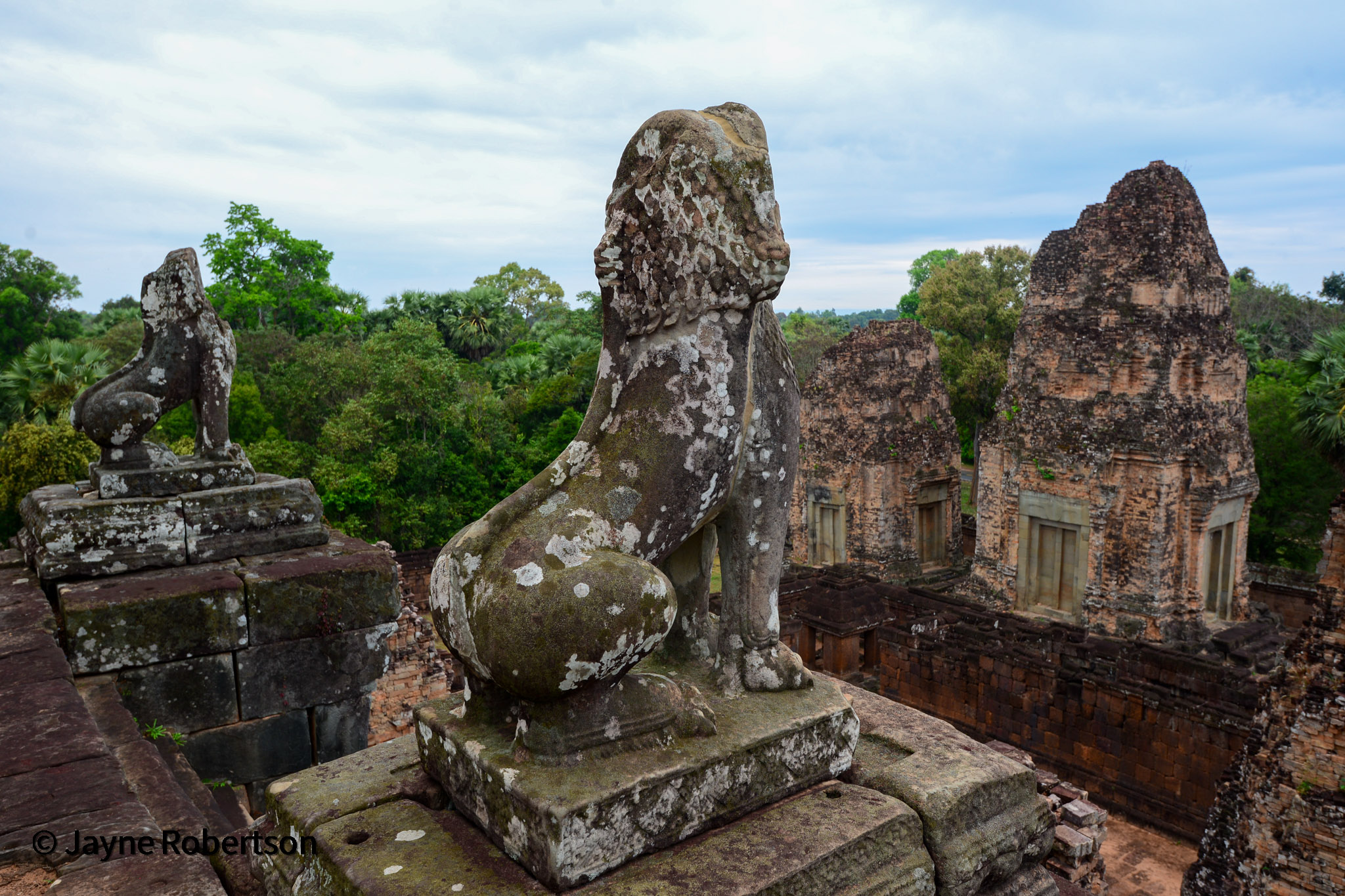
Our intention for our travels to southeast Asia was to visit Cambodia, Vietnam and Laos, however, due to Covid, only Cambodia was open for tourism at the time we were to visit. When we landed at the Siem Reap airport, we were greeted by acrobats performing outside the arrivals building – quite the greeting! We made our way to our hotel, recommended to us by our dear friends Dan and Jamie, who had visited Siem Reap right as Covid started in March 2020. Siem Reap with its paved roads, decorative bridges, and some beautiful hotels and restaurants had more development than we had seen in some other developing countries. Siem Reap, though, turned out to be somewhat of an outlier as compared to other cities and towns we would visit in Cambodia.
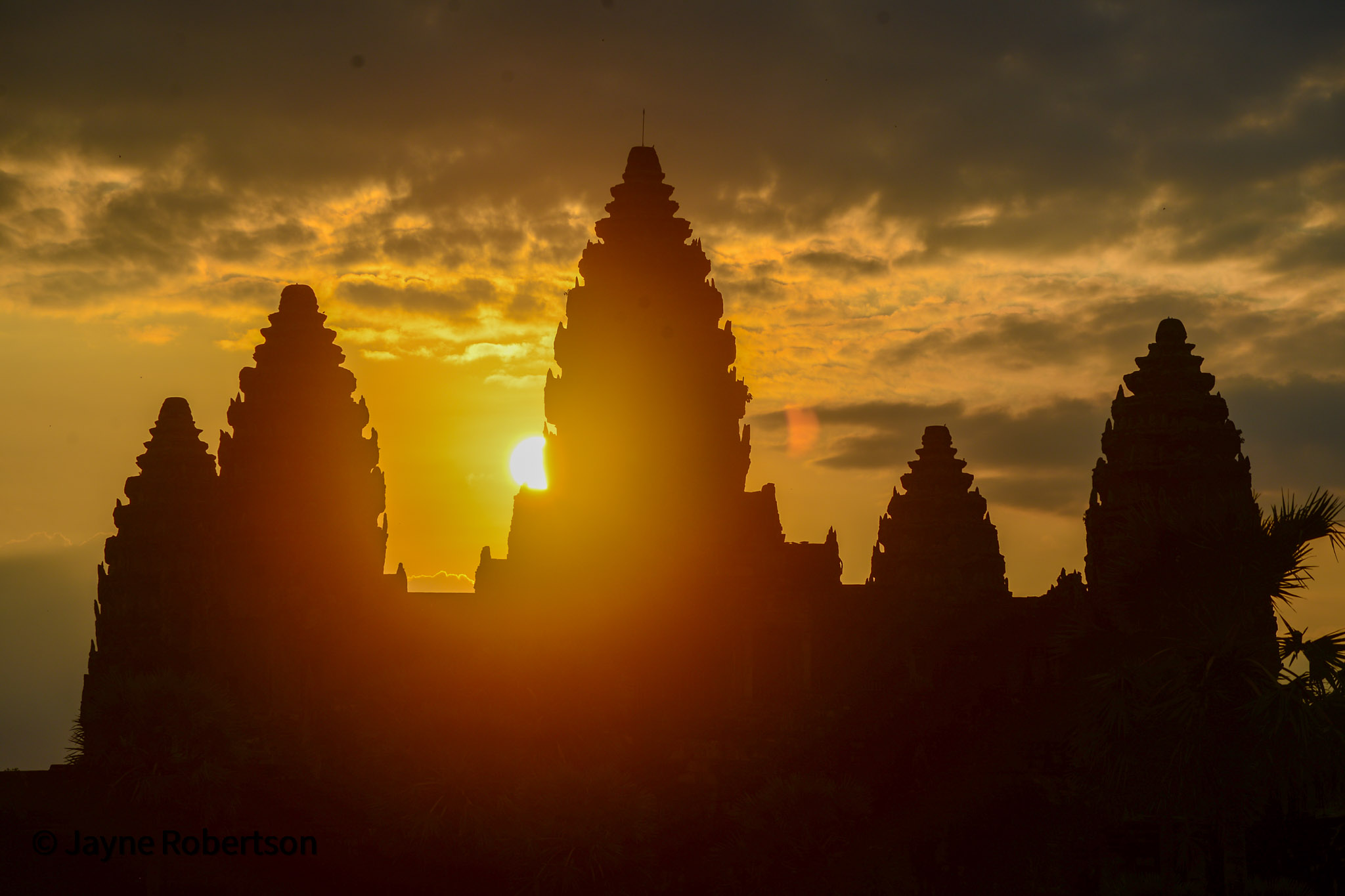
Siem Reap is best known for the huge temple complex and UNESCO World Heritage site of Angkor Wat. It’s the largest religious complex in the world by landmass (402 acres) more than three times the area of the Vatican. Its iconic 5 lotus-like towers which rise nearly 65 meters are best photographed at sunrise. Pre-Covid, we were told by our guide, Chan, that there would be hundreds, if not thousands of tourists and eager vendors lining the path that approaches the complex at sunrise. When we arrived, there were no vendors and maybe 50-100 tourists.
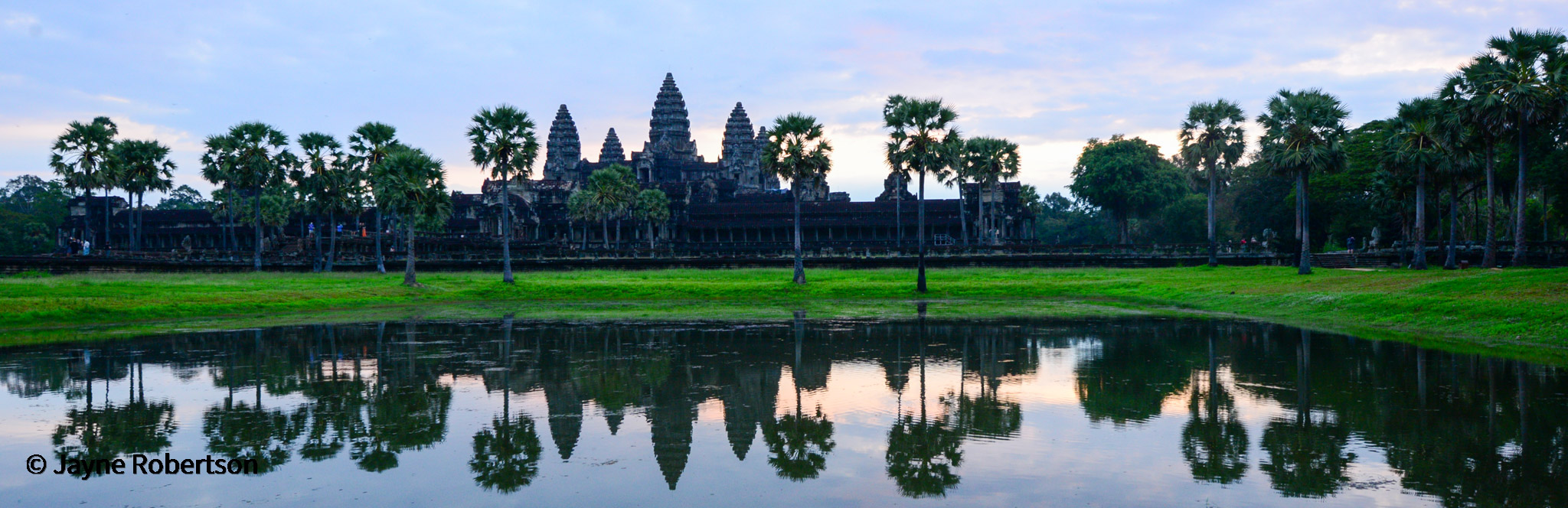
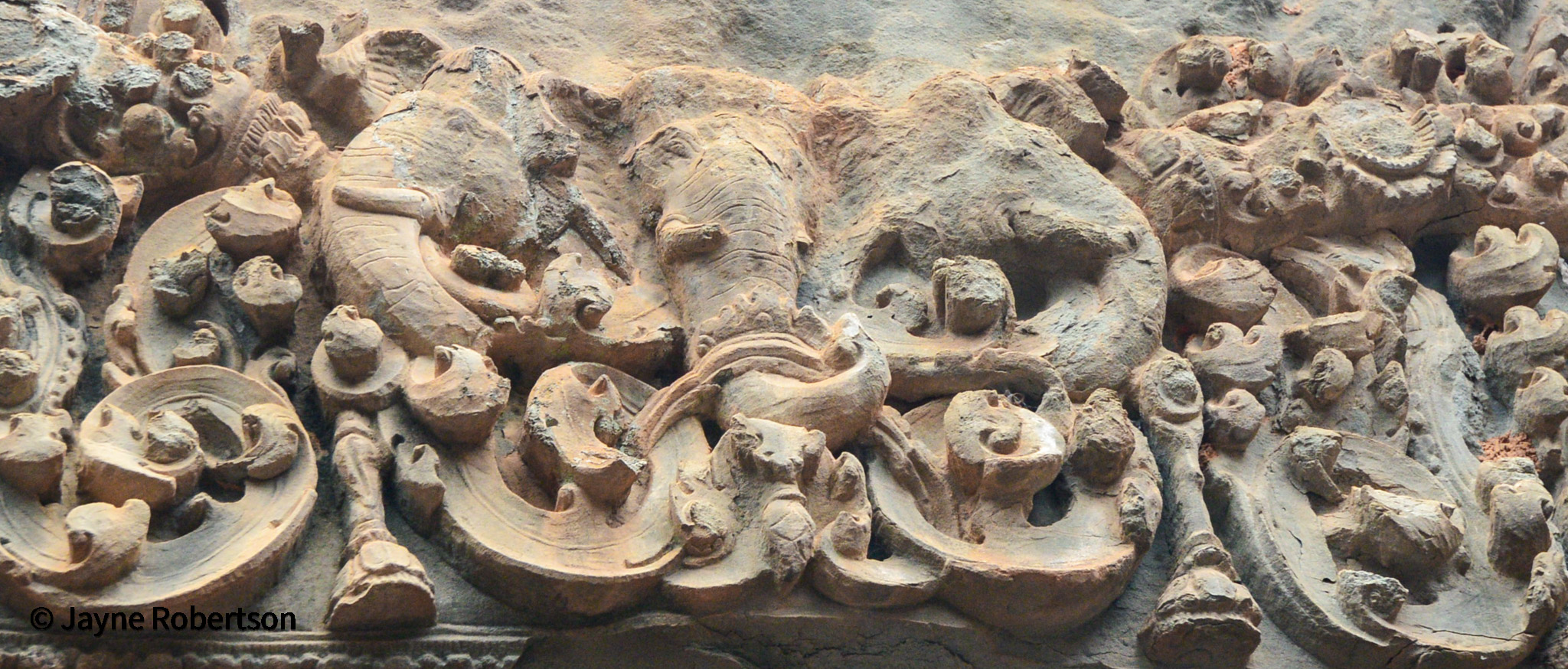
Angkor Wat was built in the early 12th century by King Jayavarman VII as a Hindu temple but it was converted to a Buddhist temple in the late 12th century and is recognized as one of the most revered Buddhist pilgrimage sites in the world. The temple has beautiful bas-reliefs of the Hindu god Vishnu and other Hindu devas (deities) as well as hundreds of statues of the Buddha.


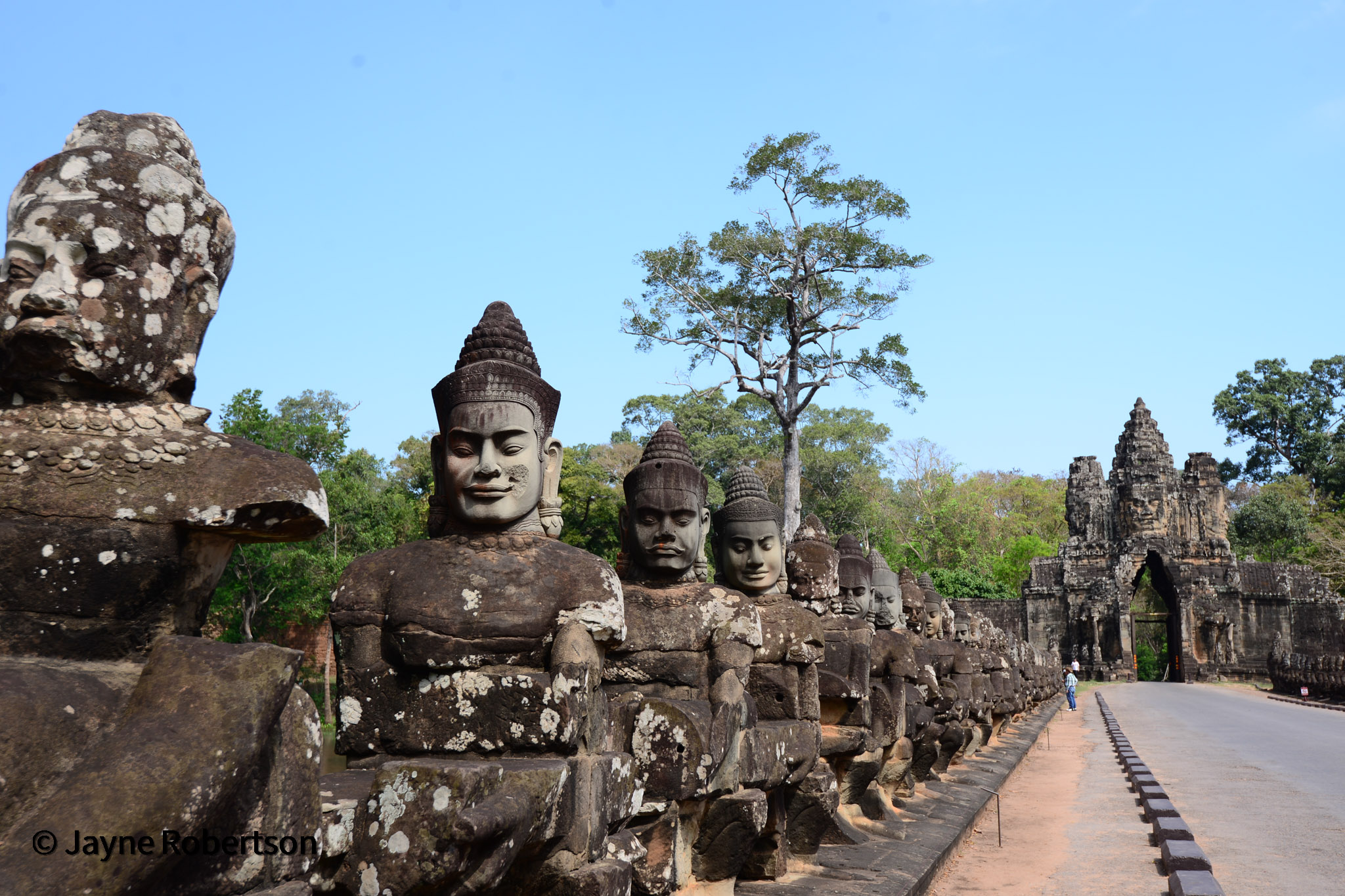
We spent two days visiting Angkor Wat and many other temples in Siem Reap including Angkor Thom. This was one of our favorites, the last capital of the Khmer Empire, which was a fortified city enclosing residences of priests, officials of the palace, and military, as well as buildings for administering the kingdom. These structures were built of wood and have since perished, but the remaining stone monuments testify that Angkor Thom was indeed a “Great City” as its name implies.


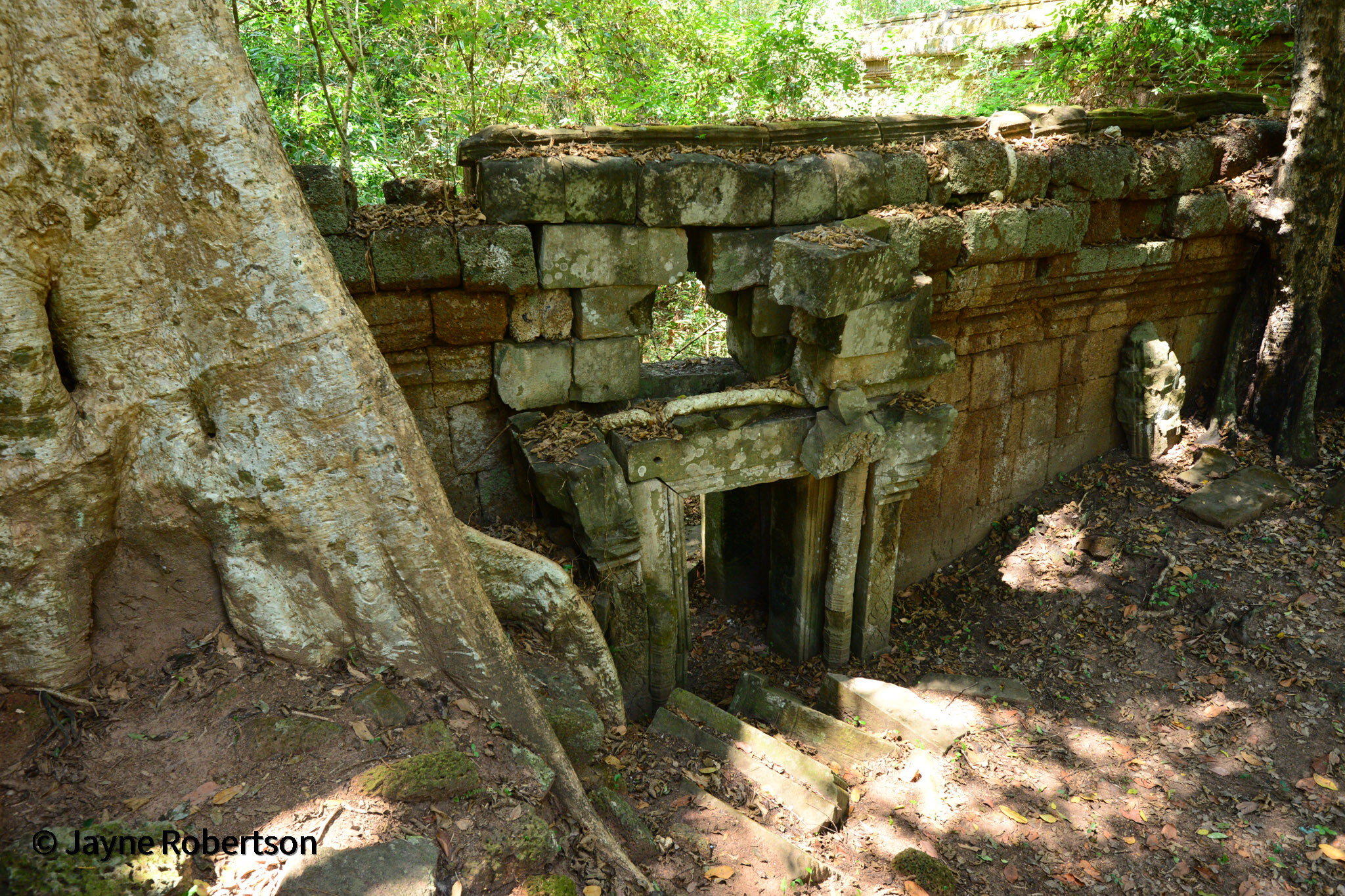
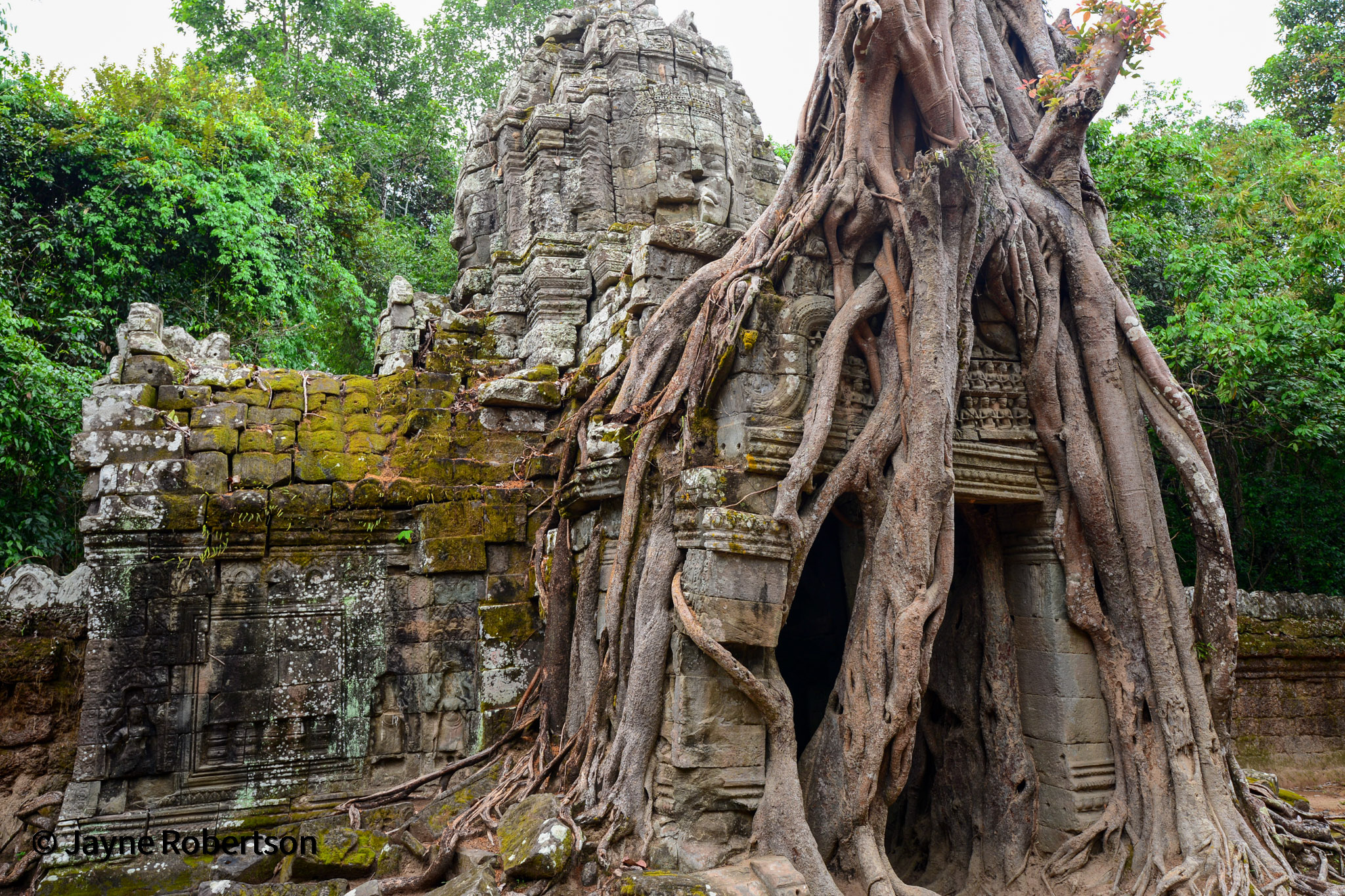
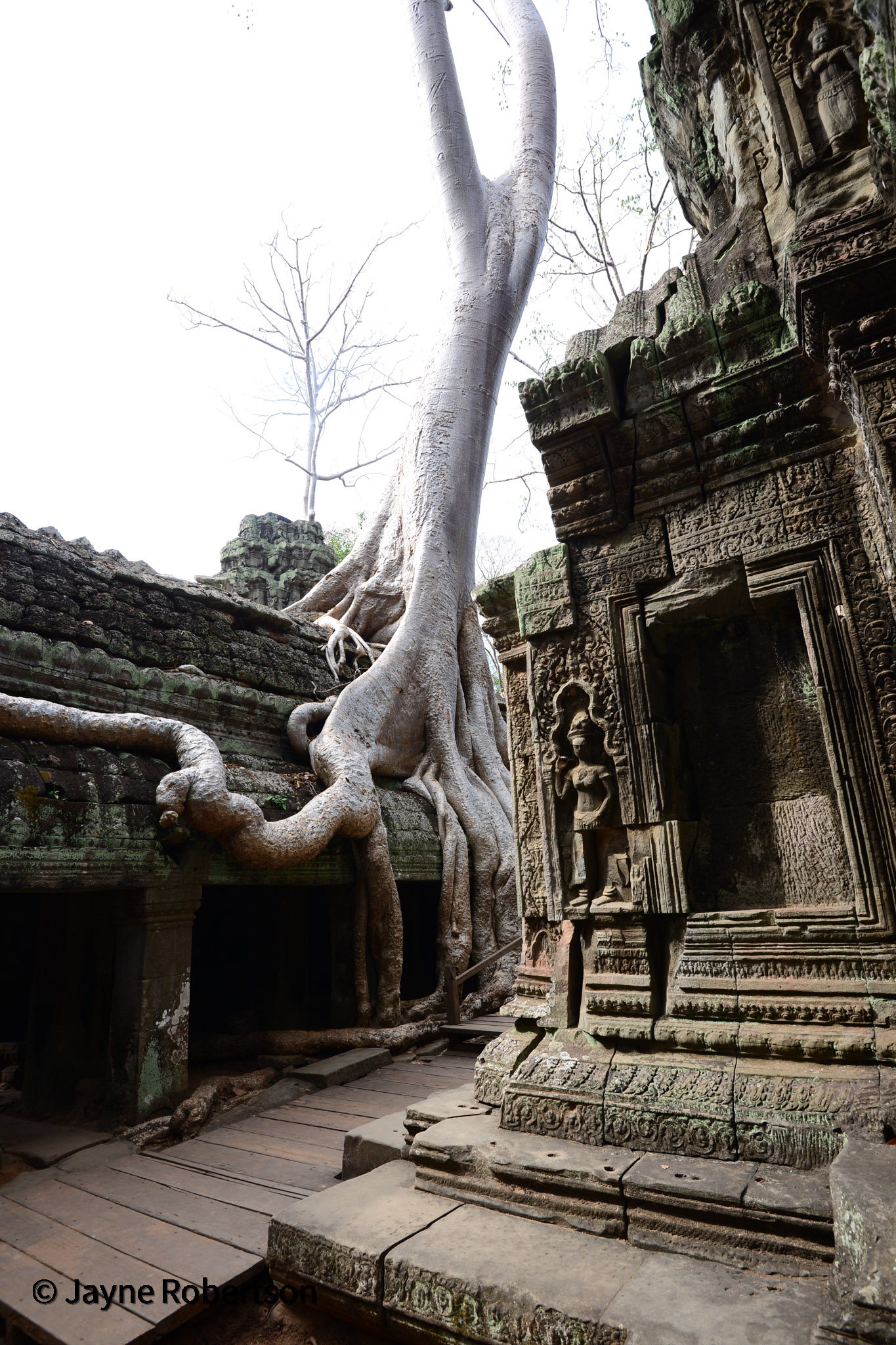
Ta Prohm, otherwise known as the Tomb Raider temple, was made famous by the 2001 movie, Lara Croft: Tomb Raider with Angelina Jolie (which we watched for the first time after our visit). The appeal of Ta Prohm is its other-worldly appearance with its vast root systems of the surrounding trees showing off the power of nature in the jungle. Built in 1186 and originally known as Rajavihara (Monastery of the King), Ta Prohm was a Buddhist temple dedicated to the mother of Jayavarman VII.
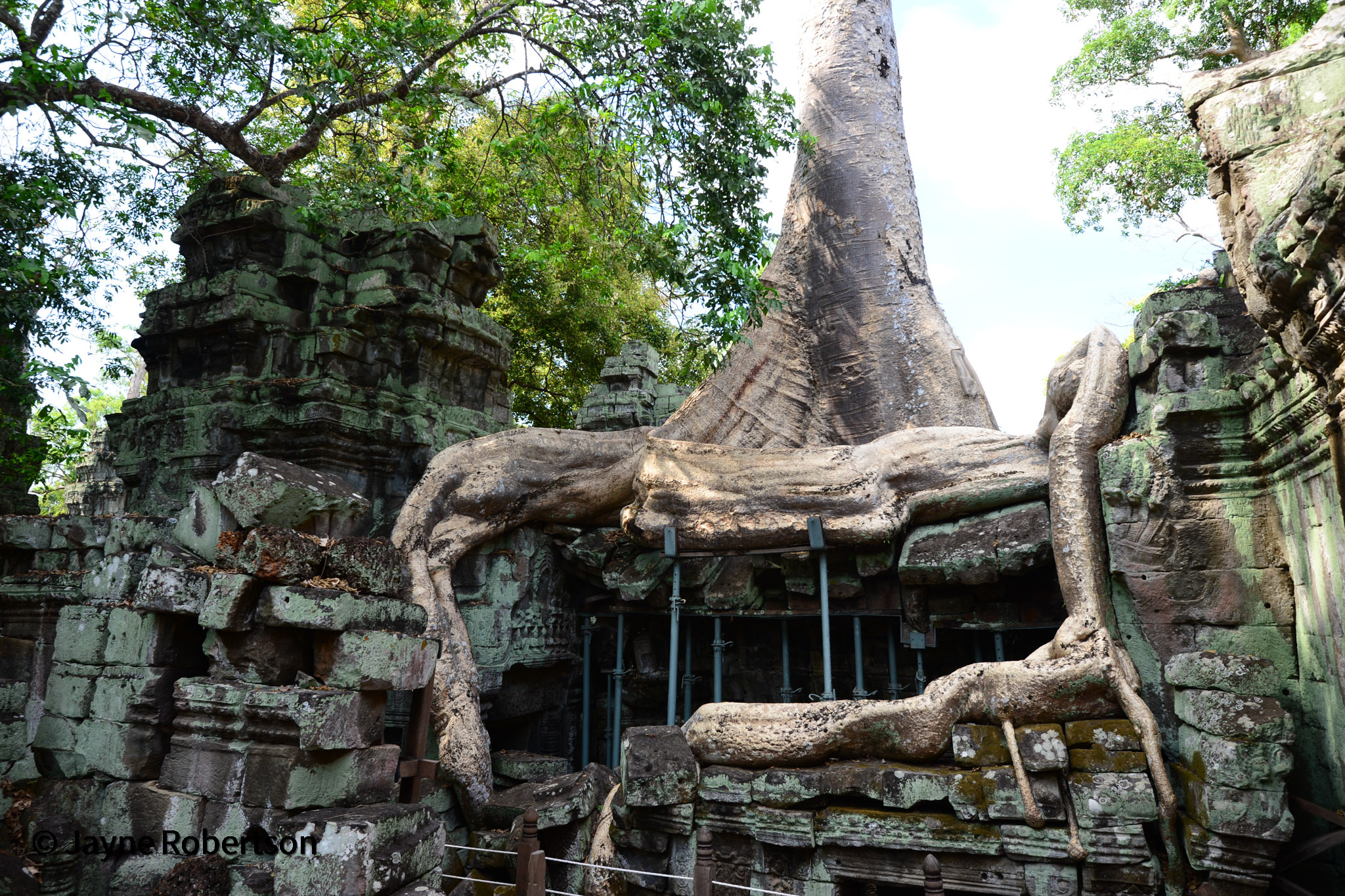
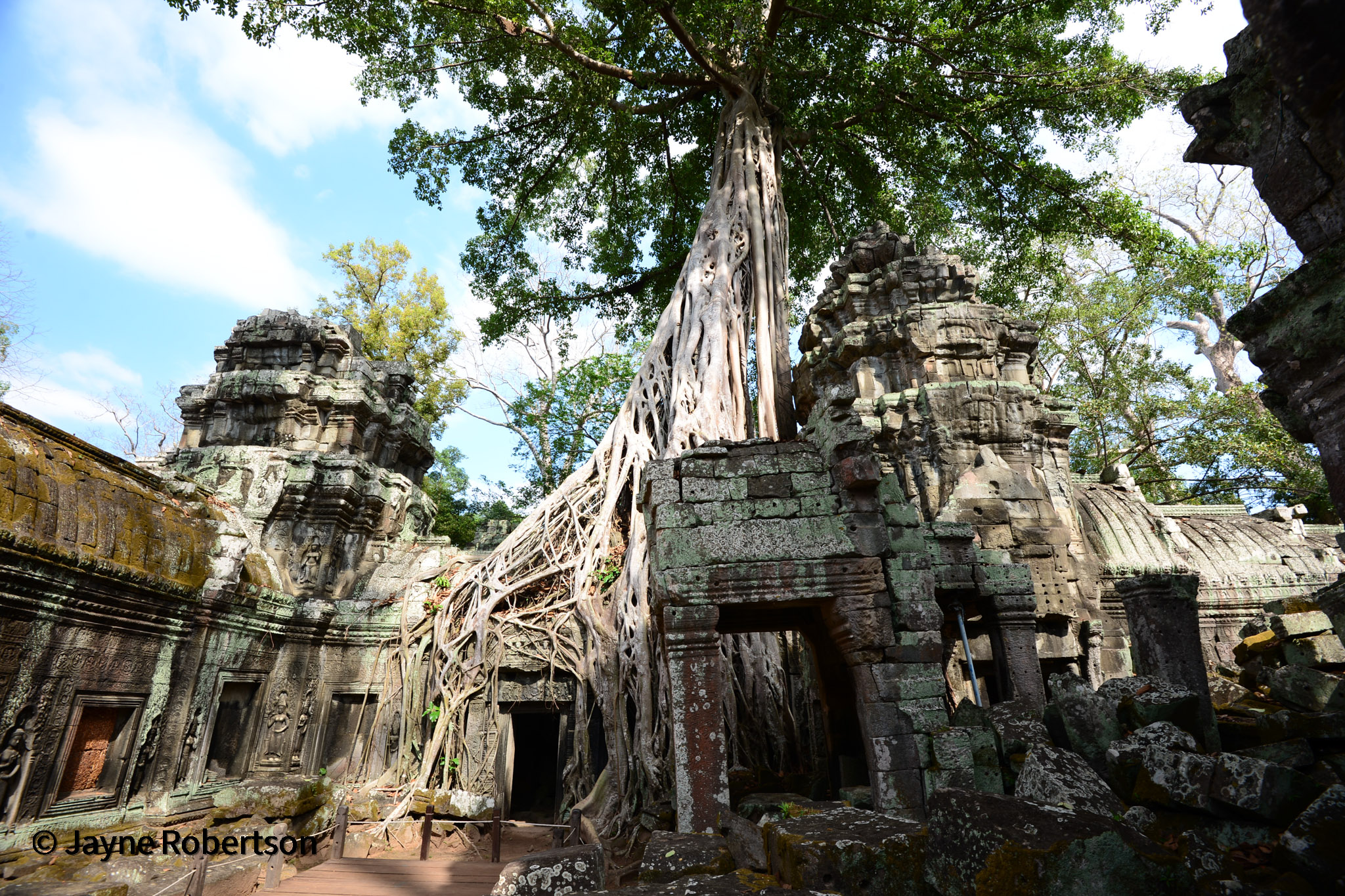
Ta Prohm is a temple of towers, closed courtyards, and narrow corridors. Many of the corridors are impassable, clogged with jumbled piles of carved stone blocks dislodged by the roots of long-decayed trees. The most photographed tree is the one from Tomb Raider. Pre-covid, we were told that there would be a long line of people waiting to be photographed in front of it. When we were there there was only one other couple.

Our next stop was Battambang, which required a 3-hour ride in a minivan with about 12 other people. There were a few stops along the way, which my crunched knees found welcome. When we arrived at the bus terminal, we were met by several tuk-tuk drivers eager for our business. We took the first one who approached us, whose name was Nith, and we were so overcome with his graciousness that we hired him as our driver for the two days we spent in Battambang. What most struck us about Nith, and this would be the case with other Cambodians who were dependent upon tourist dollars for their livelihood, was how appreciative they were for us hiring them or buying items from them. Similar to other countries we had visited over these past several months, for the two years of covid, many people found themselves with no sources of income. How they survived over this time, with very little, if any, government assistance is a testament to the human spirit. We sensed that in Cambodia, more than any other country we had visited, covid’s effect on the economy was particularly devastating.
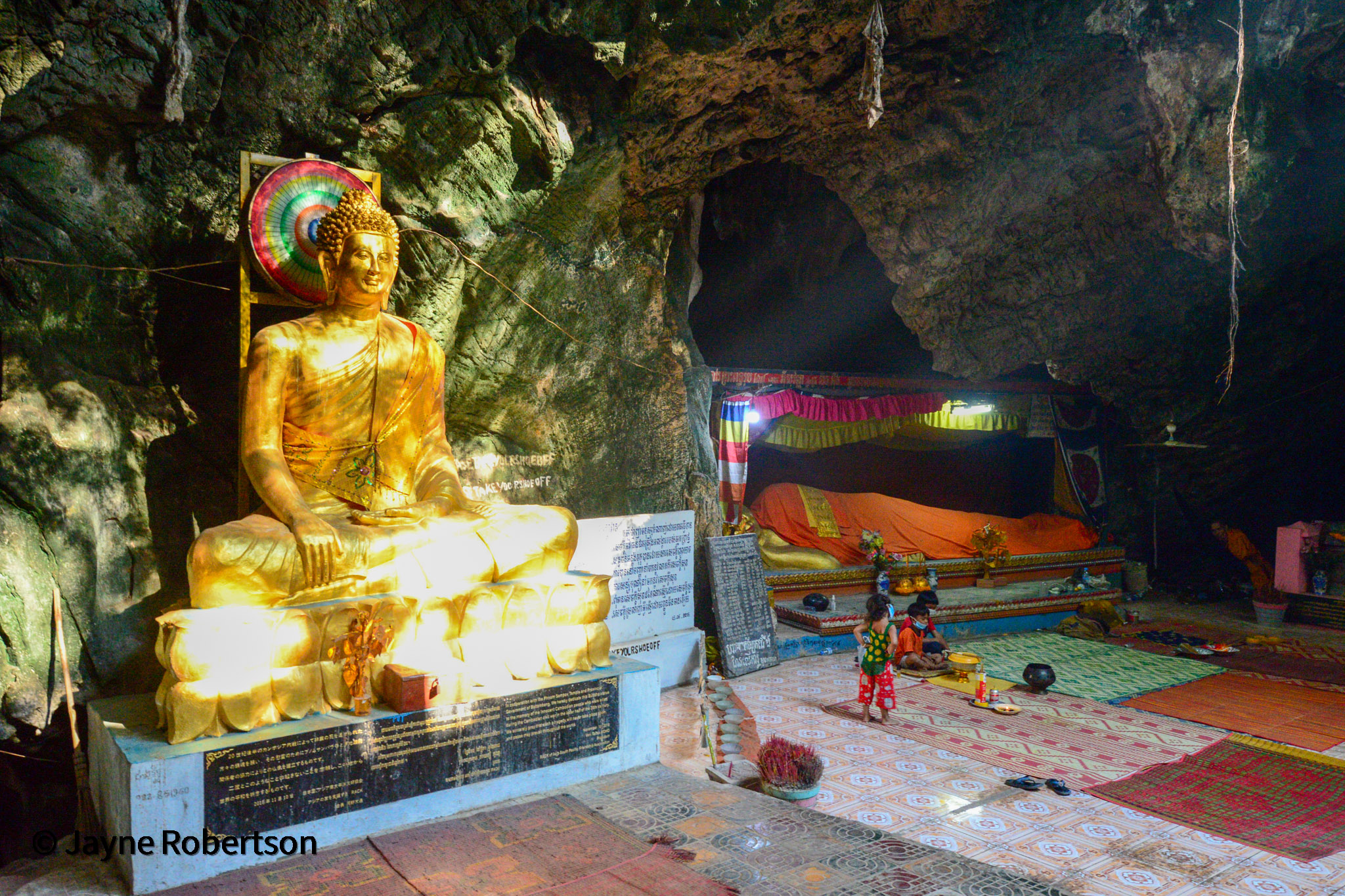
There were a few points of interest in Battambang, one of them relating to the genocide that occurred during the Khmer Rouge regime under Pol Pot from 1975 to 1979. It would be difficult to describe Cambodia without discussing the lasting effect this genocide has had on the people of Cambodia and part of our visit included the Killing Caves of Phnom Sampeau a Khmer Rouge execution site on a hill 7 mi (11 km) southwest of Battambang. The Khmer Rouge killed their victims on top of the cave at the rim of a daylight shaft or ceiling hole and then threw the dead bodies into the cave. Today there is a large glass memorial in the cave next to the skulls and bones and a golden reclining Buddha that can be reached via a staircase. A memorial, assembled from cyclone fencing and chicken wire contains human bones at the base of the stairway.
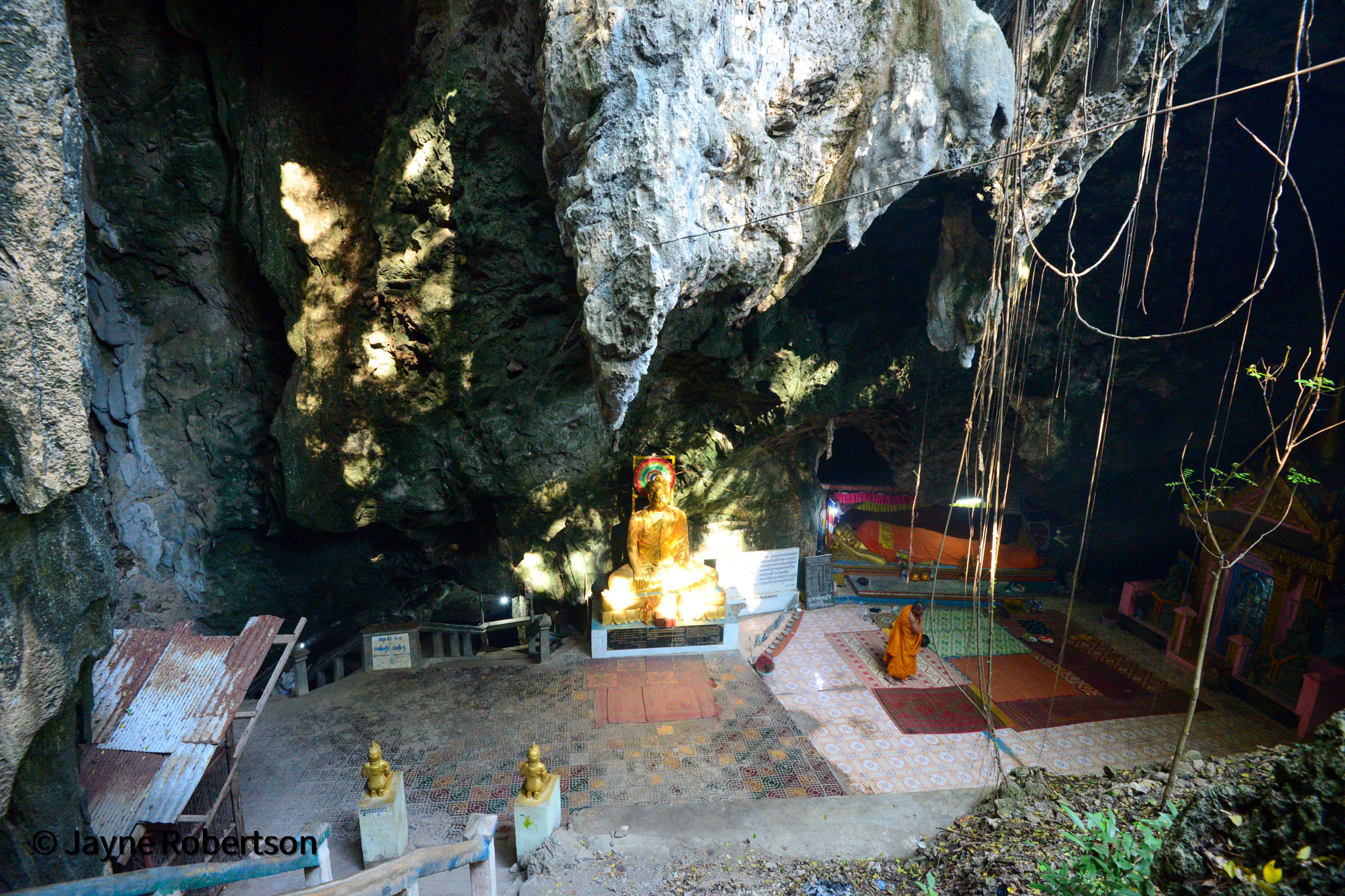
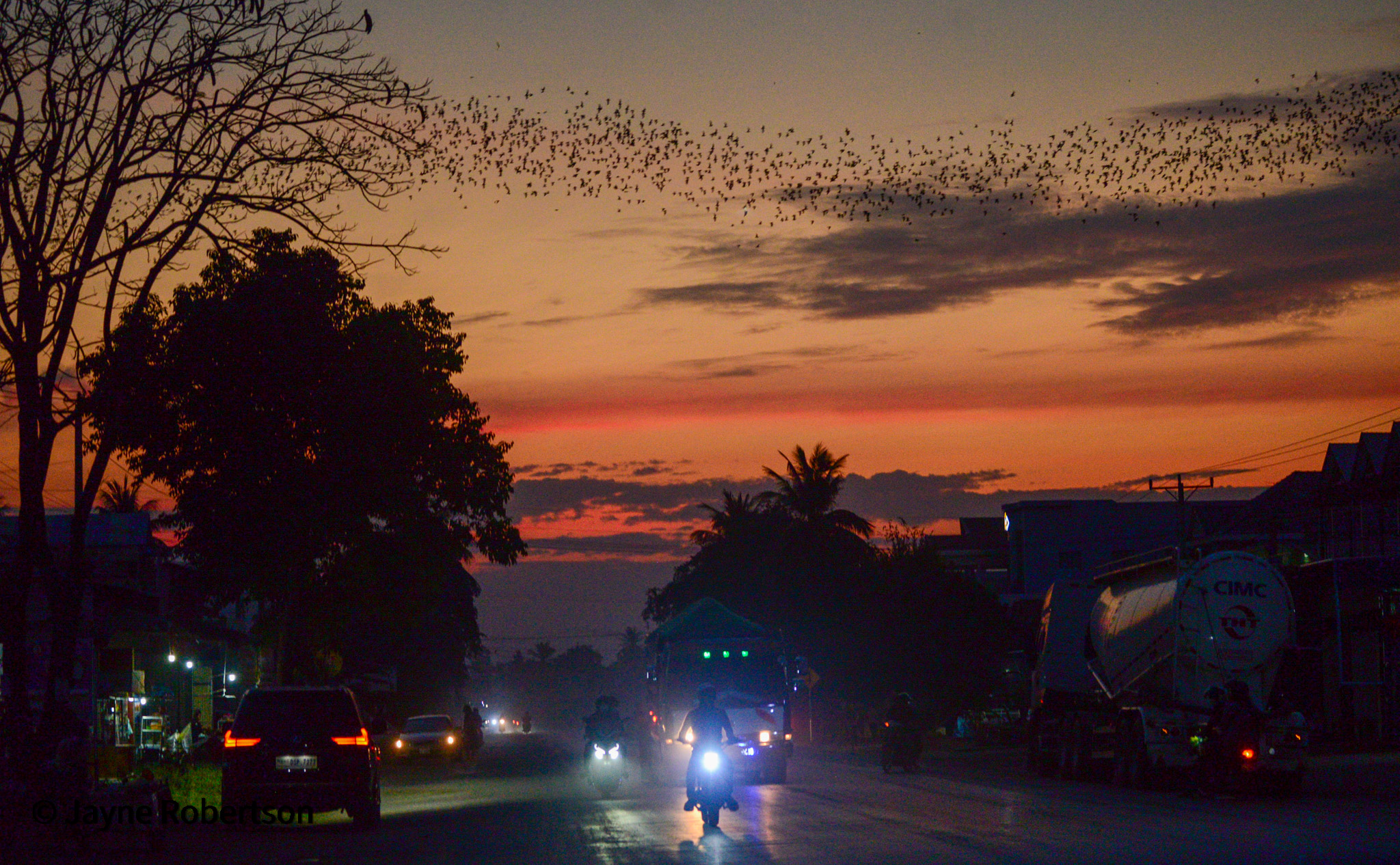
Nith then tuk-tukked (a new word) us to the Bat cave where. right around sunset, 3-4 million bats fly out of the cave with a sight to behold, for 30 minutes!
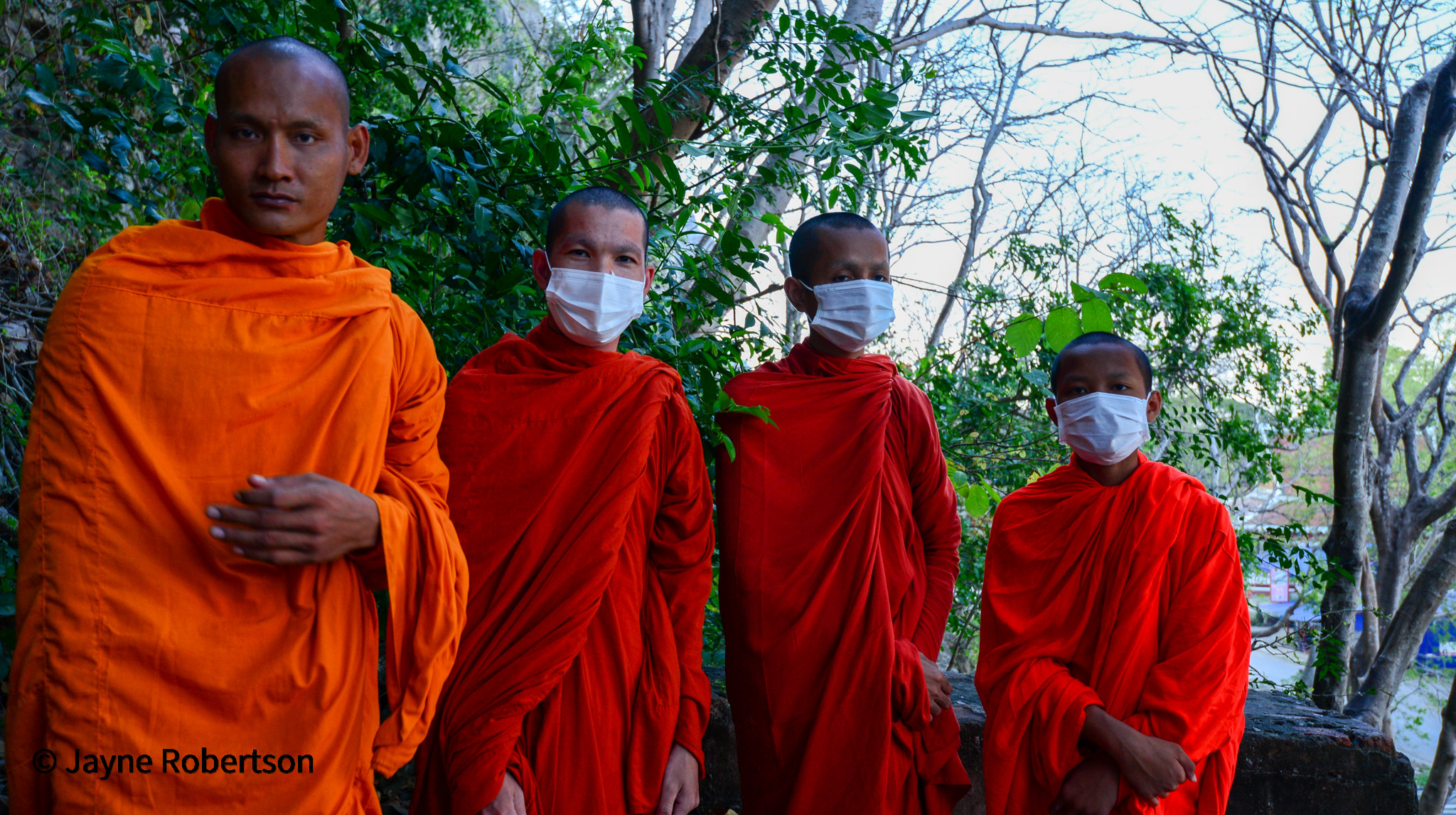
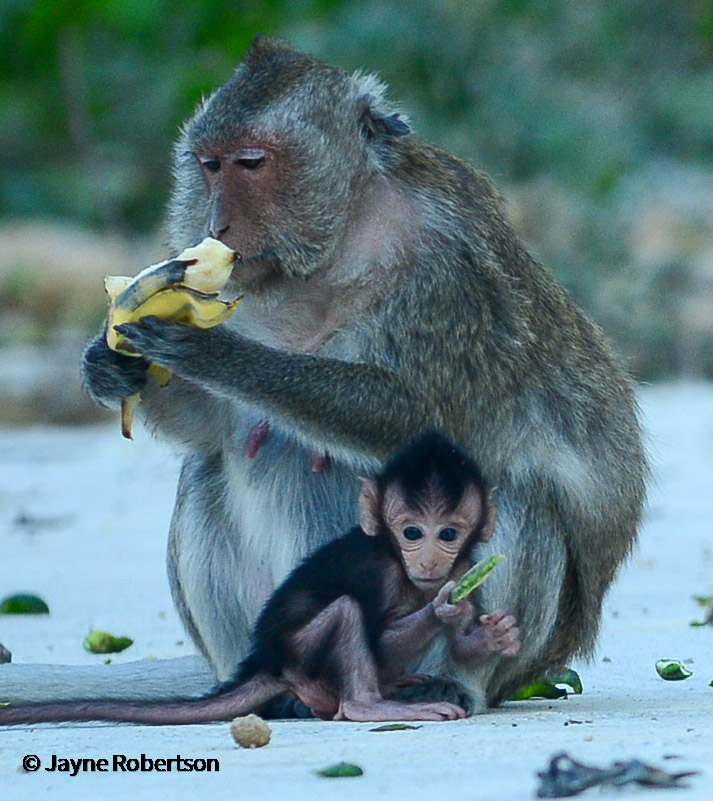
From Battambang, we had a 6-hour minivan ride to Phnom Penh, the capital and most populous city in Cambodia, and is the nation’s cultural, industrial, and economic center. Here we visited the National Museum, which housed many of the antiquities from Angkor Wat as well as the Genocide Museum to gain a deeper understanding of the genocide, and were fortunate to have a very knowledgeable guide. We then continued to a place outside of Phnom Penh known as the Killing Fields, a name dubbed by Dith Pran, the Canadian journalist who wrote the book of the same name. Although we had both seen the movie previously, we watched it a second time after visiting this very solemn site. It is estimated that anywhere from 1.5 – 2 million people out of a 1975 population of 8 million, were brutally executed or starved to death. Over 20,000 mass grave sites have been found throughout the country and you can feel and sense the trauma that this genocide has had on the people as you hear stories from everyday people about their own personal experiences.
I was curious to know how this trauma has continued to affect the population, so I researched a bit about how historical and cultural traumas can affect survivors’ children for generations. In much the same way as the Holocaust or other genocides, the genocide by the Khmer Rouge has had psychological, biological, and perhaps even genetic transgenerational effects on survivors. Such is the continued legacy of trauma in Cambodia today. We could just sense it in the people.
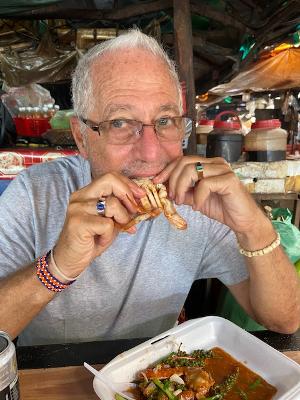
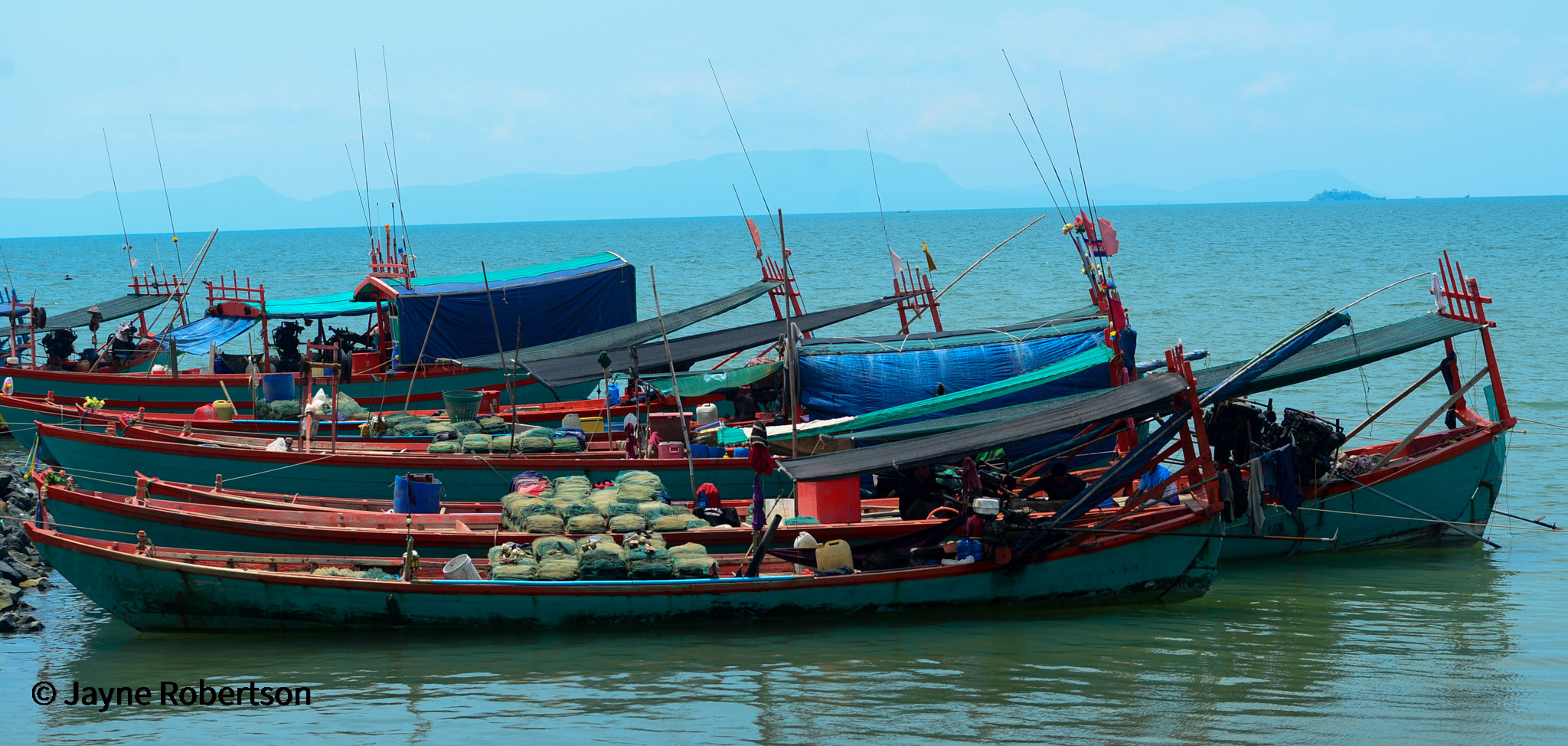
From Phnom Penh, we had another minivan experience and arrived in the fishing village of Kep, known for its crab market. We stayed for a few days at a small, very nice resort owned by an Aussie and managed by a French woman where we met other travelers and enjoyed the swimming pool. We ventured down to the crab market where for $9 a kilogram you could get the freshest blue crab one would ever experience and so I did! Pretty, pretty tasty!

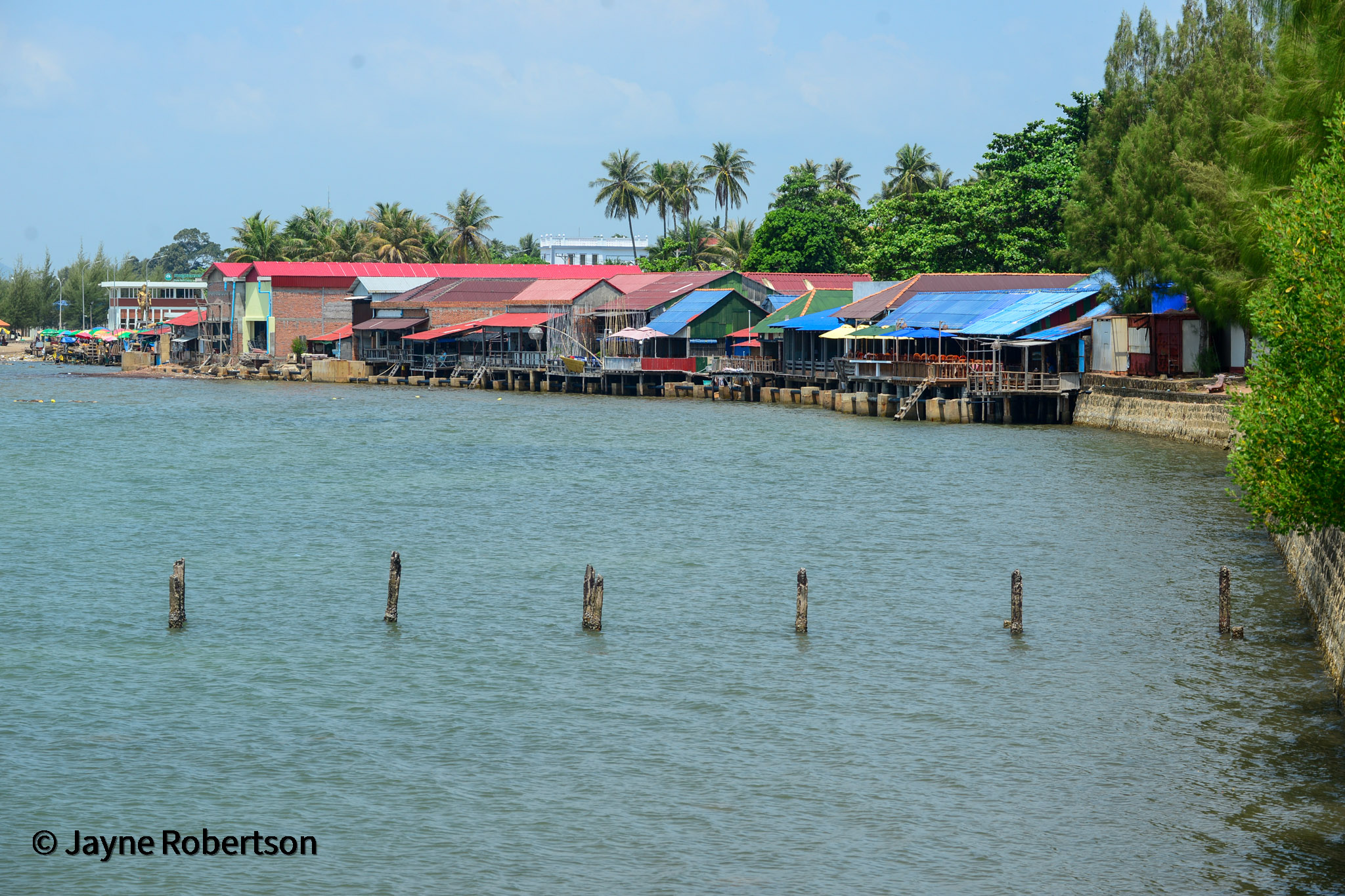
The town of Kampot was a 30-minute tuk-tuk drive away from Kep, so we packed our baggage in the tiny space of the tuk-tuk and arrived at our 60-room boutique hotel which had about 5 employees, none of whom understood or spoke much English. It was our first experience in 7-months of travel at this point, where the front desk of a reasonably-sized hotel could pretty much only say “hello” and “goodbye”. Even something as easy as arranging a bus to our next stop was impossible. It was quite frustrating but similar to other places we traveled, hiring competent personnel during and post-Covid has been difficult, especially for relatively small businesses.
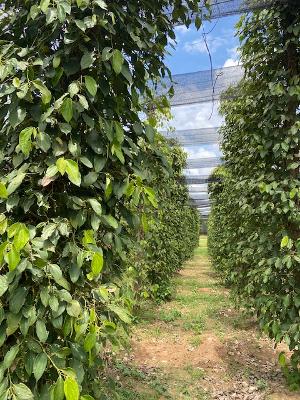
Kampot was once the major seaport of Cambodia before Sihanoukville was established. It is now known for its French colonial architecture and its pepper which is exported to over 60 countries worldwide. We visited La Plantation, the largest pepper plantation in the area, which boasts Black, White, Red, and its exclusive Fresh Salted Kampot Pepper. According to its website, it has been selected as the best pepper in the world. The plantation, owned by a French-Belgian couple, offers a guided tour of its property. On the tour, we chatted with a German-Italian couple, who we would have a few meals with and Whatsapp with over the next couple of weeks. It wasn’t often that we connected with others while traveling, but when we did it was great to hear how other people from other cultures live and experience life. Certainly, this is one of the major benefits of travel. We sometimes can become so entrenched in our own world that we forget there are many ways to live a life.
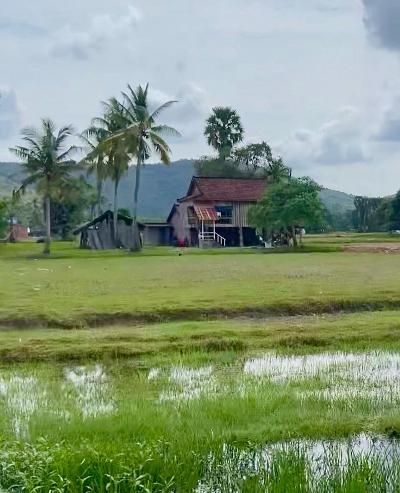
The other interesting experience we had in Kampot was taking a sunset “cruise” down the Kampot river to see fireflies. For $5 a head, you get the cruise and a drink of your choice. We chose a beer, which in Cambodia was remarkably cheap. It was not uncommon to see beer sold for $.50 or a dollar per glass at a bar. So, the cruise consists of sitting (not on chairs mind you but yoga-style; great for Jayne, not so much for me!) on the top deck of the boat drinking your beer, and eating whatever else you might order. Then the experience happens. As the boat is drifting down the river, you approach a bridge, and if you don’t lower your head you’re probably going to have a cracked skull. And oh, by the way, no real warning is given that you should probably lower your head. Thirty minutes later the boat pulls into an area where we think we’re supposed to see fireflies. We stop for about 5 minutes, no fireflies appear and we’re now heading back to where we started our cruise. Yes, a forgettable experience!

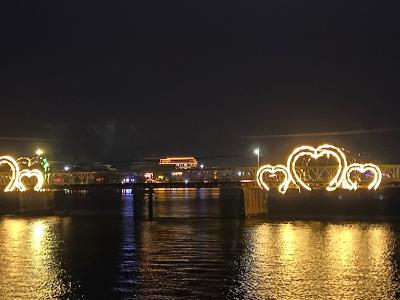
After spending time in the cities, it was time for some beach living. We took a private car with a driver from Kampot to the coastal town of Sihanoukville, which serves as a jumping-off point to travel to nearby islands. The town itself is filled with halfway completed construction projects primarily funded by Chinese money. With very little Chinese traffic coming since the pandemic, construction materials litter the streets, the crime rate has increased and the beaches that Sihanoukville had boasted are now filled with plastic bags.
There are two popular islands off the coast of Sihanoukville, one is Koh Rong and the other Koh Rong Samloem, one more of a party island and the other more laid back. Of course, because of the party animals we are, we chose the more mellow island of Koh Rong Samloem. The main beach on the island is Saracen Bay where our hotel was situated, with our “villa” just steps away from the water. We had organized through the hotel a boat to do some snorkeling about 45 minutes from Saracen Bay. We learned pretty quickly, after this experience and a few others we had subsequently, that it was unlikely that any snorkeling trip would measure up to our experience in the Maldives. On this particular excursion, the boat was old and rusty, the engine was started with our captain hot wiring it, and the snorkel gear was barely ok -and the snorkeling itself- meh. After the 45 minutes of snorkeling, he took us to one of the few towns on the island where we had a drink and enjoyed the view before heading back to our hotel.
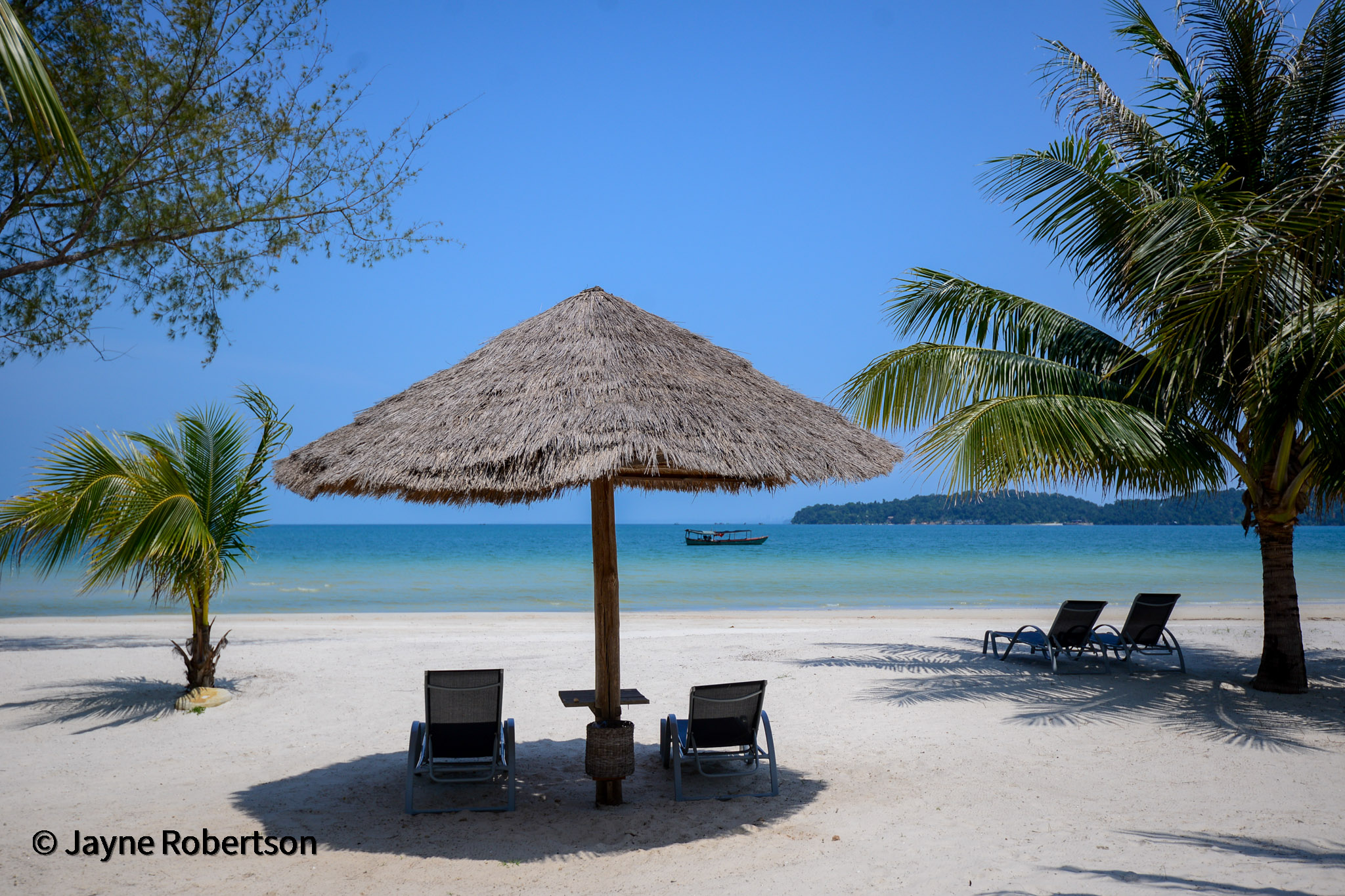
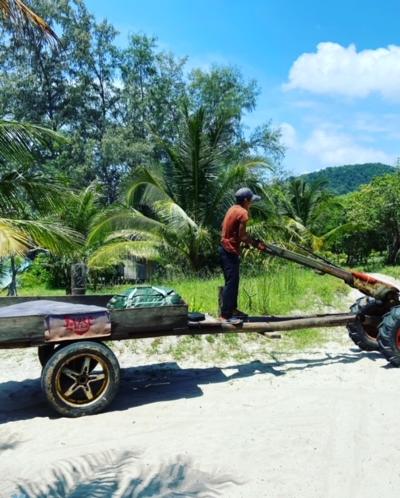
In our research of the island, we had read about Lazy Beach, considered to be one of the most beautiful beaches in Cambodia, and its accommodations rustic. We decided we could handle rustic after our more luxurious beautiful stay at Saracen Bay so we booked a bungalow for a few nights at Lazy Beach. We were transported from our hotel to another side of the island by a tractor with a boy about 15 years old, and his able companion of a similar age.

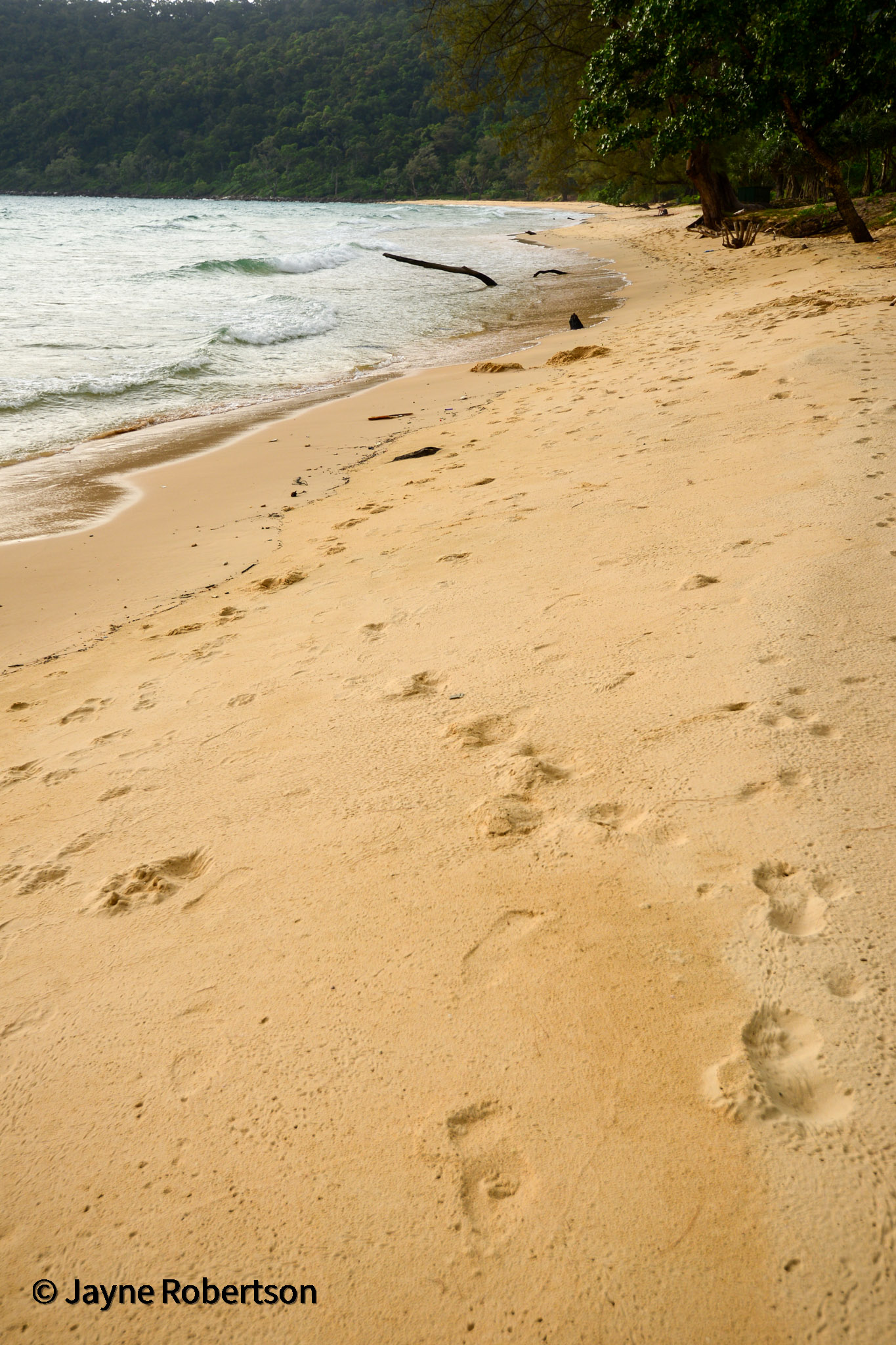
The beach was quite nice, but unfortunately, it had a lot of plastic and other rubbish that would wash up on the beach each day. Like many beaches we visited, especially in poorer countries, rubbish washing up the beaches is a major problem. Ocean pollution is problematic worldwide in so many ways, with microplastics being just one small piece of the puzzle. (If you’re interested in learning more, check out “Seapriacy” on Netflix as we did.) In order not to feel so helpless and hopeless, as we’ve traveled these past several months we will spend some time doing our own beach cleanup. It doesn’t take much time or effort and it makes you feel like you are contributing in some small way.
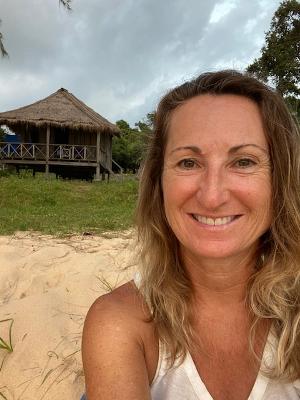
Our bungalow was rustic as advertised, with gaps in the wooden floorboards, no air-conditioning, and a toilet seat that rested about 10 inches from the floor. It certainly will take its place as a memorable experience during our travels. The “resort” was owned by a Cambodian family, who could not have been nicer. Their restaurant served up some good food and we met a number of friendly people who shared their travel stories as well as us sharing ours. One couple, she Scottish and he French were particularly interesting and engaging, and found ourselves spending time sharing stories over meals.

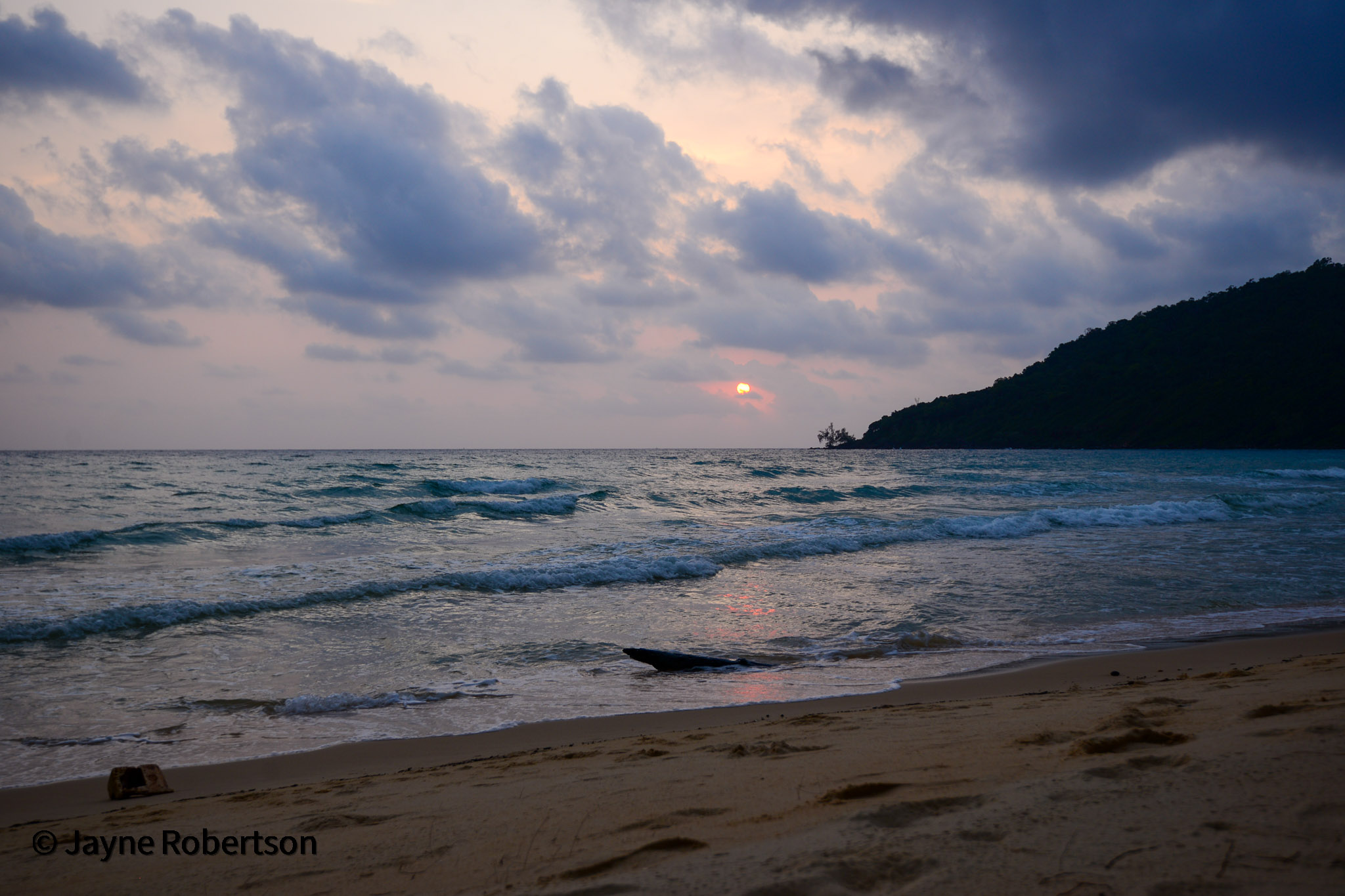
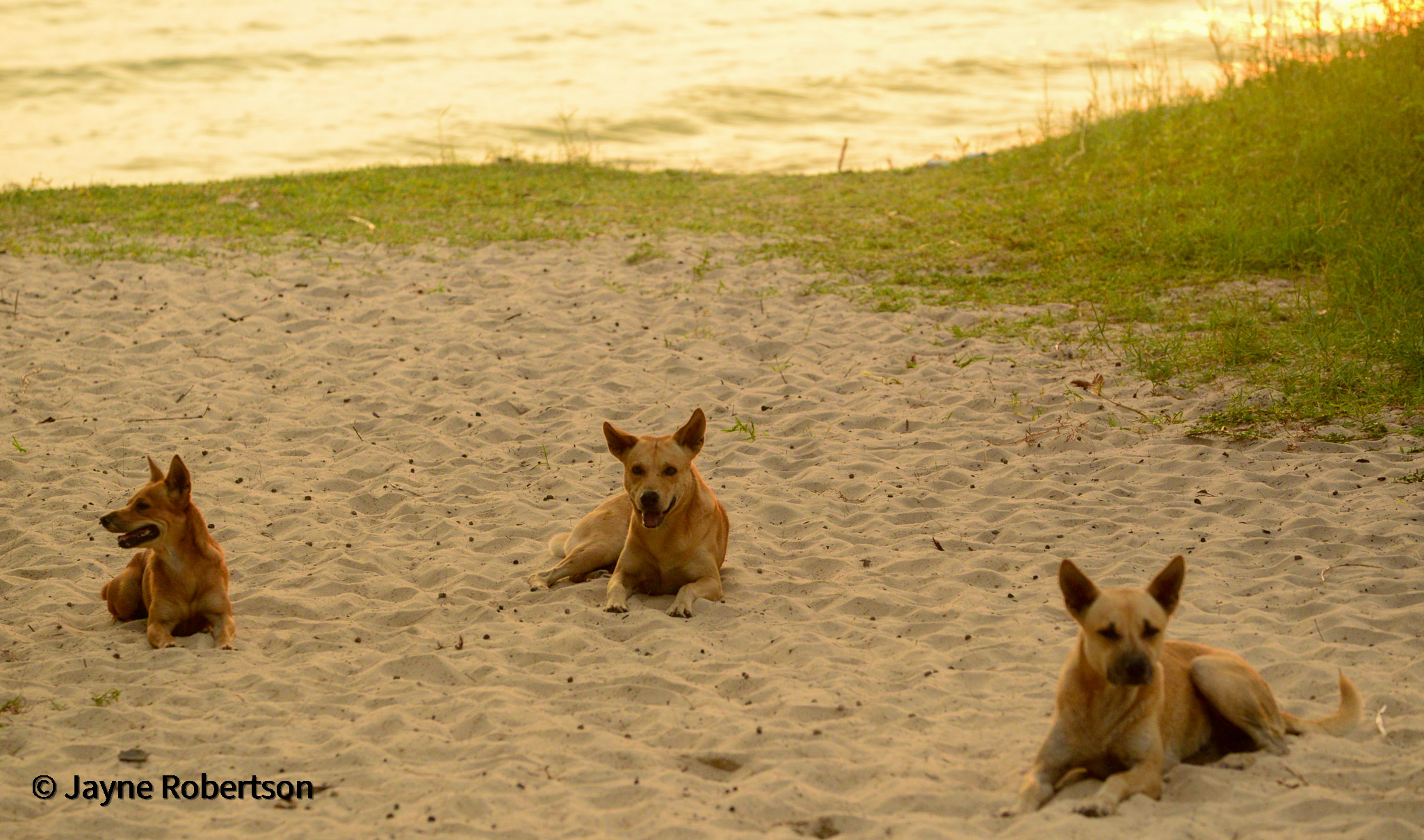

After a few days on Lazy Beach, we took a ferry back to Sihanoukville where we spent the night, and then had an early morning bus ride back to Phnom Penh to our hotel where we had stayed a few weeks prior. Our last couple of days in Phnom Penh were spent eating at some nice restaurants, and with me getting a sidewalk haircut and shave. Normally, it would only have cost $2. but because I requested that my whole beard be shaved, another 50 cents was added to the tab.

The highlight of our time in Cambodia was visiting Angkor Wat and having the temples almost to ourselves. We also enjoyed our time in Battambang and Koh Rong Samloem. Yet, what I think we will also remember was the despair on people’s faces from the economic pain they were suffering due to the lack of tourism over the past couple of years. Equally hard, was to hear the stories of the genocidal years under the Khmer Rouge. Cambodia for us was a mixed bag of joy and sorrow.
Coming up – Thailand!