written by ed; photos by jayne
For those of you following our travels, you might recall that one of the criteria of which country we choose to visit is the weather i.e. warm weather. Well, we searched the map from where we were in Greece, and Turkey made the most sense, even though the daytime temperatures would be in the 50’s and 60’s F in Istanbul and much chillier in other places like Cappadocia. I know for many of you these “chilly” numbers are laughable, but we are desert rats and not particularly fond of cold weather. In addition, we aren’t traveling with many cold-weather clothes. Anyway, we put on our big boy and big girl pants and survived, albeit not without a bit of whinging/whining along the way.
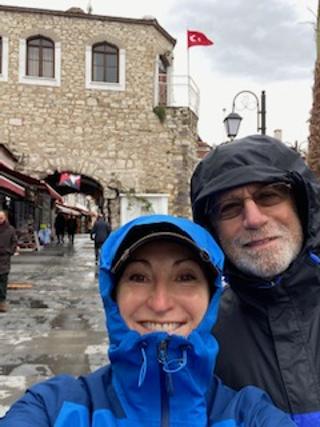
Istanbul was our first stop and we could immediately sense a big-city vibe of aggressiveness as we made our way on public transport visiting the major tourist sites. The aggressiveness was also accompanied by unhappy and unfriendly faces. I would not want to generalize that this was the Turkish persona, rather more a big-city way of being in the world. Once we departed Istanbul and visited smaller towns, the difference in attitudes was so much more open and friendly.
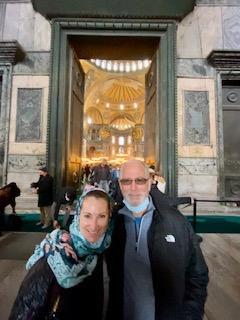
The Sultanhamet section of Istanbul is home to the city’s major sites of Hagia Sophia, the Blue Mosque, and the Topkapi Palace/Museum. The Hagia Sophia, once a church then a mosque, then a museum, and once again a mosque is considered one of the finest examples of Byzantine architecture and was designated a World Heritage Site by UNESCO in 1985. The fact that it was once a church and then a mosque makes it unique as you can see pertinent symbols of each religion throughout the multi-domed structure.
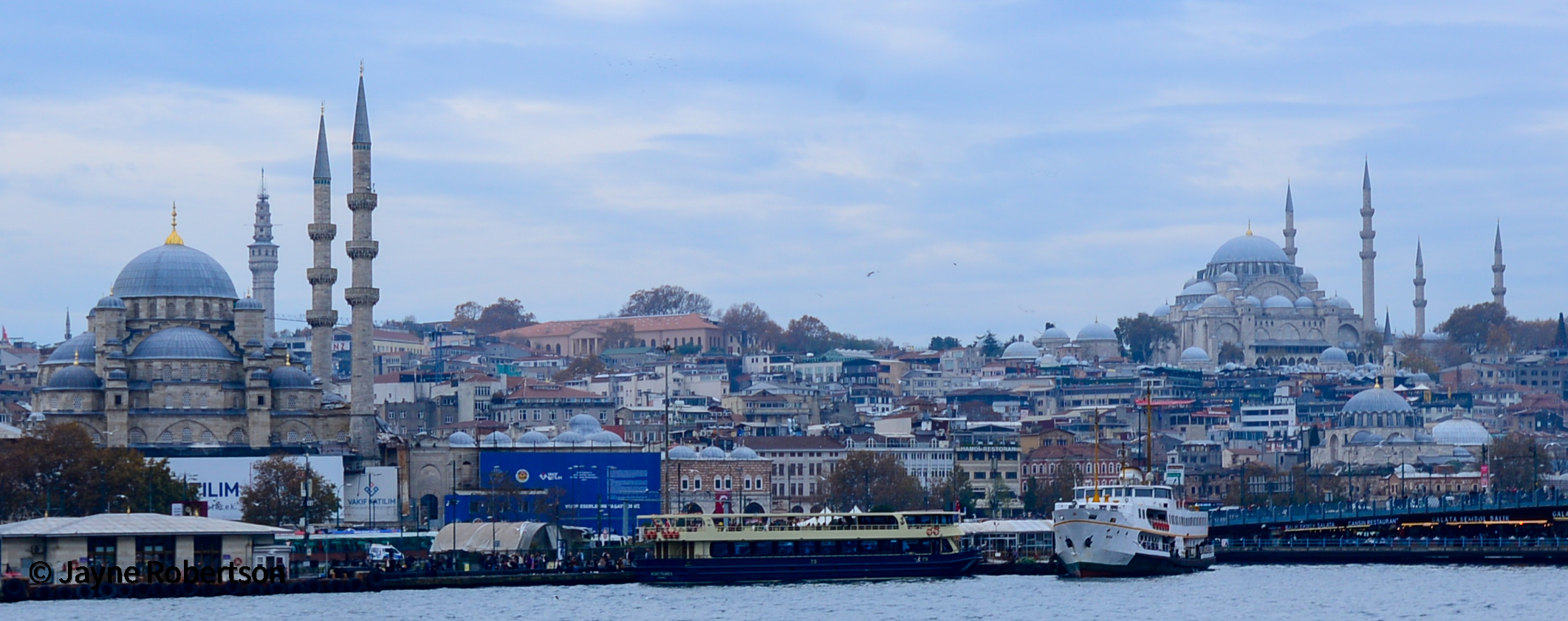
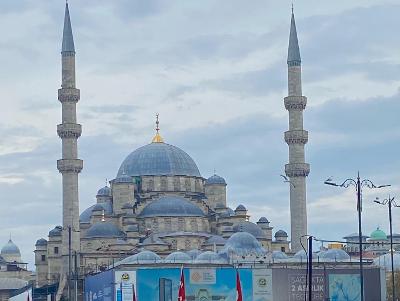
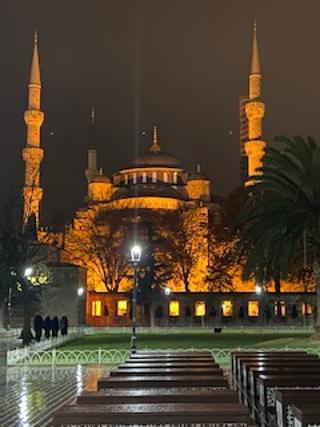
Unfortunately, the Blue Mosque was closed for renovations when we visited, but it still makes for an imposing building from the outside.
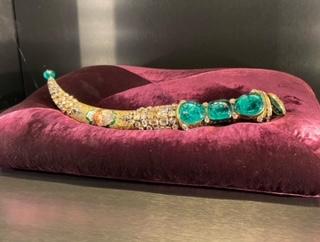
We were approached by several licensed guides and finally decided to hire one to take us on a tour of Topkapi Palace. I’m not sure how many of my vintage remember the 1964 movie, Topkapi, starring Melina Mercouri, Maximilian Schell, Robert Morley, and Peter Ustinov (who won an Academy Award for his Supporting Actor role). If my memory serves me well, I distinctly remember the marketing campaign consisted of posters that simply read “Topkapi” plastered all over New York City with no other words appearing, which totally intrigued me. My recollection was that it was a very entertaining heist movie, with the object of desire an emerald-encrusted dagger. The guide was so excited that I had seen the movie and told us that we would see the dagger on display in the palace. We did see it, and I felt like a 14-year-old boy again, at least for the moment and the memories.
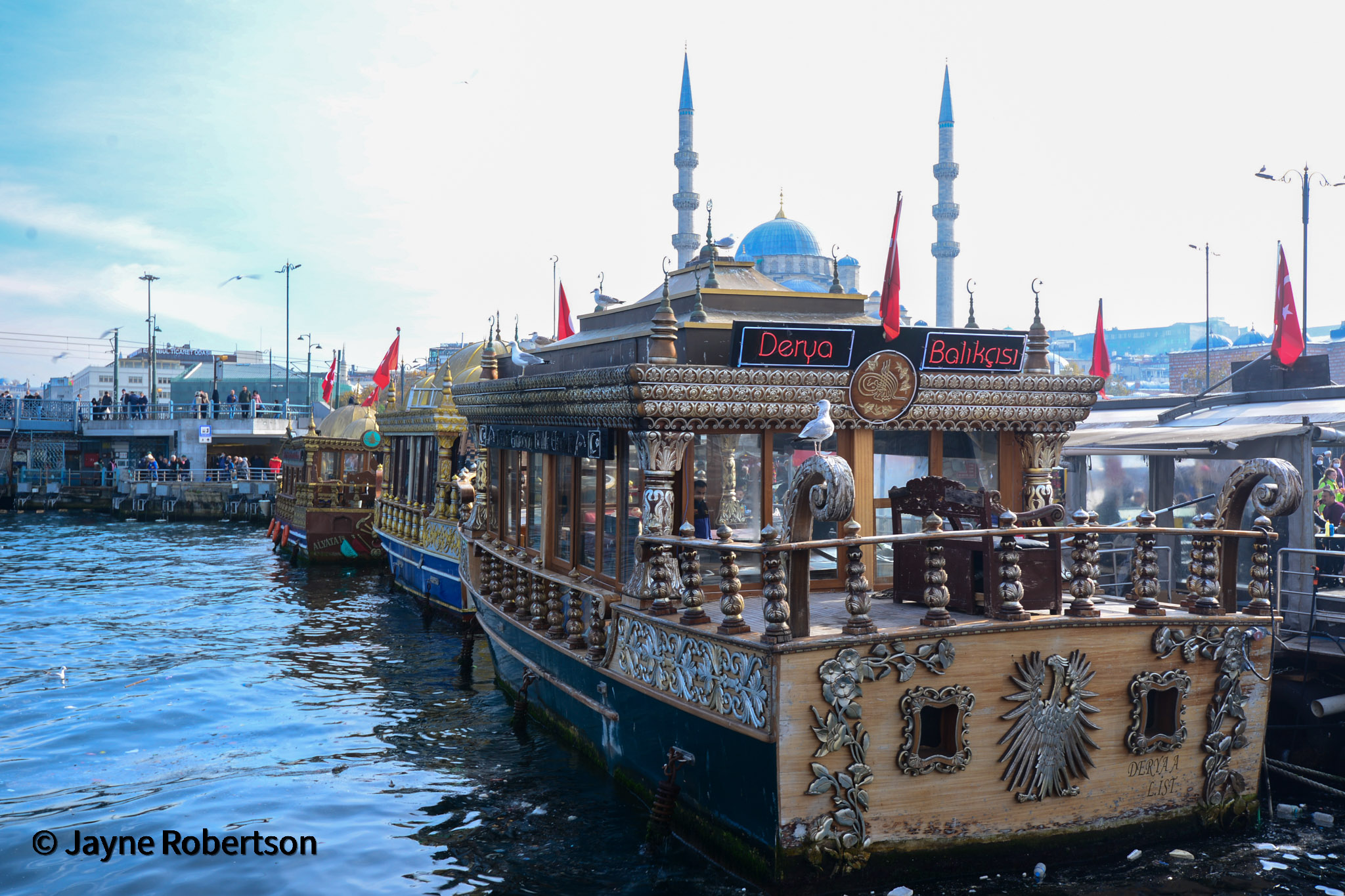
One of the must-do’s while visiting Istanbul is to take one of the cruises down the Bosphorous Coast. The one-and-a-half-hour cruise takes you along this 30-km strait that divides Europe and Asia, connecting the Marmara with the Black Sea. Along the way, you’ll see Imperial palaces, mosques, and small fishing villages.
Istanbul is also known as the City on Seven Hills, although when you are walking around the city it feels like about 700 Hills. It’s a great walking city if you’re looking for a good quad workout, and you do get to a point as you’re seeing another site, where you say “another hill?”. One of those sites was the Galata Tower, built in 1348, as a fortification by Genoese Italians and in recent times was a fire lookout tower up until 1960. The climb to the tower itself was somewhat strenuous, but once you arrive at the tower you take an elevator to the top which affords you a fantastic 360-degree view of the city.
Close to the tower was the Jewish museum which highlights the significant contributions and cultural life of Turkish Jews. There was a Jewish presence, in what is now modern Turkey, dating back 2400 years. During the Spanish Inquisition, many Portuguese and Spanish Jews were expelled but welcomed to the Ottoman Empire in the late 15th century. Those Sephardic Jews brought with them the language called either Judeo-Espanyol, Ladino, or Hebraica. The museum noted that when populations of people migrate from one country to another, the language they’ve brought with them usually disappears within four generations. Judeo-Espanyol is still spoken though 500 years later by the dwindling number of Sephardic Jews in Turkey. Today, it is considered “an endangered language”.
We had heard that Turkey was one of the best places in the world to receive inexpensive, yet high-quality dental work. Both Jayne and I were in need of some teeth cleaning so we decided to check out a clinic near our Airbnb. At the reception, we were greeted with friendly faces, who also happened to speak excellent English, and asked how they could help us. The clinic was clean, the staff professional, and so we made an appointment for the next day. We were so pleased with the results that we had some additional work done the following day, at a fraction of the price we would have paid in the States. The dentists we saw were knowledgeable, young, and very professional; an unexpected “medical tourism” stop.
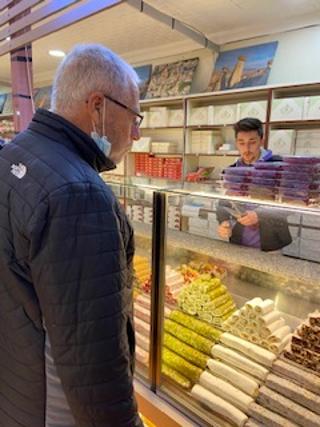
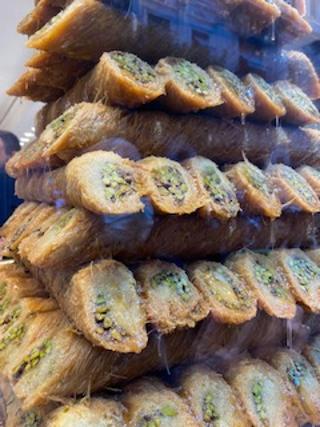
Our six days in Istanbul were filled with things to see and do, and overall we thought it a beautiful, interesting city with its historical sites, geography, the ubiquitous candy shops selling Turkish Delights, and, of course, the beautiful handmade rugs (hard to believe that most of these shops could stay in business given how many there are). We were happy to leave though, as the density of the city began to wear on us, and excited to head to Cappadocia a short flight away.
As soon as we arrived at our hotel in Goreme, we were offered tea and had all of the tours available explained to us. Under normal circumstances, we probably would have been put off by this blatant selling, but in hindsight, not only wasn’t it pushy, the information provided proved to be invaluable and timely. We were told that if we wanted to do the hot air balloon ride, which of course we did, the following day the balloons would be flying but they couldn’t guarantee that would be the case the next two days. At first, you’re inclined to think this “impending doom close”, commonly employed by used-car salespeople or FOMO (fear of missing out). We were only going to be in Cappadocia for three days so we happily agreed to leave the following morning for the sunrise balloon ride and were so happy we did as no balloons flew the other two days we were there. We learned from talking with one balloon company’s owner that, in fact, over the course of 365 days only 240, on average, are suitable for flying. Imagine how disappointing it was for this one woman we met, who had brought with her a dress she would wear on the ride only for the ride to be canceled during the few days she would be in Cappadocia.
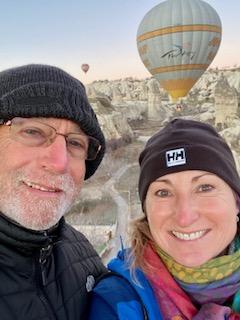
The following morning we awoke at 5:30 to -5 degrees C (23 degrees F) to board a van that would then stop at a few other hotels to pick up others for the ride. Given that there are up to 150 balloons flying on any one single day, this scene is almost comical, with vans scurrying all over town to pick up passengers.
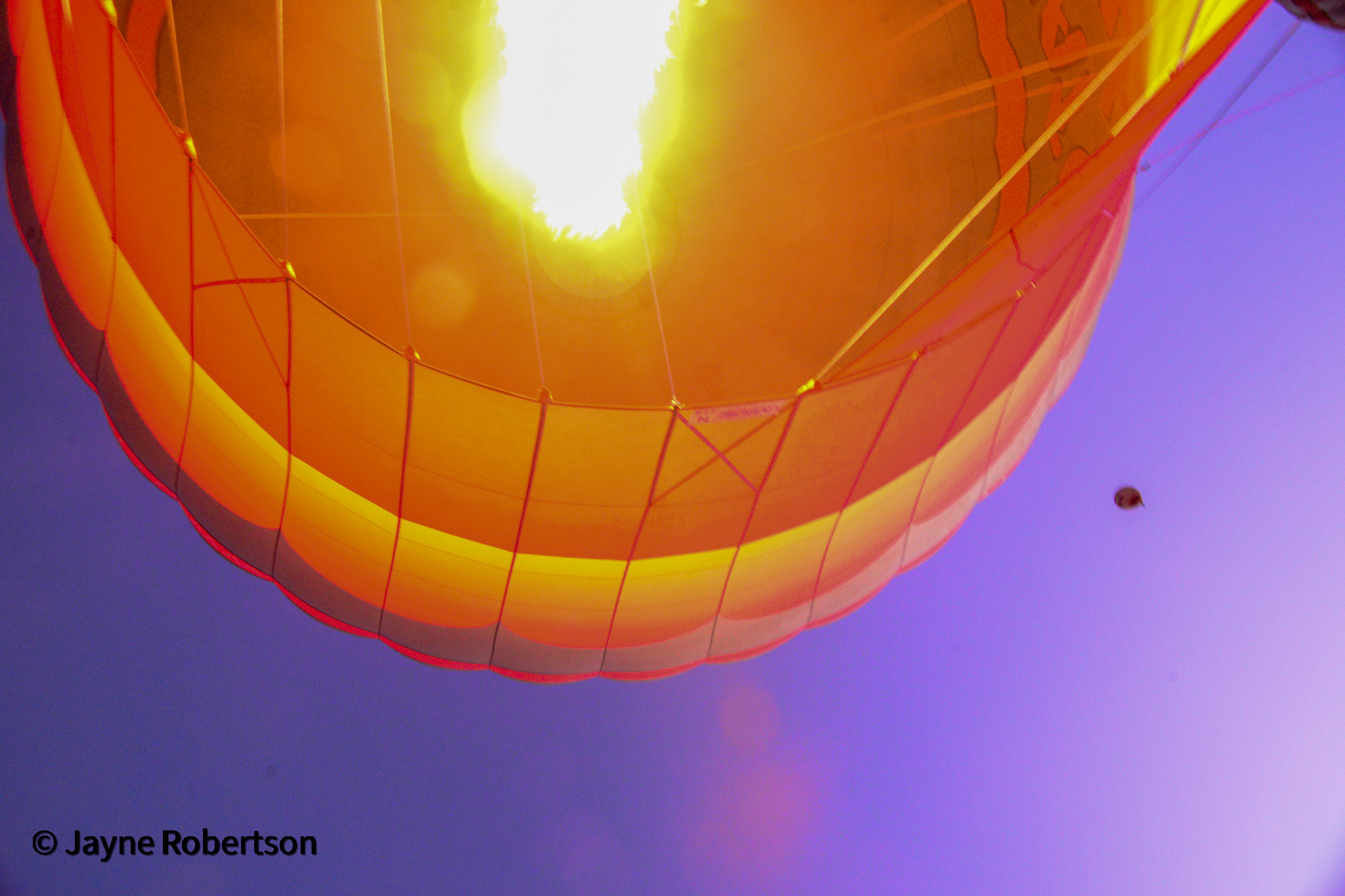
When we finally arrived at the launch site, the balloon operators are preparing for the ride and 15 of us climb into the balloon and off we go. Not all of the balloons depart simultaneously, there are two different times, 15-30 minutes apart, but it is quite the scene as the sky fills up with those multi-colored balloons over rock formations that appear to be other-worldly. While Cappadocia’s popularity in recent years is attributed to Instagram photos, they don’t do justice to the tranquil scene and ride that transpires over the next 60 minutes. You’re not even thinking about how cold it is; the scene is mesmerizing and otherworldly.
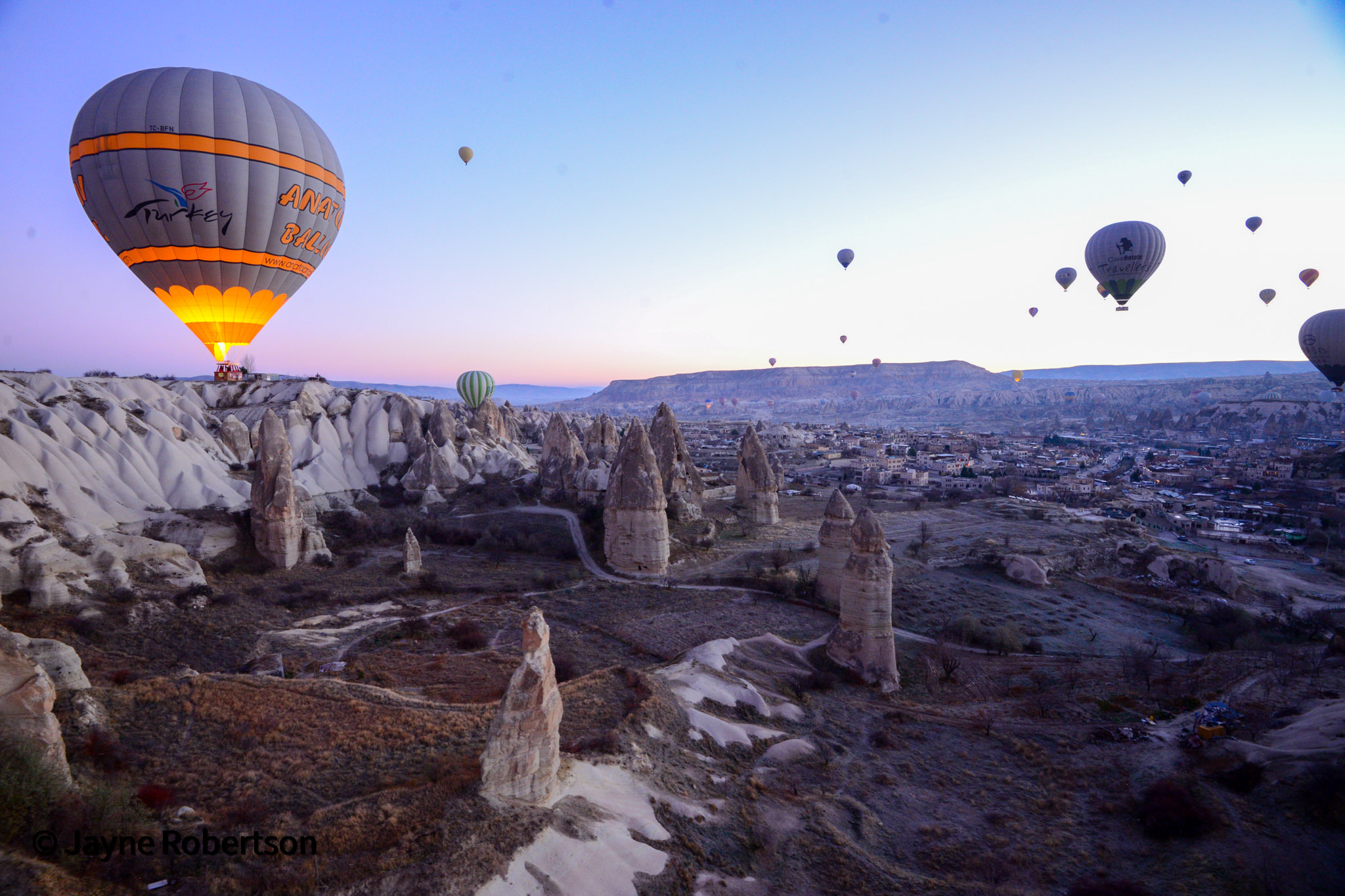
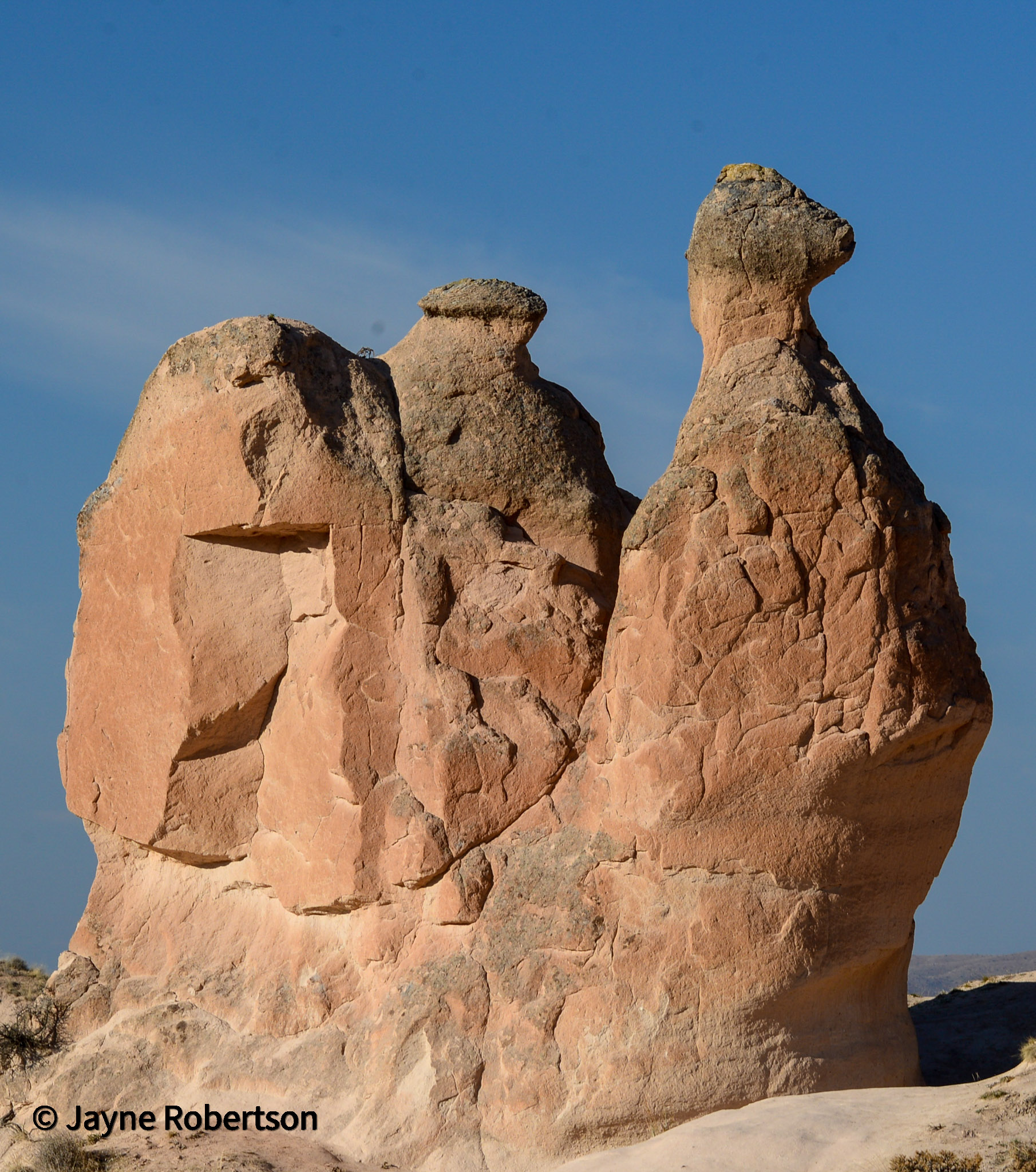
The rock formations of Cappadocia were formed by thousands of years of erosion from active volcanoes two million years before. These rock formations, commonly referred to as Fairy Chimneys, can be seen throughout the Cappadocia region and served as underground cities and monasteries.
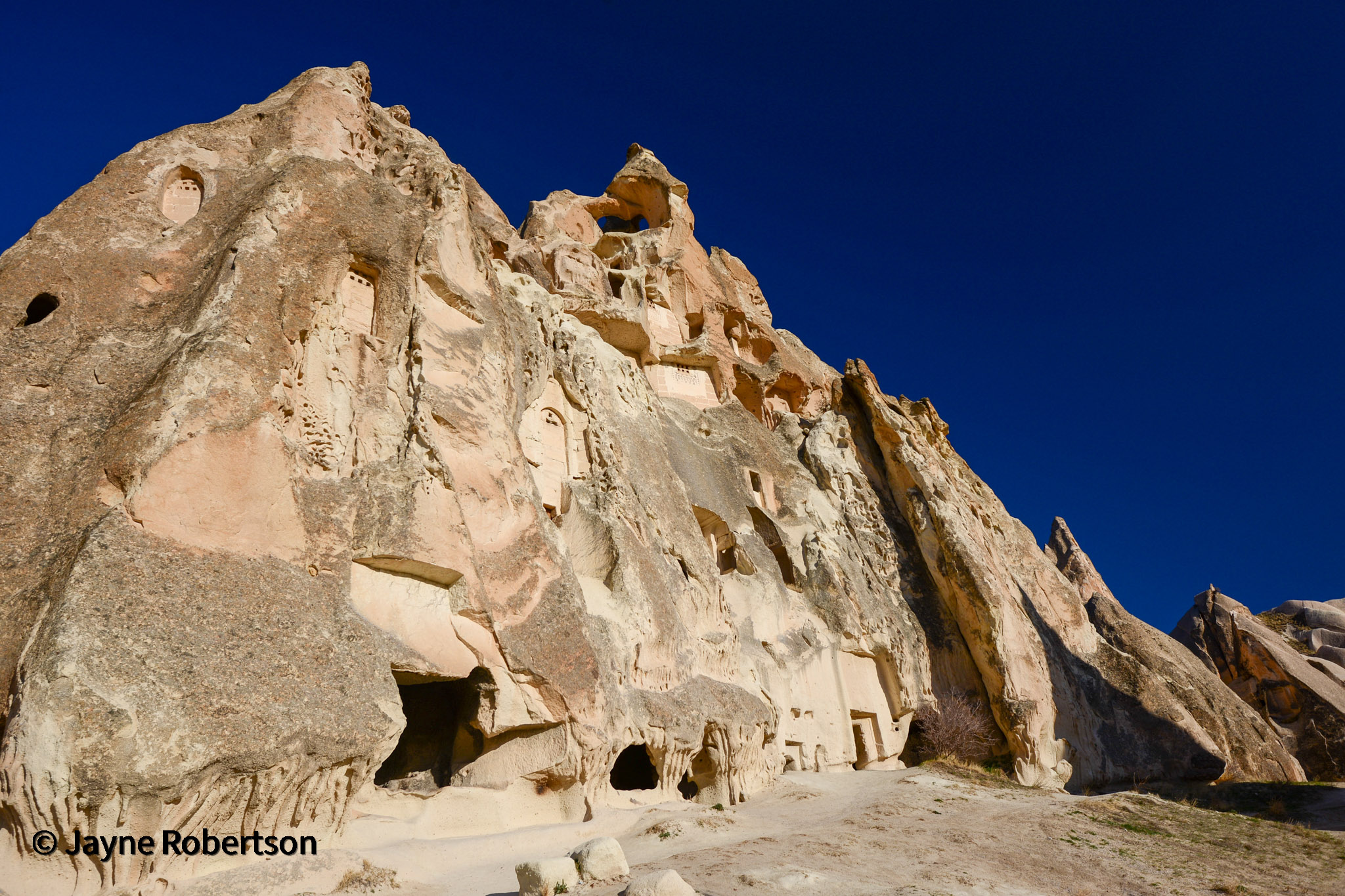
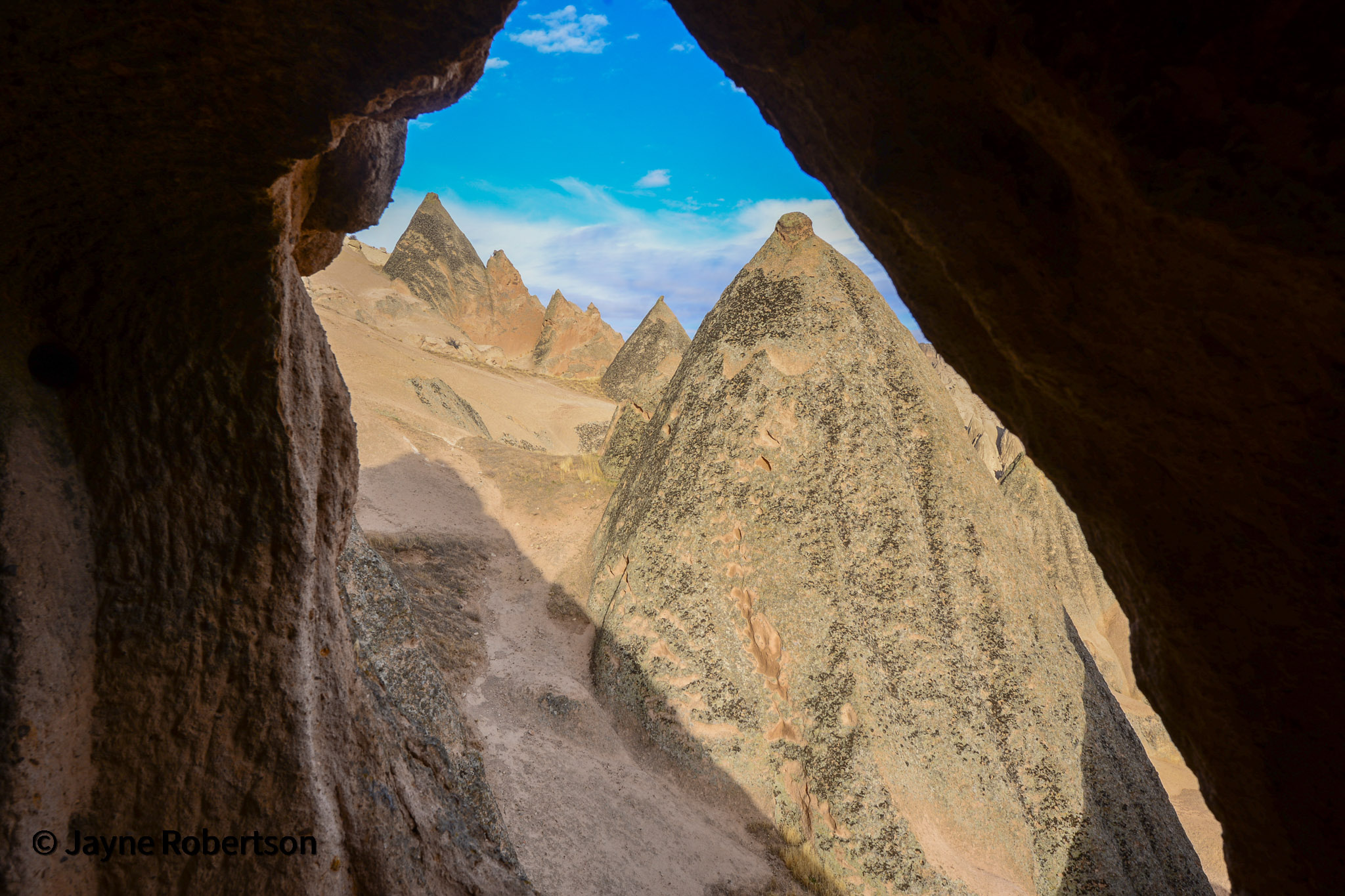
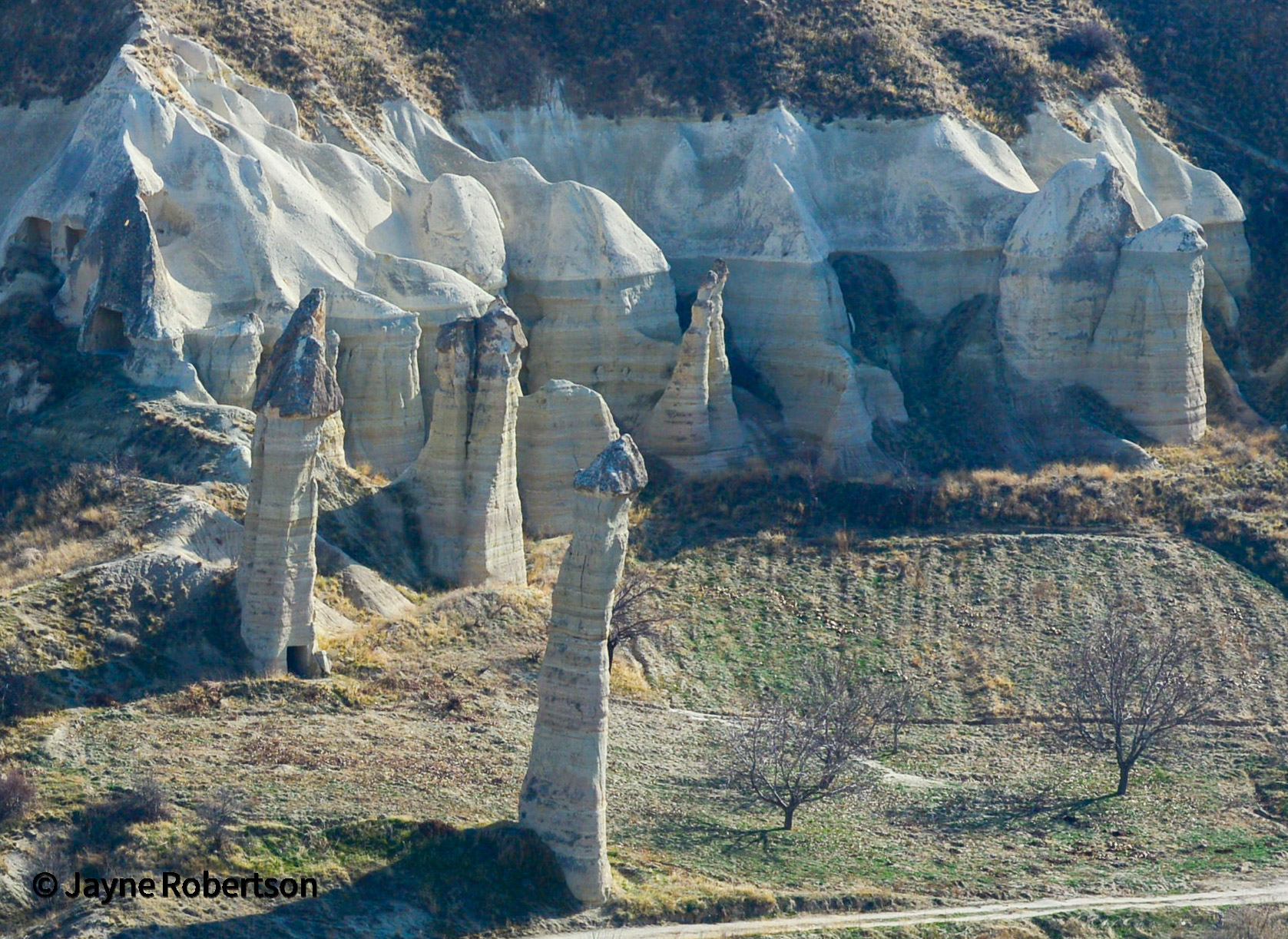
The day after our balloon ride we had a tour of one of the 150 ancient underground cities, Kaymakh, a city that was once inhabited by 30,000 people. The city has hundreds of labyrinth-like tunnels which visitors can explore, which we did. The purpose of having low, narrow, and long tunnels is to restrict the mobility of the enemy. As you might imagine, these tunnels are quite narrow and maybe three feet high, so making it through required that you be fairly flexible and not claustrophobic, two attributes that are not mentioned when you’re about to make your way through the “city”.
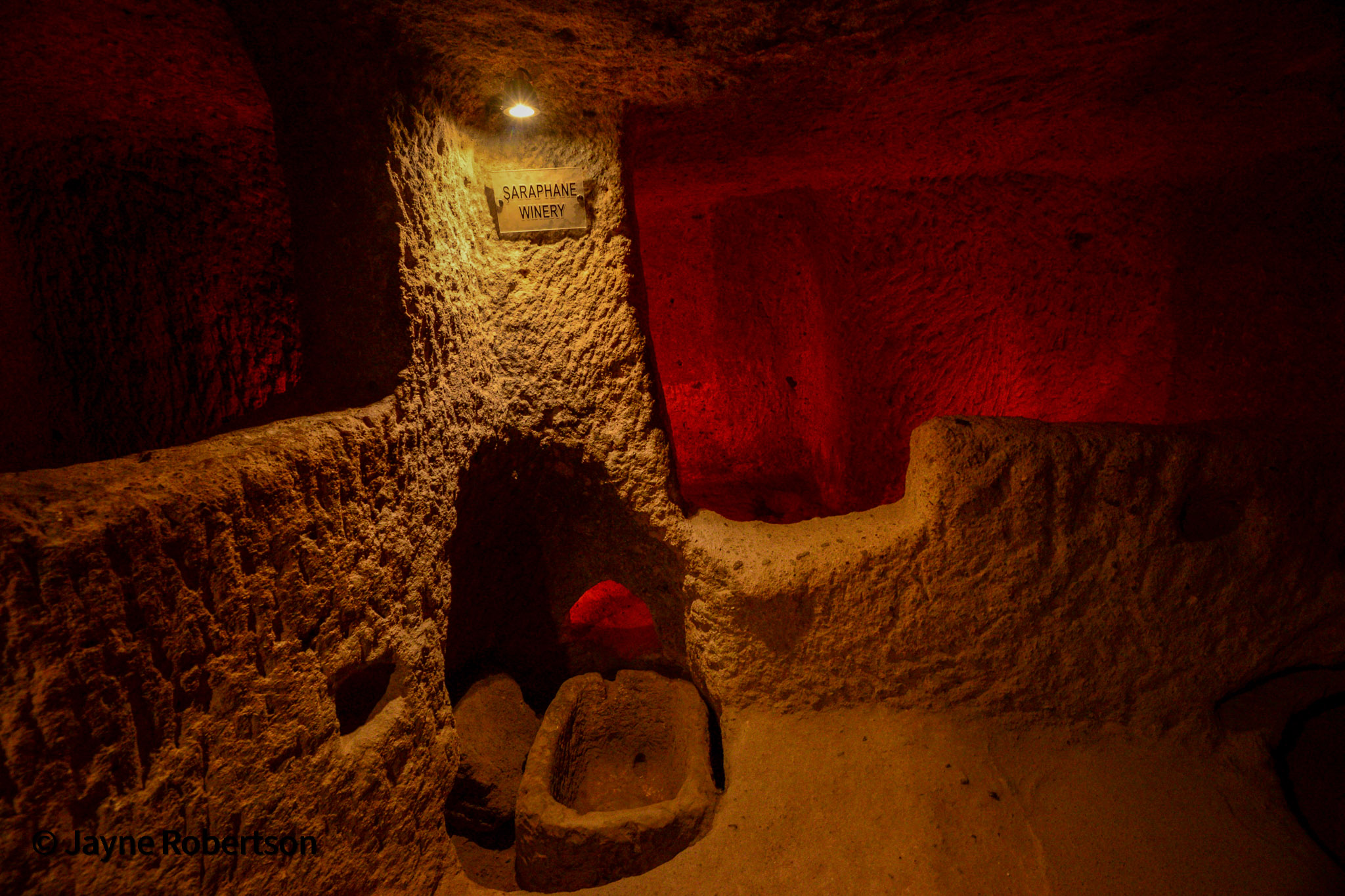
When we arrived back at our hotel, I remarked to the owner that while the tour of the city was interesting, it perhaps should have some disclaimer for those who might not want to make the trek for certain physical or psychological reasons. He laughed as he told us of a time he took a group on the tour and one of the people was a bit large and another was claustrophobic and happened to be behind one another in one of the tunnels. First, the large woman stopped because she got “stuck” trying to make her way through and the man behind her started experiencing some claustrophobia. The man did what I suppose any one of us might do in a similar situation and bit the woman’s behind which had the desired effect of getting her “unstuck”! We all had a big laugh as the visual of this scene was pretty hysterical.
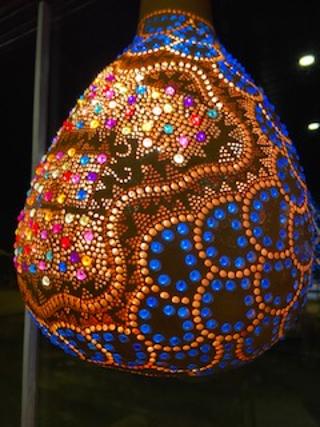
Our three days in Cappadocia were truly magical. Unlike Istanbul, we found the people very friendly and eager to learn about us. Of course, we enjoyed getting to know a few of the locals, like the owner of a popular restaurant named Pumpkin. As you’re seated in the restaurant you can’t help but notice the beautiful gourds that have been made into colorful light shades. When we told the owner how beautiful they were he proceeded to tell us of his hobby of making these shades and then went through the step-by-step process he employs in this craft. Not only were the shades gorgeous, but the food was also as well.
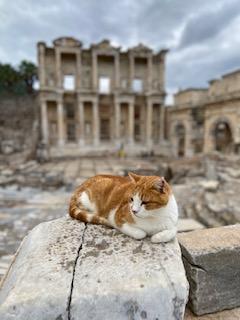
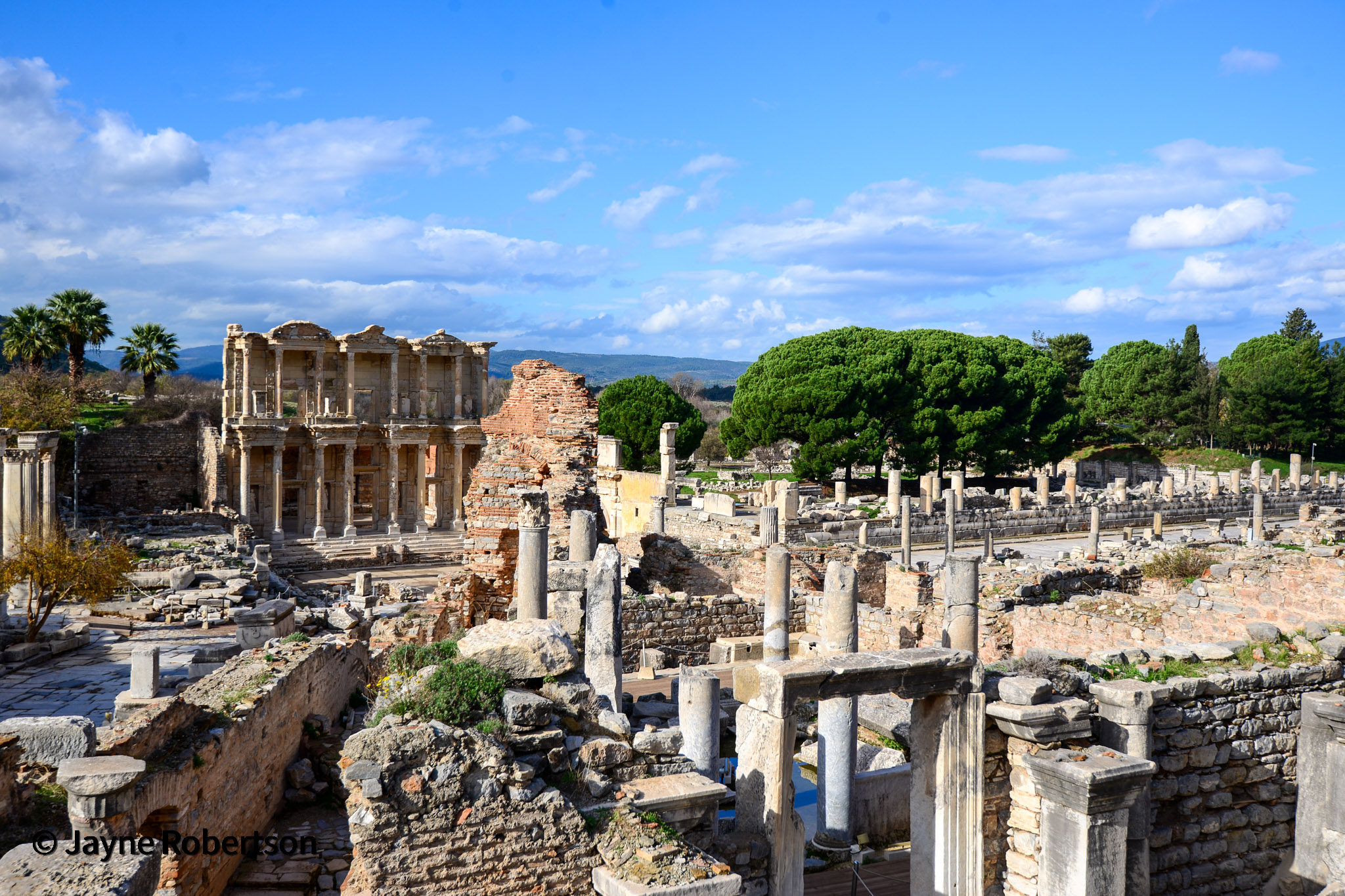
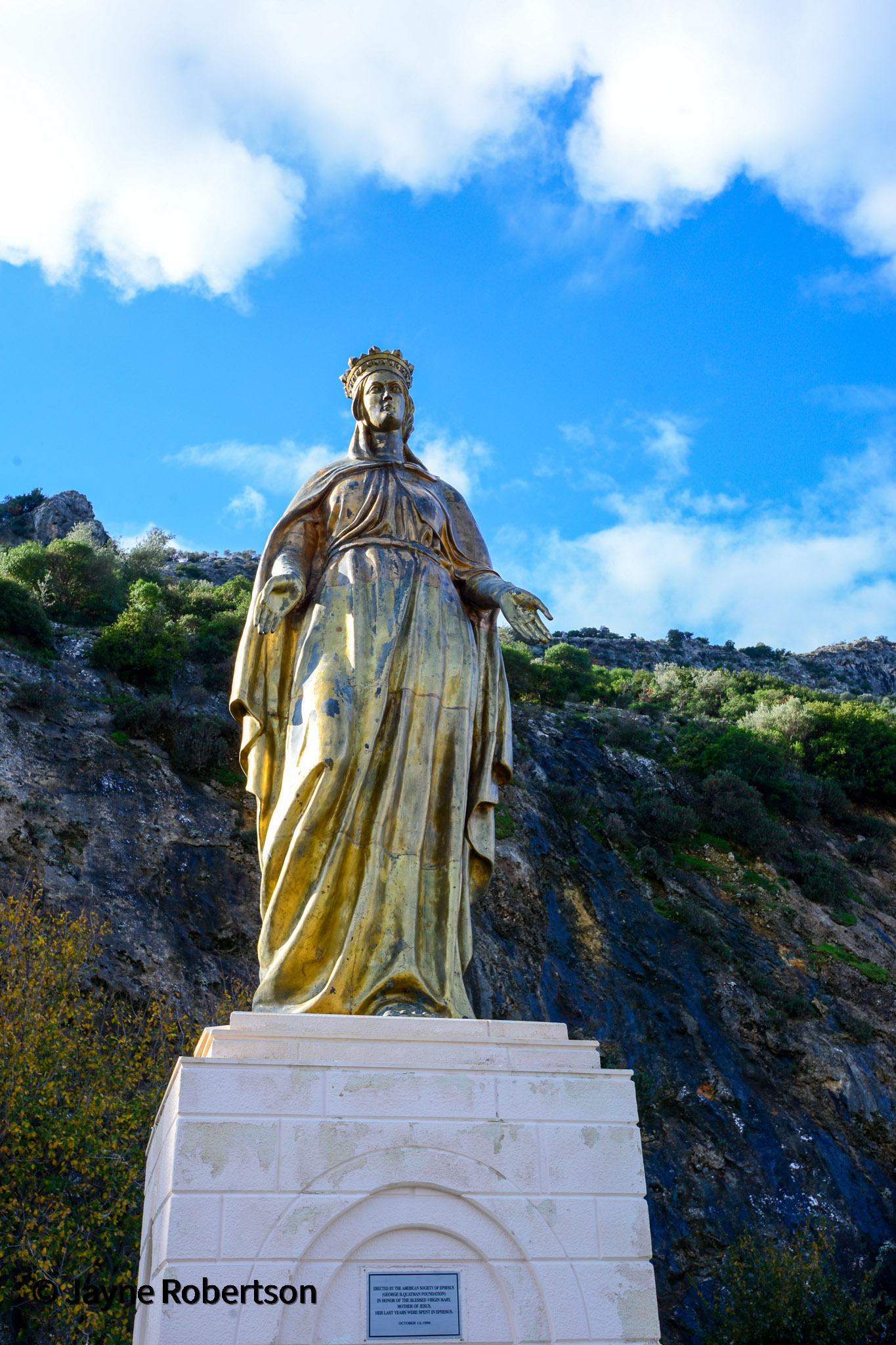
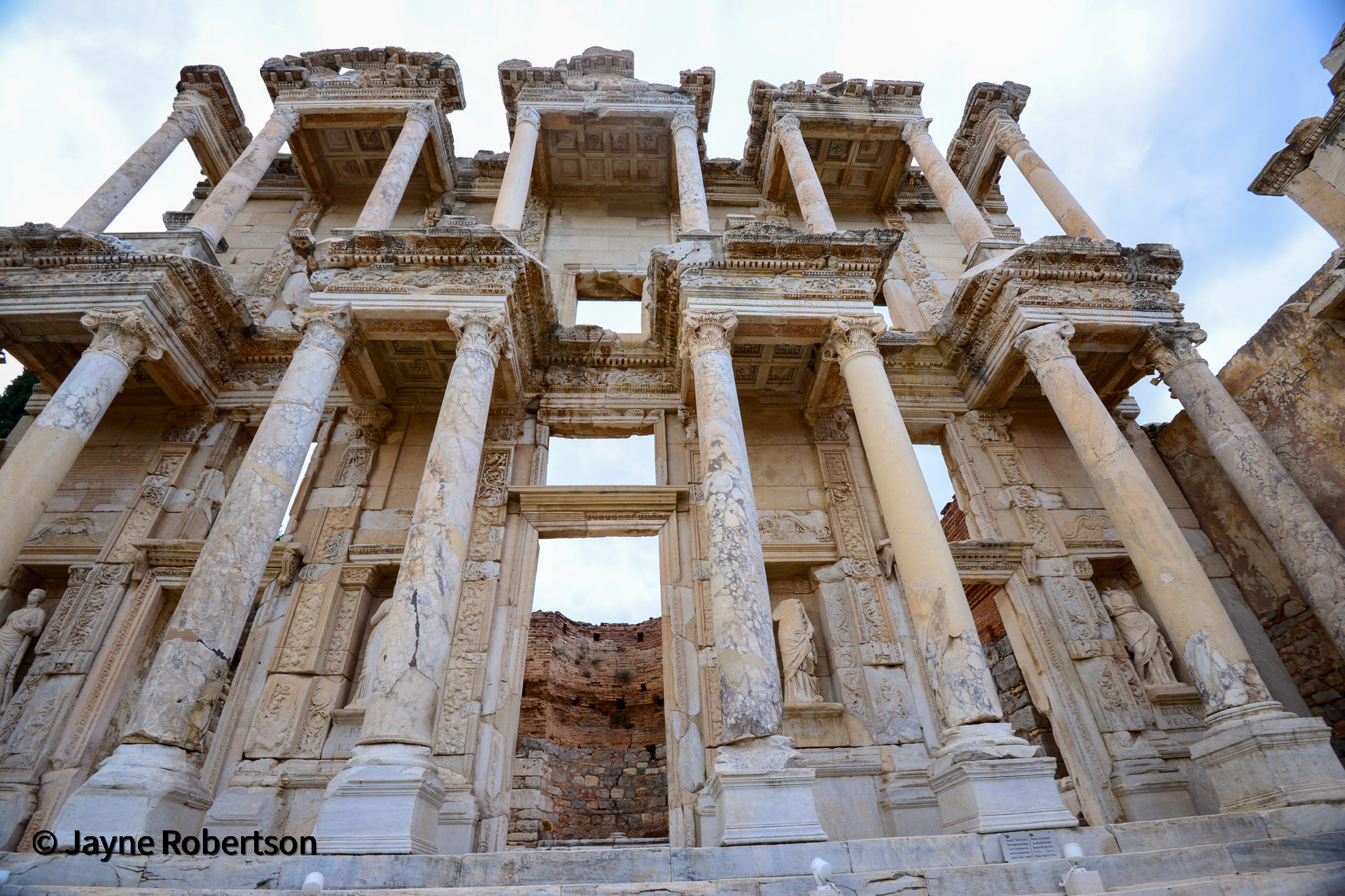
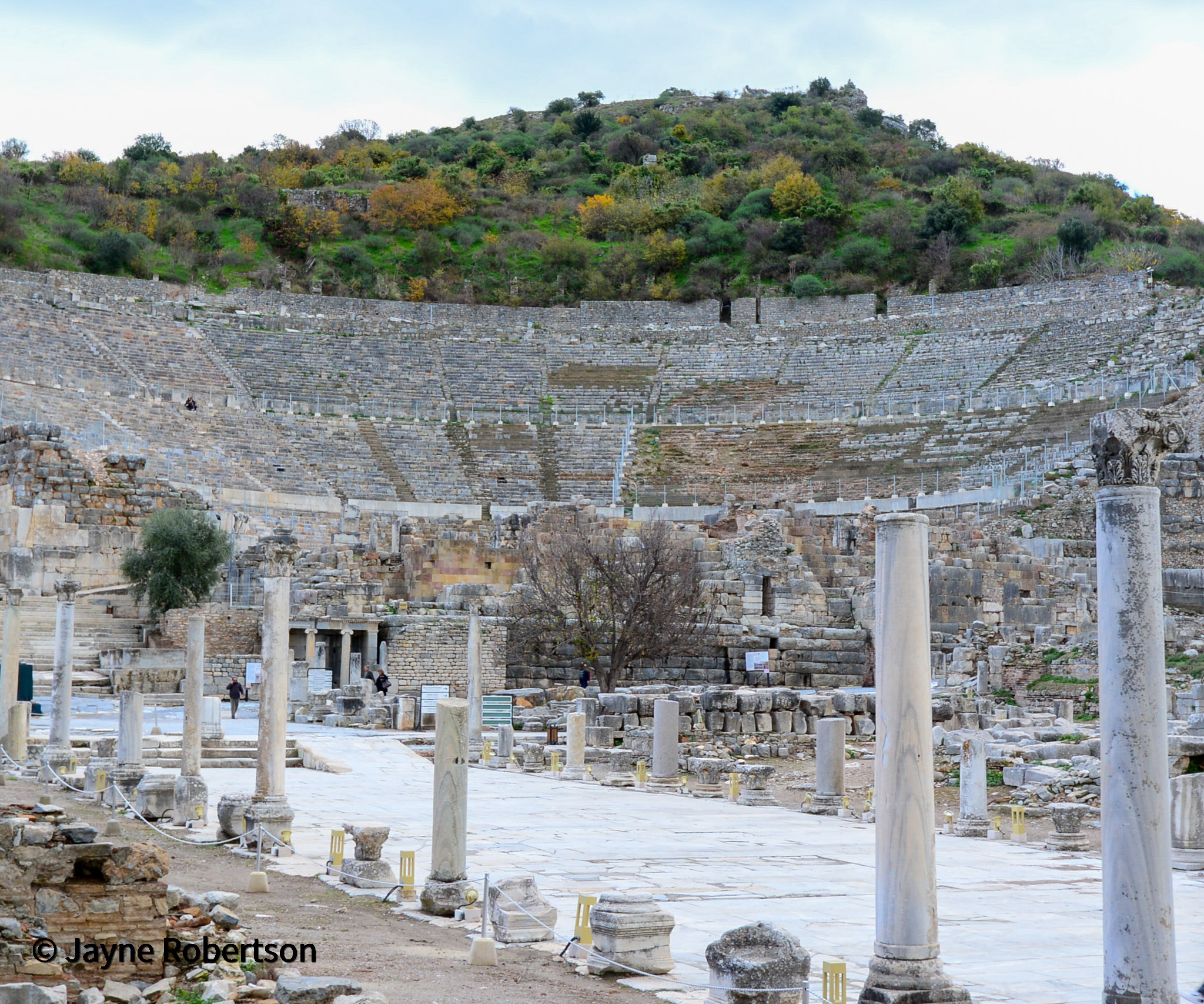
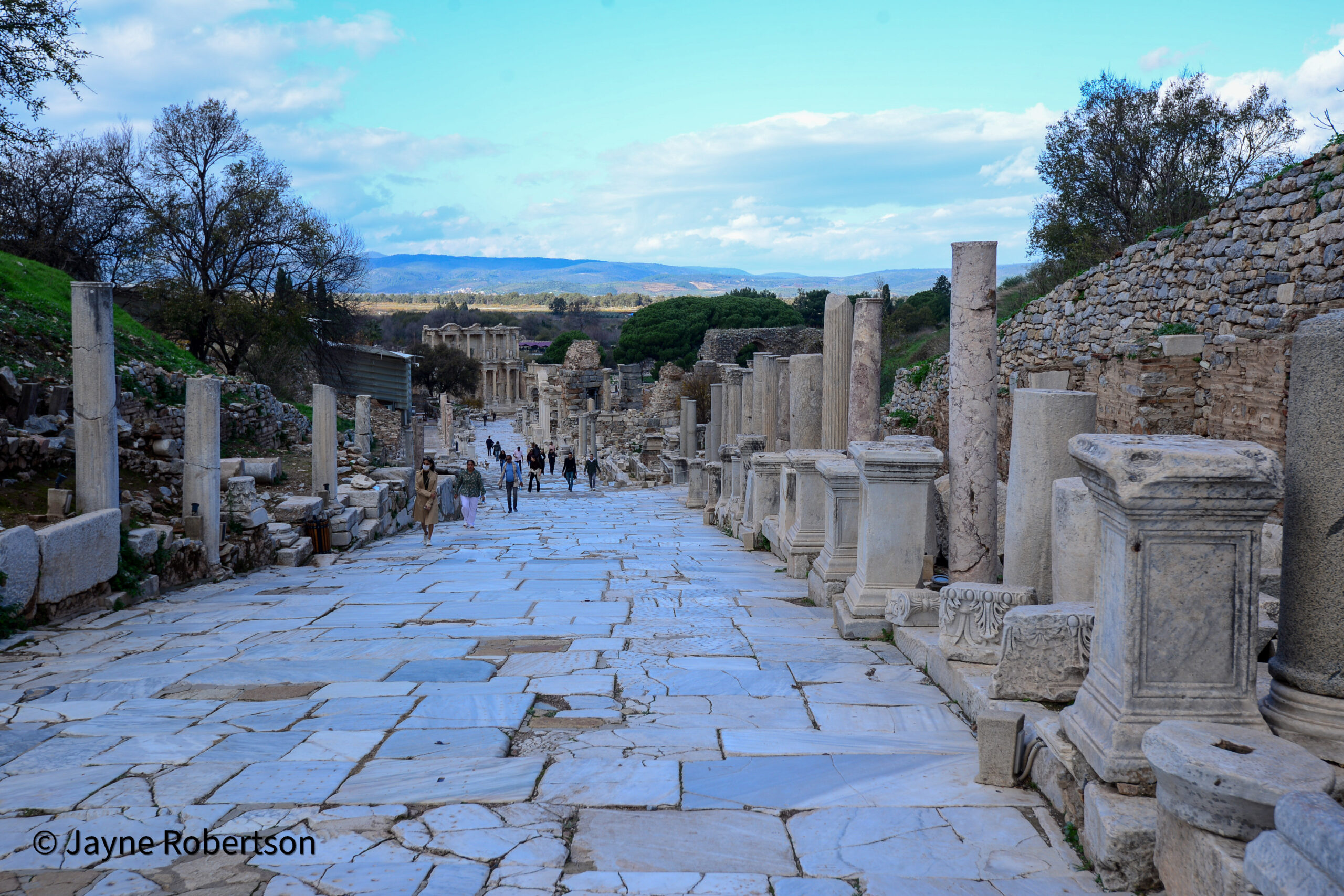
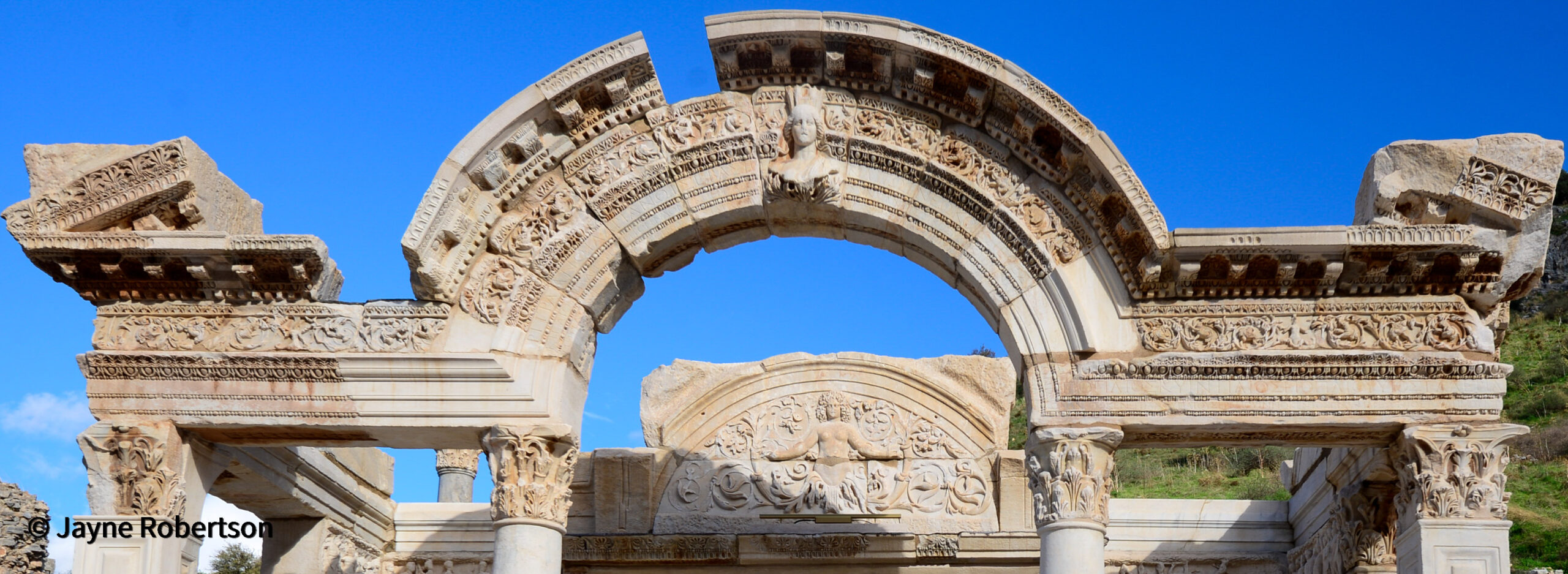
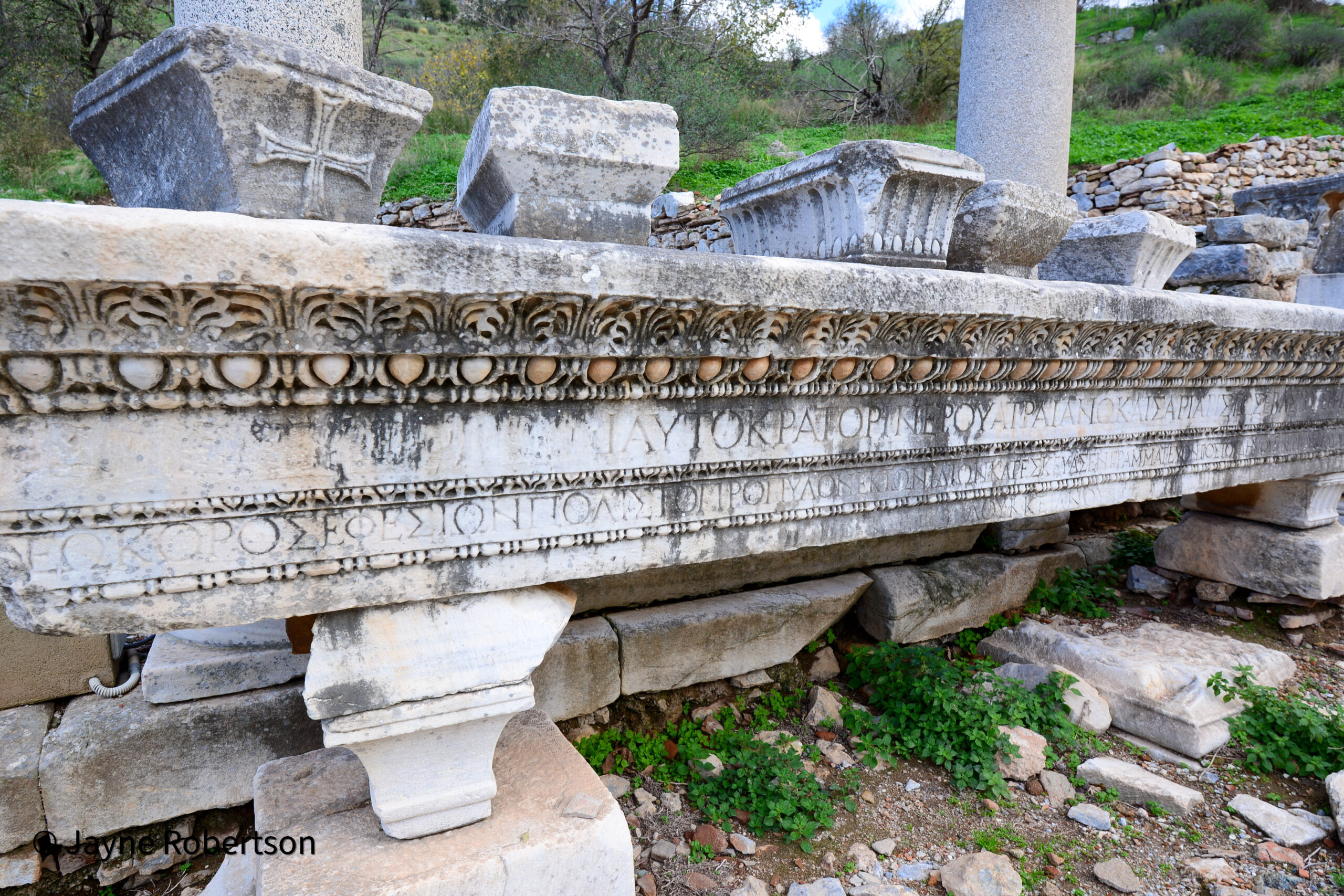
From Cappadocia, we took a short flight to Izmir, where we were picked up by our guide, Selin, who was recommended to us by the hotel owner in Cappadocia. We were first driven to the House of the Virgin Mary, believed by the Catholic pilgrims who visit to be the place where Mary, the mother of Jesus, spent the remainder of her earthly life after she was taken there by Saint John. Next was was our primary destination the ruins of Ephesus designated a UNESCO World Heritage in 2015. It was great having Selin as our guide, as her father was a tour guide for many years and she would tell us stories that her father related to her about the ruins. It was a nice added personal touch.
Our final stop in Selcuk was a carpet weaving collective, where we saw how the rugs were made by women who were taught the craft by their mothers. The rugs were absolutely beautiful, especially the ones with more contemporary designs. While I was inclined to pursue purchasing one, my better half suggested that it might not be the right time for that, considering we don’t have a house to put it in. Point well taken, and although I could easily come up with counter-arguments, we left without any carpet, only a business card because, well, you never know.
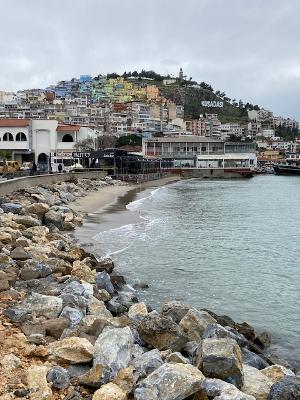
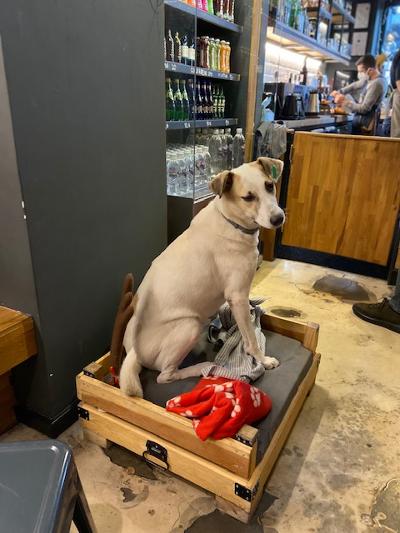
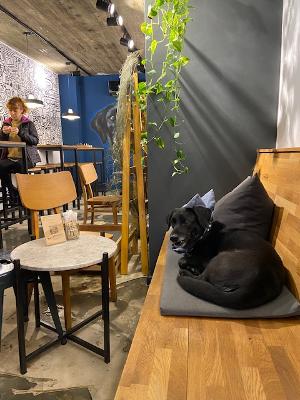
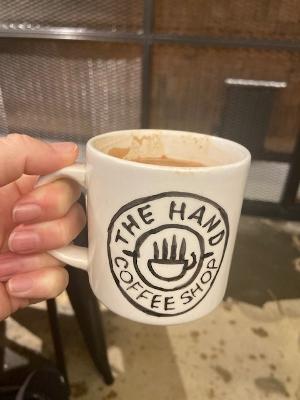
Our final stop in Turkey was Kuşadası, a beach resort town on Turkey’s western Aegean coast. It’s primarily a jumping-off point for those on cruise ships wanting to visit Ephesus. It has a seafront promenade, marina, and harbor lined with hotels and restaurants, where we found our favorite coffee shop called “The Hand” a dog-themed coffee shop, whose owners had a few of their dogs sitting on their cushions in the shop. There was also a mural of dogs in the shop, so as to let anyone who enters know that dogs are as welcome here as anyone else.
Just as cats are ubiquitous in Greece, stray dogs can be seen throughout Turkey. They are beloved creatures in Turkey and you will see many of them with their ears nicked or tagged to identify them as neutered and vaccinated. It is believed there are 100,000 stray dogs in Turkey that have a no-kill policy. As of this writing though, President Erdogan, loved by some and disliked by most of the people we spoke with, in an effort to distract attention from soaring inflation and the huge devaluation of the Turkish lira, has declared war on these strays by ordering them captured and brought to animal shelters, where critic believe many of them will be killed.
Despite the chilly weather, we very much enjoyed our time in Turkey. For me, the highlight was unquestionably Cappadocia with the views from our balloon ride, the underground city, the friendliness of the people, and the great mapo tofu (hot bean curd made by a chef from China) I had at a Chinese restaurant. For Jayne, it was the history of the country, Ephesus, and the balloon ride. There’s so much more to see and do in Turkey for another, warmer time!