

written by ed; photos by jayne
(For those of you who don’t follow Jayne on either Instagram or Facebook, you may not know that we are presently in Sri Lanka, having arrived just a few days ago. Also, if you place your cursor on the map of the world above, and use the zoom option on the right, you can click on the red markers and see where we have been thus far. Obviously, I’m a bit behind on my blog, as we’d also been in Turkey for a couple of weeks after Greece. So, please know this blog will not be in real-time!)
There are two determining factors as to where we travel – the weather and Covid-19. As warm weather people, we prefer to travel to warmer climes, and we try to avoid any countries that are experiencing an uptick in Covid cases. To that end, Greece seemed to be a good option as our next destination after Egypt. Of course, we knew that the weather in Greece in mid-October would not be ideal for beachcombing, but then again, we also knew that most tourists would be gone so beaches would be sparsely populated if populated at all. Moreover, low to mid 70° F (22° C) isn’t terrible! Jayne had visited Greece three times in the past (I had never been), and since she had never been to Rhodes it made sense for this to be our first stop in Greece.
We had a short layover at the Athens airport before departing for Rhodes. One of the logistical pieces we had heard to consider when flying from one country to another, is the proof of “onward travel”. Obviously, countries do not want you to stay for longer than your visa permits unless you have a visa that allows such. In the case of traveling to Greece, you are not allowed to stay in EU or Schengen countries for more than 90 days during a 180 day period. Some accounts said that we would need to show proof of onward travel either with some type of transportation receipt, like a plane reservation, or something similar.
Prior to arriving in Rhodes, we had not been asked by any customs agent about either how long we were planning on staying or what our next destination was, so we decided not to make any onward travel plans. When we arrived in Rhodes, yup, the very friendly customs agent asked me how long we were going to be in Greece and what our plans were after Greece. With Jayne standing nearby, I told a small lie with a big smile that we would be in Greece for three weeks and then heading to Turkey. The friendly agent didn’t ask for any proof and simply wished us an enjoyable stay in Greece. Whew!
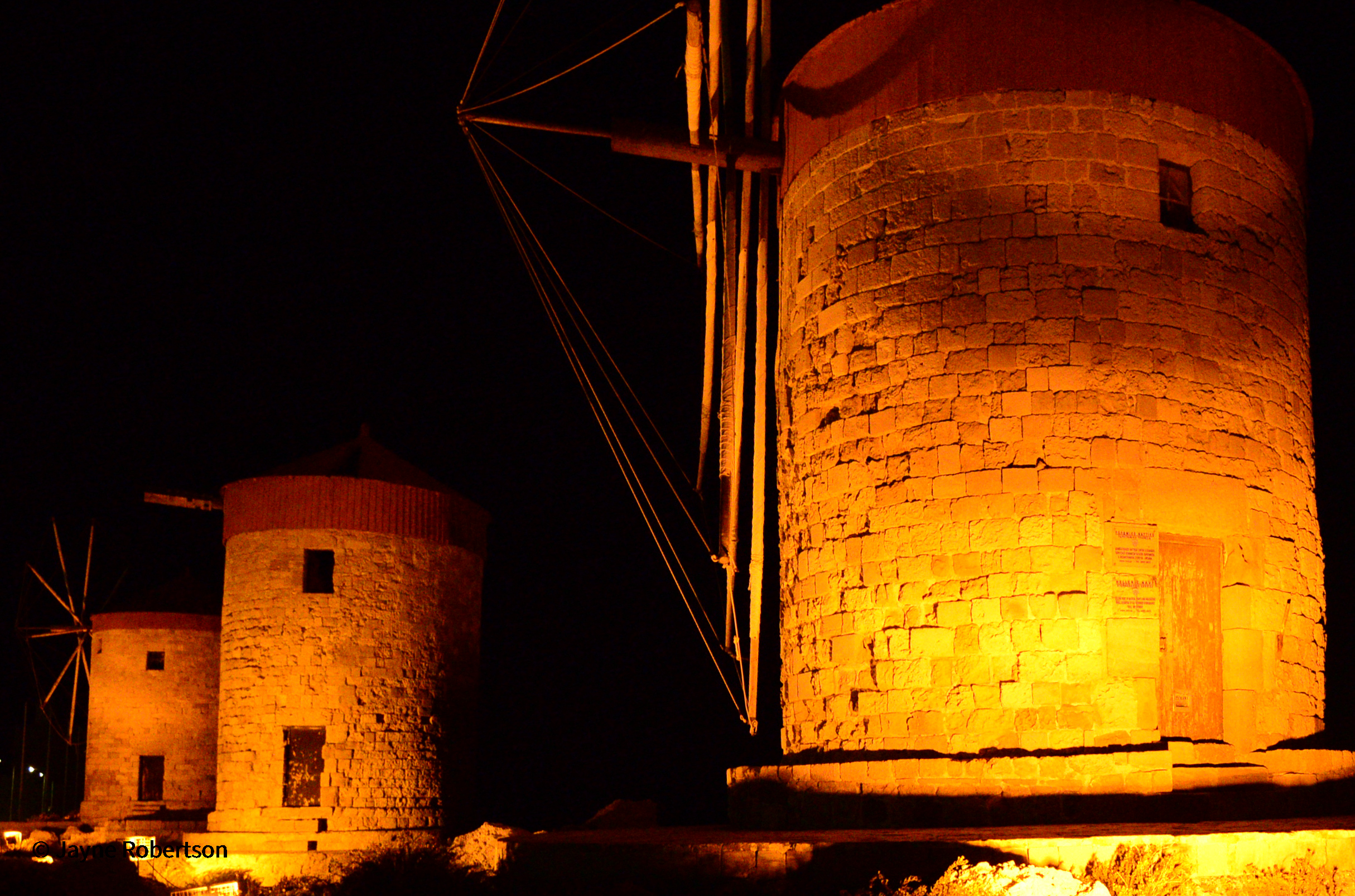
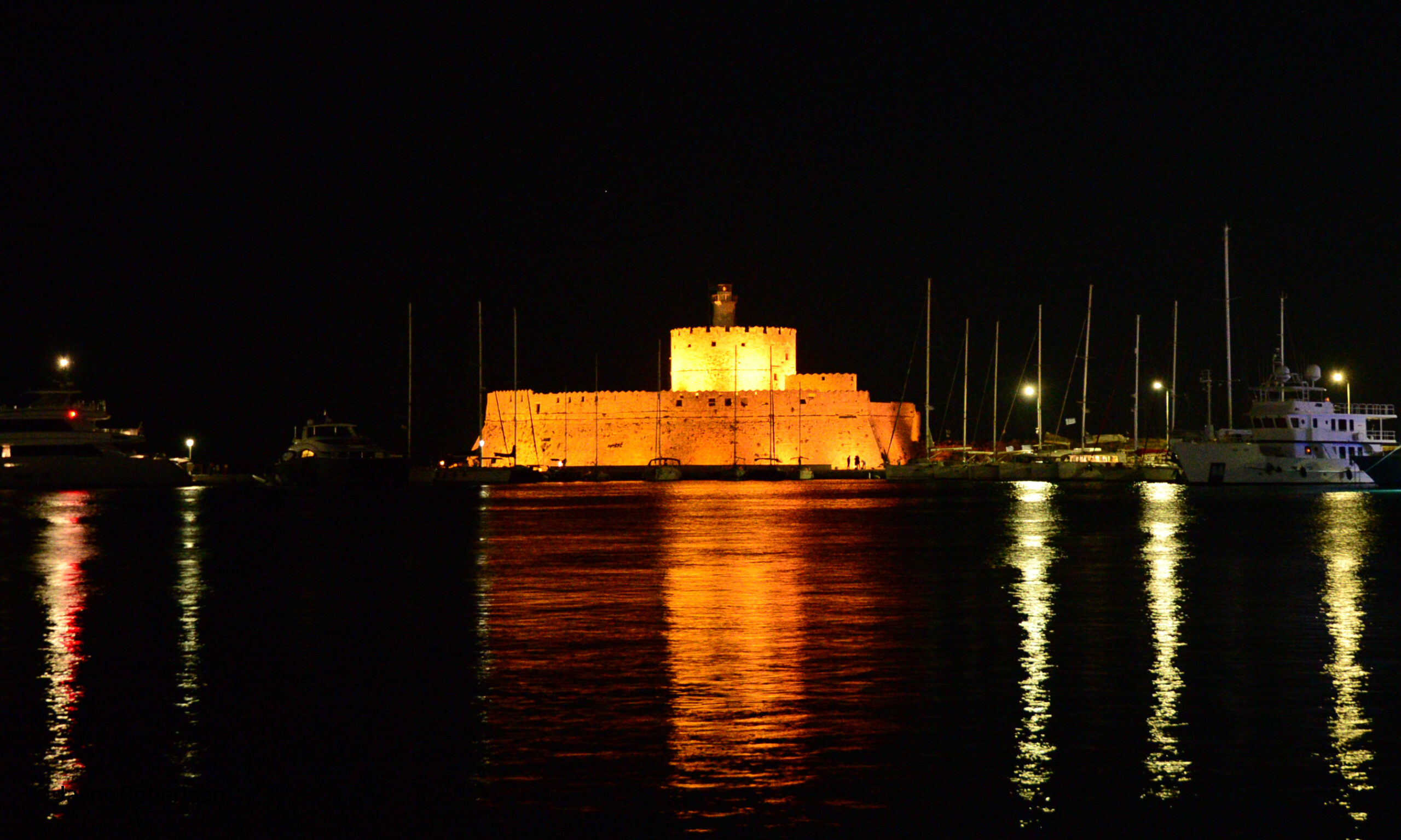
Rhodes is the largest of the Dodecanese islands of Greece and is also the island group’s historical capital. It was known for the Colossus of Rhodes, a statue of the Greek sun-god Helios, and one of the Seven Wonders of the Ancient World destroyed about 1500 years ago. Only one of those ancient wonders is still relatively intact, the Great Pyramid of Giza in Egypt, which we saw during our travels there.
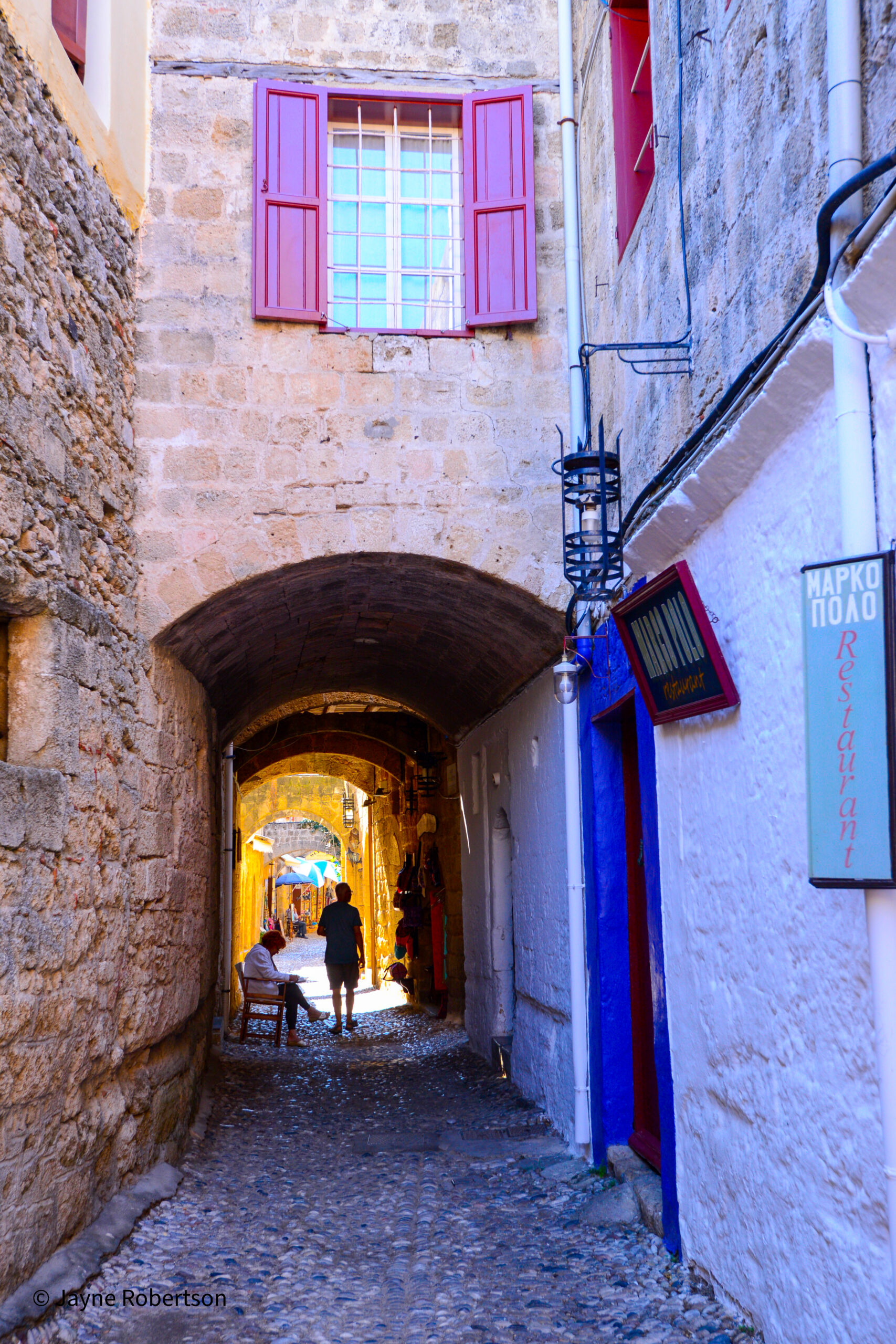
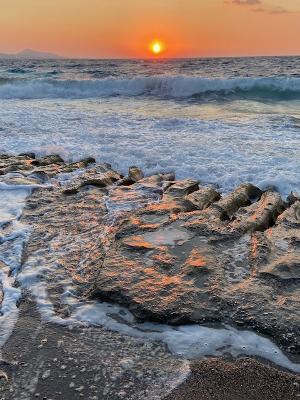
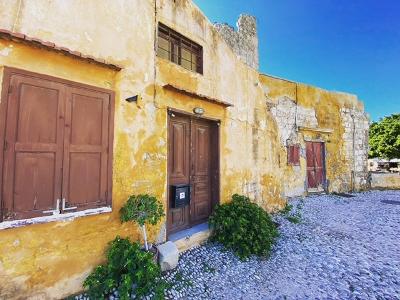
Rhodes is also well-known for its preserved medieval old town which is a World Heritage site and one of Europe’s top tourist destinations. We arrived in mid-October as the tourists began to dwindle and the number of shops and restaurants began to shut down for the season. Our Airbnb was centrally located in Rhodes, so we spent many of our days walking on the cobblestone streets of the medieval town and enjoying the sparseness of people and the relatively warm weather. It was a great place for us to slow down and relax. We even had some days where we sat on the nearby beach, taking the sunshine in and watching the fabulous sunsets.
One of the highlights of our time in Rhodes was visiting the Jewish synagogue and museum in what was once the Jewish Quarter of the island. Three of our Jewish friends had relatives who used to live on Rhodes, and unfortunately, some of those relatives perished during the Holocaust. Their memory lives on though in the synagogue where their names are engraved in stone. Seeing the names of friends’ relatives, and learning the story of Jews in Rhodes, made the visit all the more personal and meaningful.
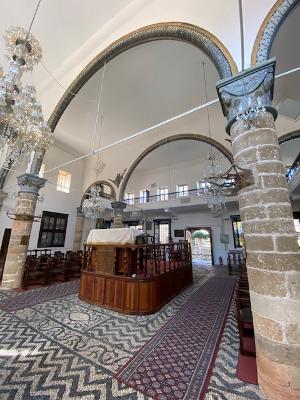
There is a long history of Jews residing in Rhodes dating back as far as, it is believed, the second century B.C. In 1523, Sephardic Jews, those who had taken refuge in the Ottoman Empire, settled in Rhodes with the already existing Roman Jews. By 1840, there were between 2,000 and 4,000 Jews living in Rhodes. With the economic crisis and political instability of the Ottoman empire in the late 1800s, many Jews began to emigrate in large groups to colonies in Africa and the United States. In 1912, Italy invaded Rhodes and in 1923 it was handed over to Italy as part of the Treaty of Lausanne, and it remained part of Italy until 1943.
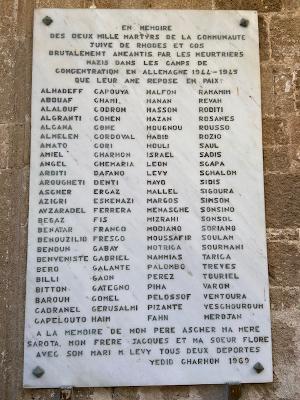
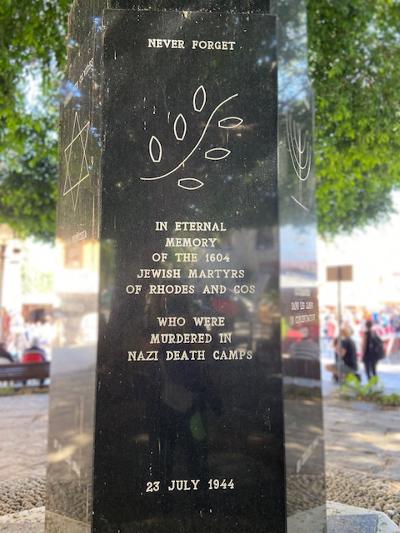
As was the case with every Italian-held area during this time, there was at the beginning more leniency and Jews were able to find shelter on the island. However, after Italy surrendered to the allies, the Germans appeared in Rhodes, imposed restrictions on Jews and amassed all the Jews in Gestapo offices, and confiscated their property. In 1944, 1700 Jews were ordered to go on 3 boats headed to concentration camps, at which point this centuries-old Jewish community ceased to exist. Only 150 Jews survived the Holocaust, and today there are only a handful of Jews living in Rhodes. A very sad chapter in world and Jewish history. There is a remembrance monument today in the old town acknowledging that tragic time.
There were some other interesting historical points of interest in Rhodes that we visited, including the Palace of Grand Masters and the impressive archeological museum.
One place recommended to us to visit on the island was the town of Lindos, so we rented a car for the day and made our way to this beautiful, and crowded town. Although Rhodes tourism at this time was slowing down, apparently Lindos tourism does not slow down in quite the same way. While the vistas were outstanding, the number of people freaked us out a bit. We were happy to have made the visit and happy to leave. If Covid was not an issue, we probably would have enjoyed our time there a bit more, but we are always on alert when we see large groups of people.
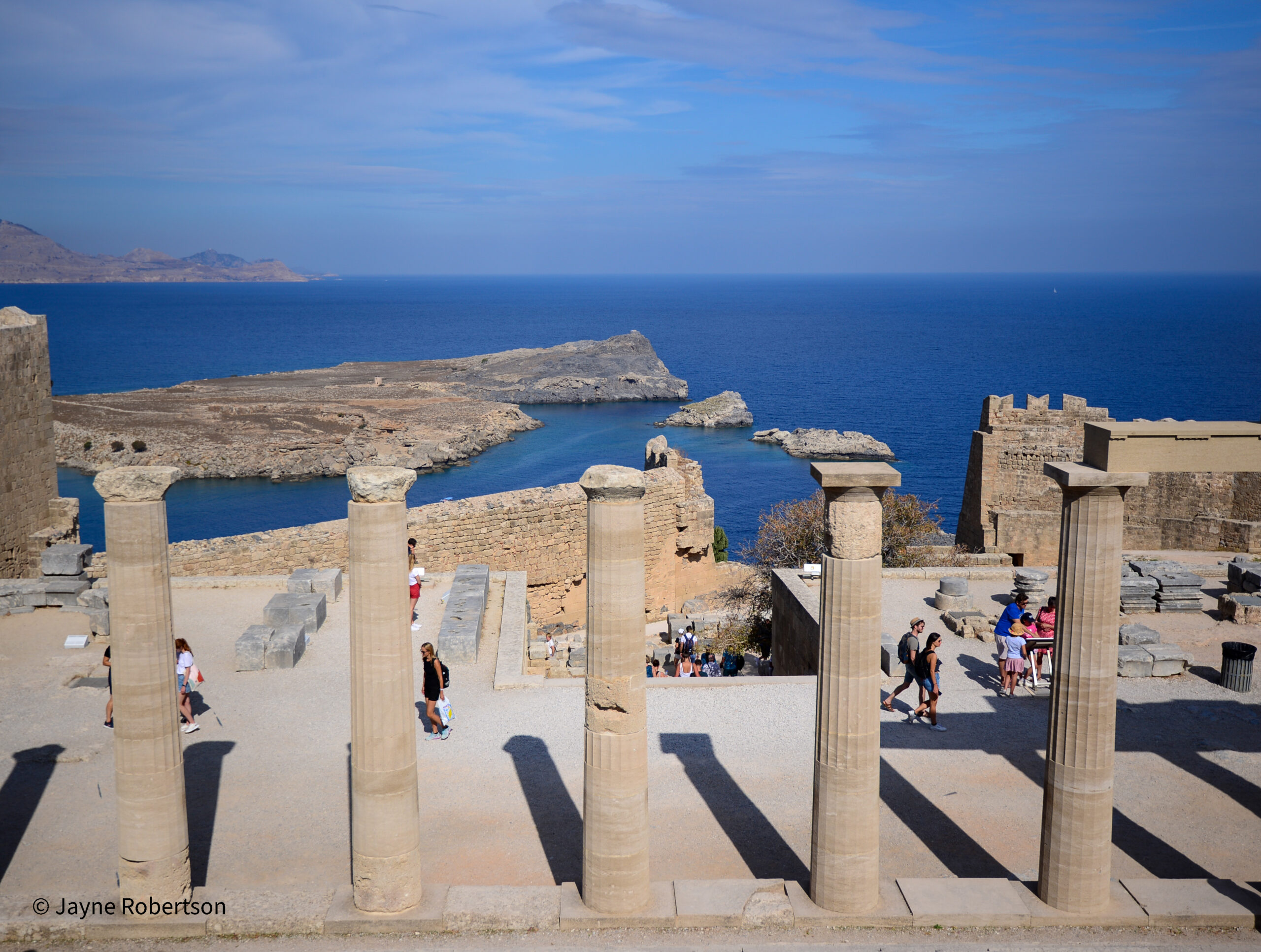
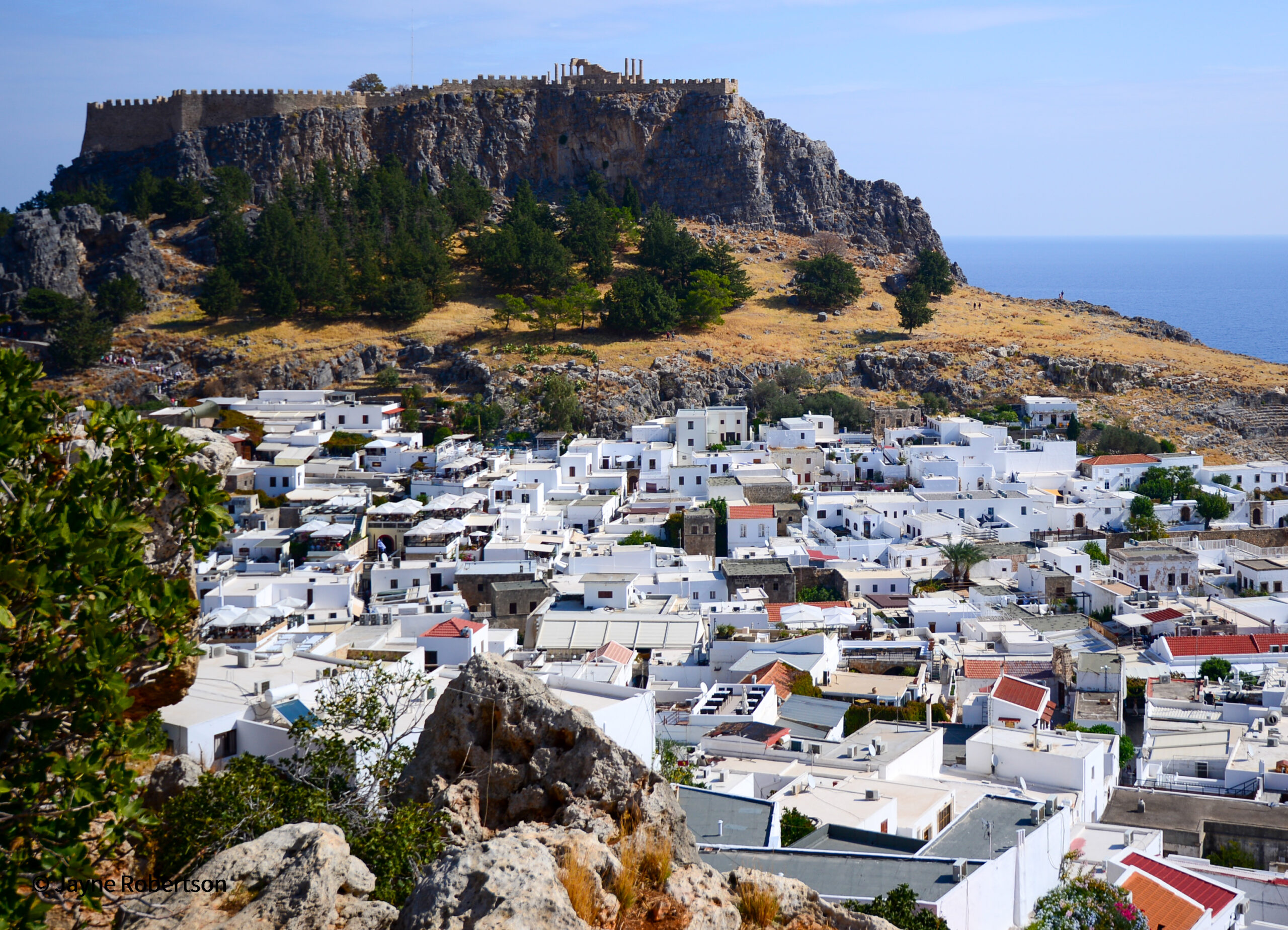
We thoroughly enjoyed our time in Rhodes, the people were friendly, the food delicious and the mixture of the old town with the newer part of Rhodes and its cosmopolitan vibe made it a place we were very happy to have visited.
KARPATHOS
Looking at the map, Karpathos was an island just a three and a half hours ferry ride away from Rhodes, which also, looking at our weather app, seemed to be a good place to spend another week. Karpathos is the second-largest Dodecanese island known for its beautiful beaches (one of its beaches, Apela, is by some accounts the nicest beach in Europe!) and a small village in the northern part of the island, where women still wear traditional dress, Olympos.
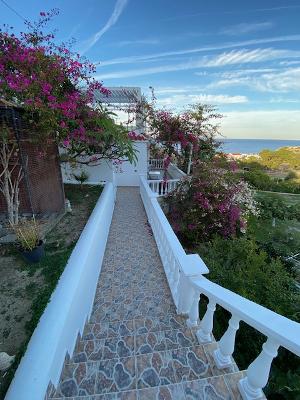
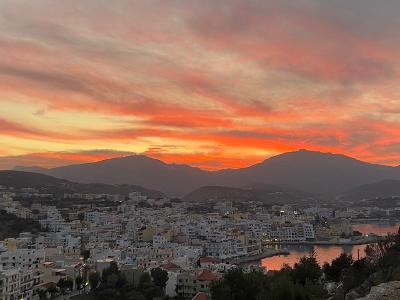
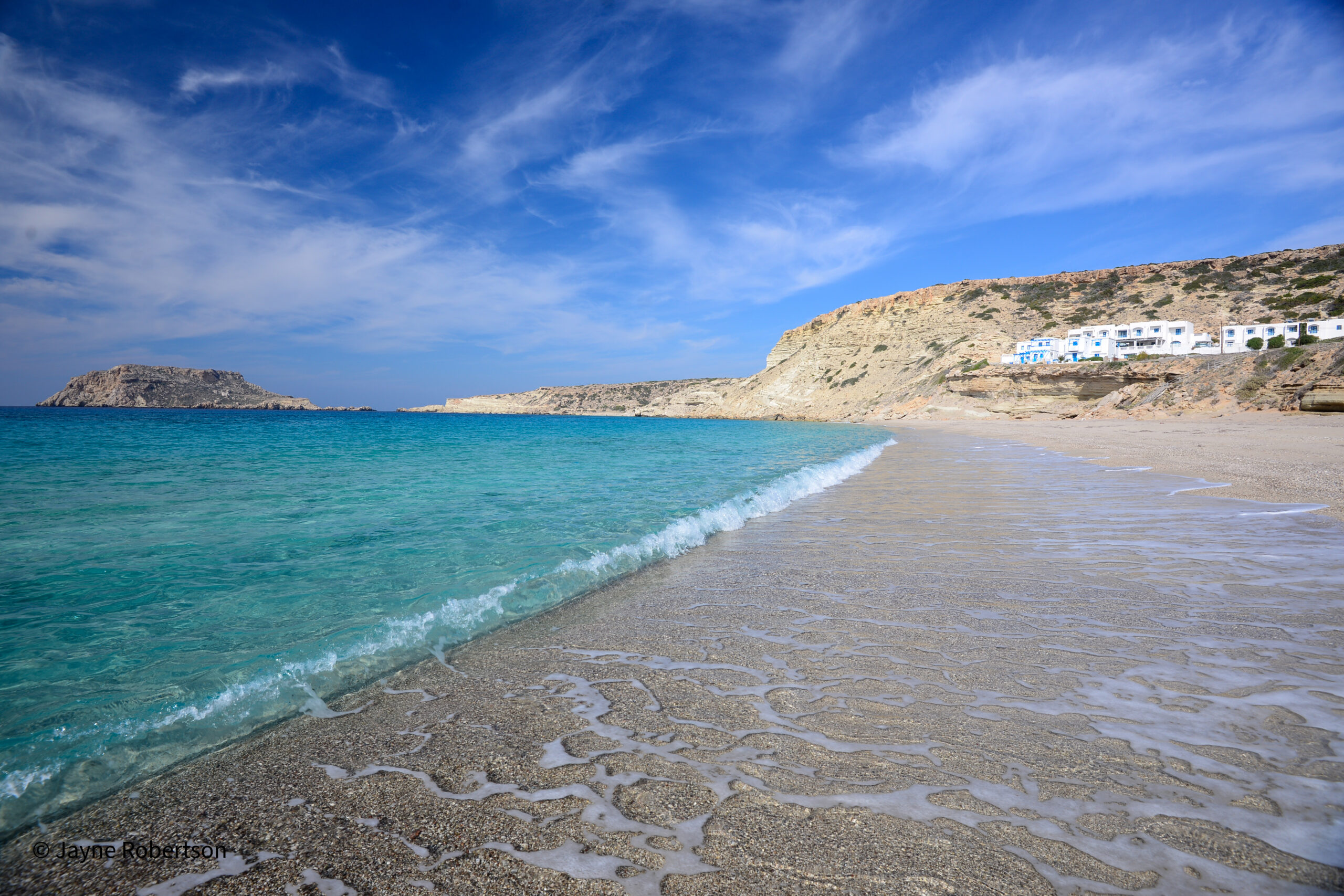
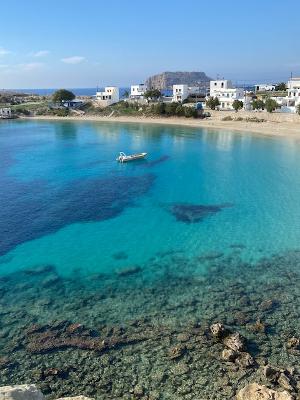
Our Airbnb was situated at the top of a very steep hill which gave us an opportunity to exercise our legs as well as offering us absolutely beautiful sunsets. We rented a car for 4 days (normally during the season the cost of a rental car is $60 per day if you can find one; we rented ours for $20 per day!) and we toured the island in search of its beaches. They did not disappoint!
Not unexpectedly, almost every beach we visited was devoid of people. Having these incredible beaches to yourself is other-worldly. You have to pinch yourself to remember this is real. While we would have liked the temperatures to be a few degrees warmer, the sea was so inviting we had to jump in and enjoy it. Of course, with no tourists around, it also means that most, if not all, of the tavernas near the beaches, were closed. Forgoing something to eat in order to have these experiences was well worth it. We did manage to find some tavernas in small towns on our drive which often led to interesting conversations with the owners. Again, when only a few tourists visit, shopkeepers and taverna owners are more than happy to chat. In Karpathos, it was even easier to engage because many of them spoke English.
During the 1940s and 1950s, many Karpathians went to Canada, the US, or some African countries, like Zimbabwe (formerly Rhodesia) to find work. As a result, many of their children wound up speaking English and when they returned to Karpathos, both languages were spoken at home. As one shopkeeper told us, nine out of ten people on Rhodes have some connection to English-speaking countries, so communication will be easy for us, and it was for the most part.
One of the recurring questions we received from shopkeepers and other Karpathians was “Why are you here? Why Karpathos?”. Over time, we realized the reasoning behind the question was, “this is off-season here, the weather isn’t so warm so why visit our island home?”. The answer was always, “we love traveling where there aren’t many tourists. If it was busy here you might not be chatting with us!” They would smile and understand that we were there to appreciate the natural beauty of the island and its laid-back lifestyle. It was no wonder that people who left Karpathos for work many years ago, returned to this hidden gem.
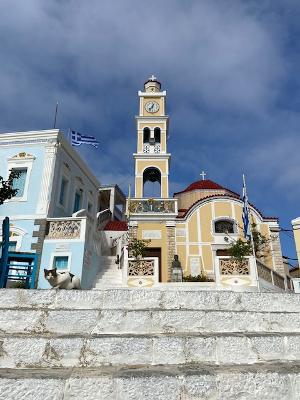
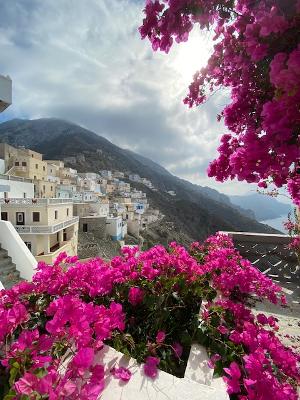
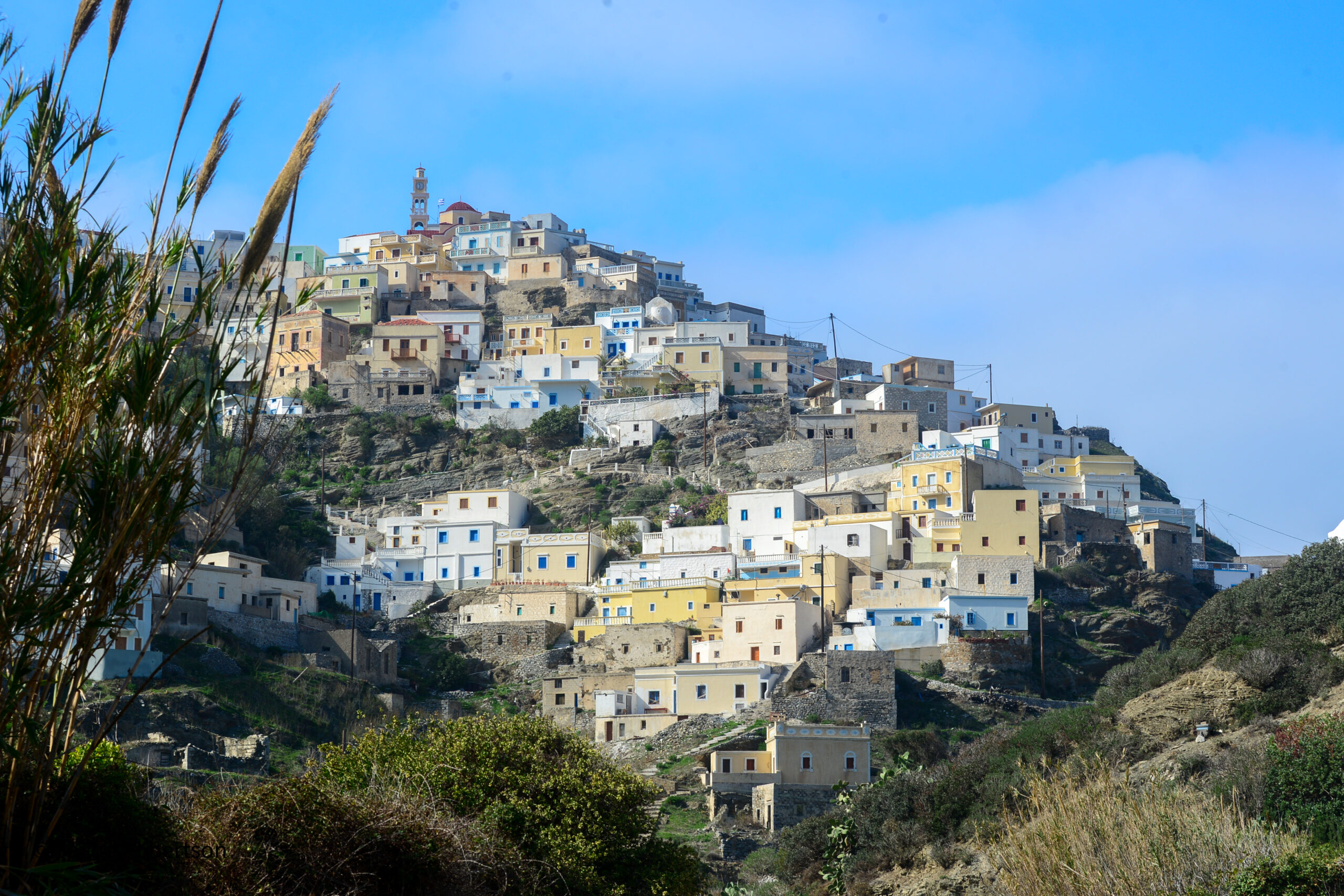
We drove the long and winding road to Olympos, where we were met by a guide we organized through Ecotourism Karpathos. The tour operator asked us for the color and make of our car so our guide would meet us at the entrance to the town. Actually, that wasn’t necessary, since we were the only car to arrive at this sleepy village. Our guide, Minas, a native of Olympos, took us on a two-hour nature walk which concluded with a visit to the small church in the village and a stop at a taverna for what we hoped would be lunch.
The owner of the taverna was very friendly and had that East Coast swagger and accent about him, that to me sounded like he was from Brooklyn. Well, he wasn’t from Brooklyn but he spent his formative years in Baltimore before his family moved back to Karpathos. He was the fourth-generation owner of the taverna and planned on passing it down to his son. Obviously, we had a lot to chat about, but we were pretty hungry, so after about 30 minutes, I finally asked him, “Do you serve any food here?”. “Sure, let me see what my wife might have available in the kitchen.” Sure enough, he came back and said he had some delicious dolmades, tzatziki, and Greek salad.
As with most places we visit, we don’t hold any expectations about how our experience might unfold. Having said that, Rhodes and Karpathos, were very pleasant surprises, definitely some of our highlights in Greece.
Next stop, Athens!
Ral city in Europe.