written by ed; photos by jayne
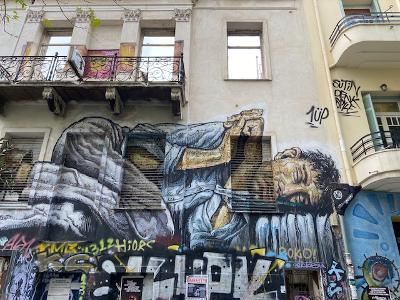
It was just an hour’s flight from Karpathos to Athens, and we had pre-arranged for an airport pickup by our Airbnb host. It was an evening flight and as we were approaching our Airbnb, Jayne and I looked at one another with a bit of distress in our eyes as the neighborhood looked, as our Aussie friends might say a bit dodgy or our American friends might call it sketchy. Some of the buildings looked like they might be abandoned, others were rife with graffiti, and so our first impressions were disappointing, to say the least. I asked the driver if this neighborhood was safe, to which he replied a confident “I think so.” Great.
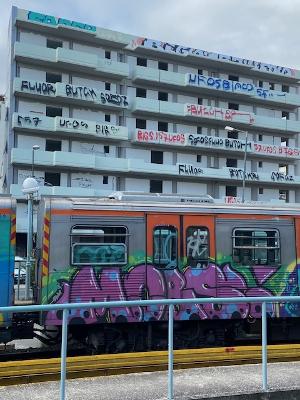
We entered the building and, since only one of us could fit in the elevator, Jayne rode it to the fourth floor while I waited downstairs for the elevator to return. After I got off the elevator, Jayne shouts, “ It’s great!”, much to my relief. The apartment was totally renovated and the host had left us a manual, which was so comprehensive in what it provided (local transport information, restaurant recommendations, apps we might find helpful) as well as a welcome gift of some olive oil and wine. While the apartment building from the outside left much to be desired, it didn’t take long for us to feel comfortable there, and the host was truly a Superhost, to use Airbnb parlance.
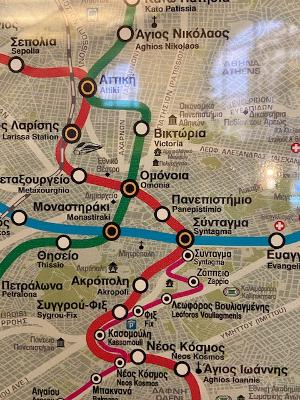
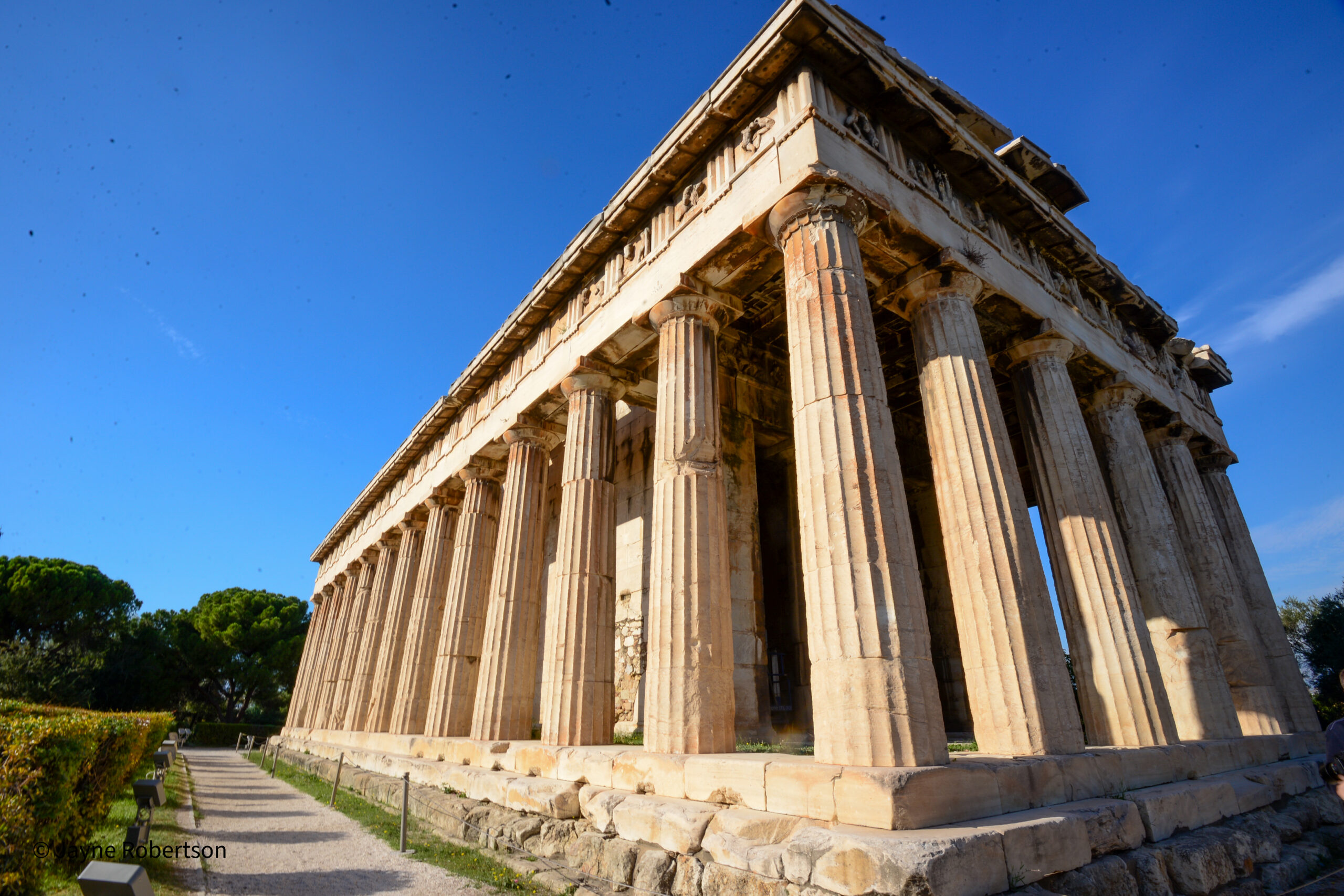
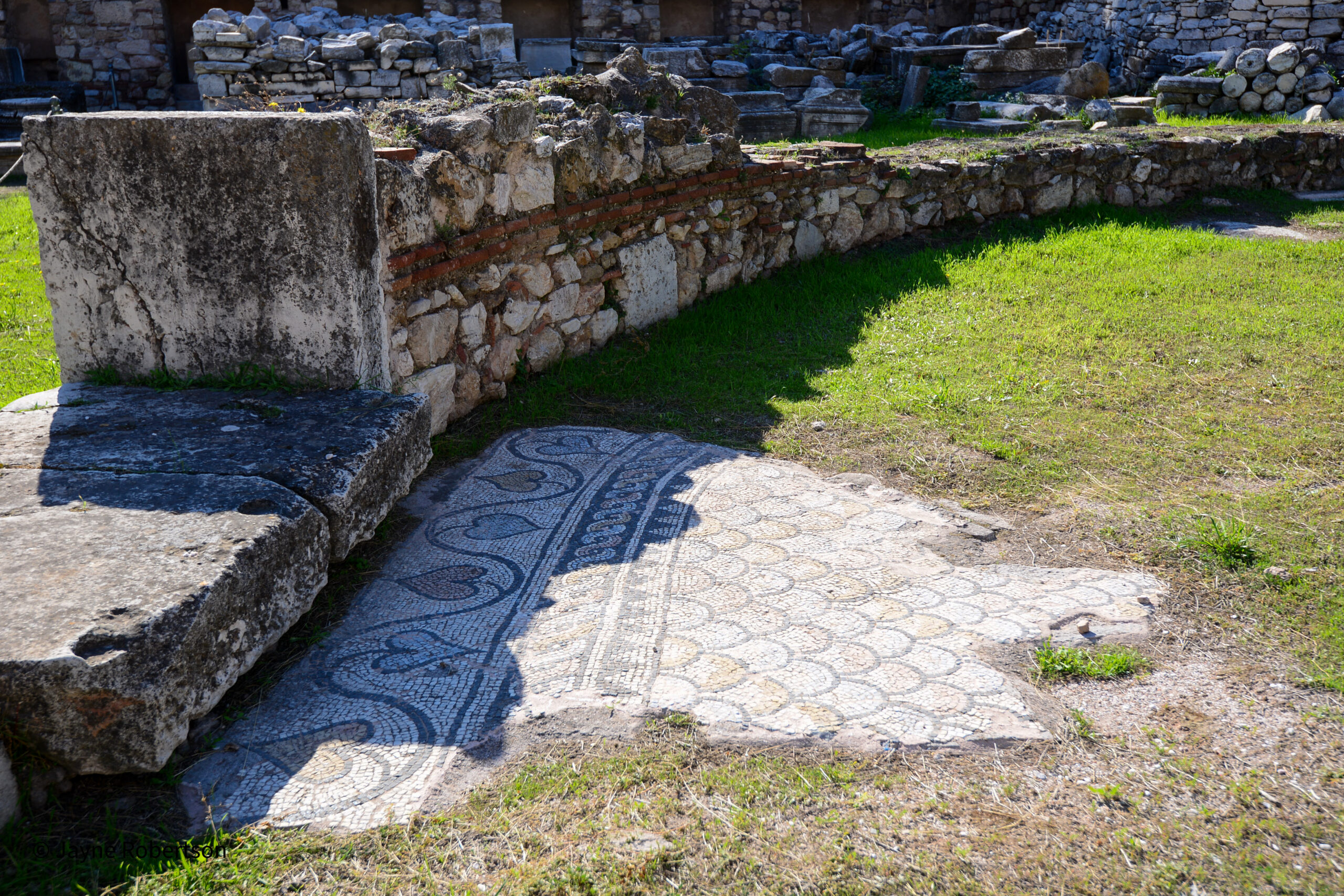
Navigating public transport in any new city requires some learning, and when the language is Greek, it feels a bit daunting. We did manage to buy a Metro pass and started to explore Athens, by first getting a latte at a cafe near the huge Central Market, and then visiting Athens Ancient Agora, right in the heart of Athens.
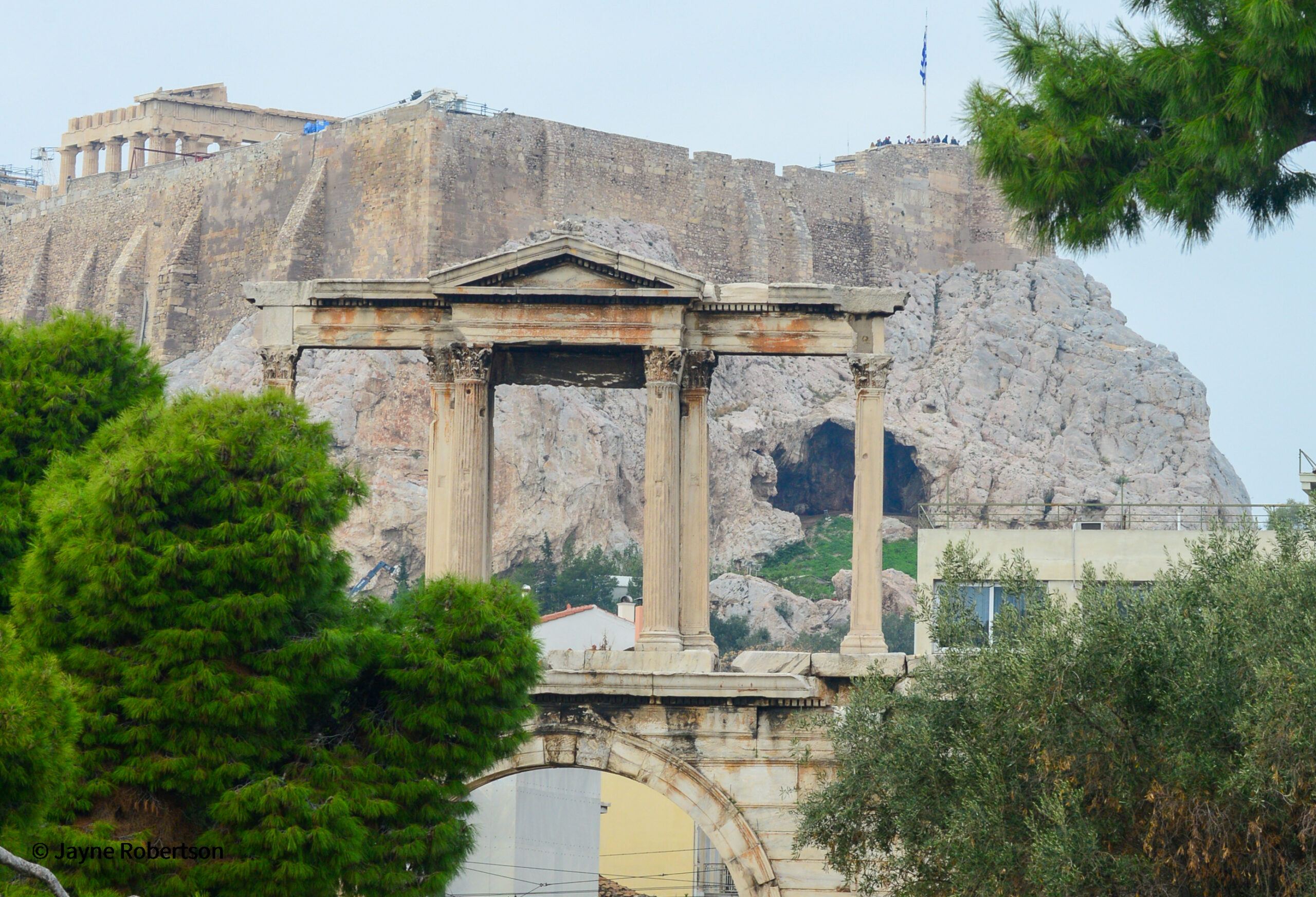
The Agora sits right below the hills of the Acropolis and is considered to be the site where the concept of democracy originated, a source of Greek pride. It was in 507 B.C., that Cleisthenes, one of the Athenian leaders, proposed a system of reforms called “demokratia”, or “rule by the people”. It had three branches: the first was a governing body that wrote laws and dictated foreign policy; the second, a representative council from the 10 Athenian tribes; and the third, a judicial system comprised of lottery-selected jurors. This democracy lasted just 200 years ( hmmm, maybe that’s how long democracies are meant to last, but I digress) but it is still considered to be one of Greece’s enduring contributions to the modern world.
On our Metro (train) ride back to our flat, we weren’t quite sure which stop we should exit. As we stood standing holding onto a pole in the train, a man sharing the pole heard our predicament and in perfect English asked if we needed assistance. Of course, we said yes, thank you, and he helped us navigate our way “home”. We engaged in conversation a bit further and he proceeds to tell us he lives in Riverdale (a section of the Bronx, although people who live in Riverdale never say they live in the Bronx!) part-time and in Athens the rest of the year. What was funny to me was while growing up in the Bronx, my friends and I would often eat at a diner in Riverdale, which we affectionately called “the Greeks”. I relayed this to the man, who laughed and said, “Most of the restaurants in the Bronx are owned by Greeks!”. A few stops later, we exited the train and wished the man a good life, and told him to give my regards to the Bronx. Small world.
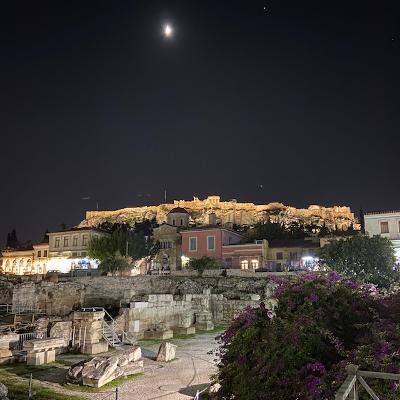
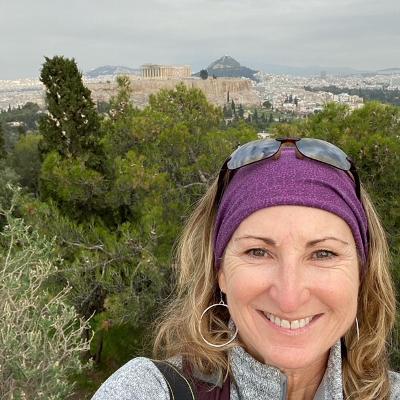
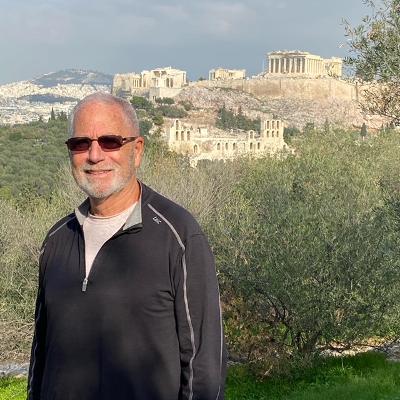
The Acropolis is another’s one of those iconic sights that you pinch yourself when you first lay eyes on it. It seems like a shrine as it sits above the city, lit up at night and omnipresent.
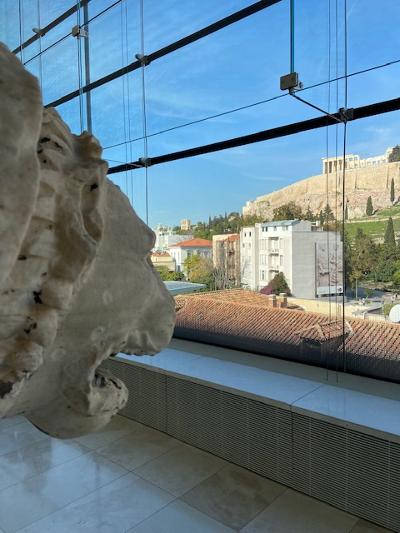
We first visited the Acropolis Museum, which gave us some context when we walked up to the “sacred rock” as the Acropolis is sometimes called.
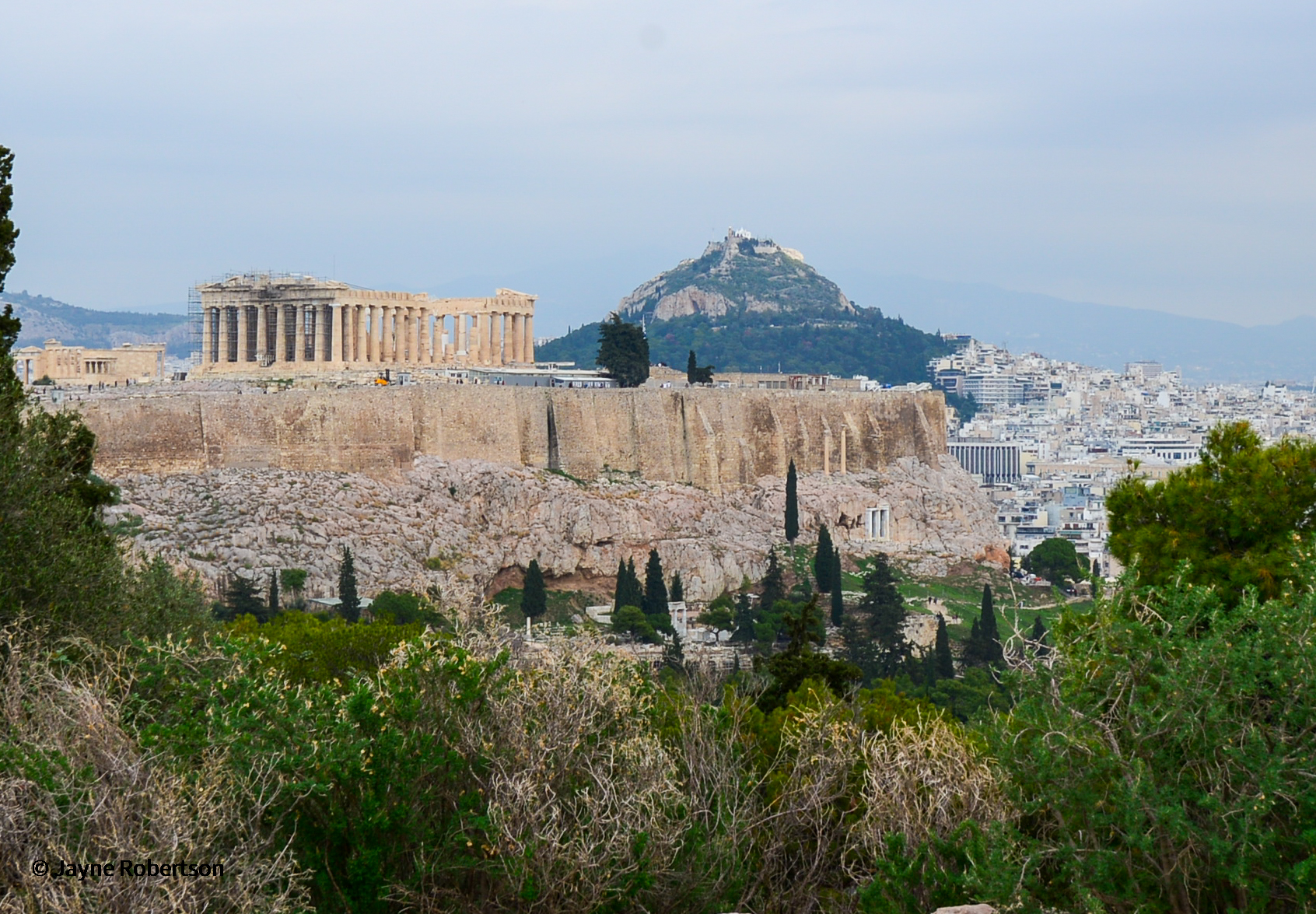
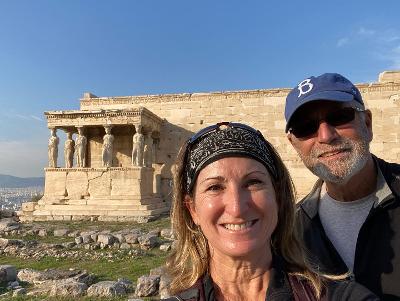
The primary sites at the Acropolis are the Parthenon, the theatre of Dionysus, the Temple of Athena Nike, and the Odeon of Herodes Atticus. All of these remains still show the classical architecture we all have come to identify with ancient Greece.
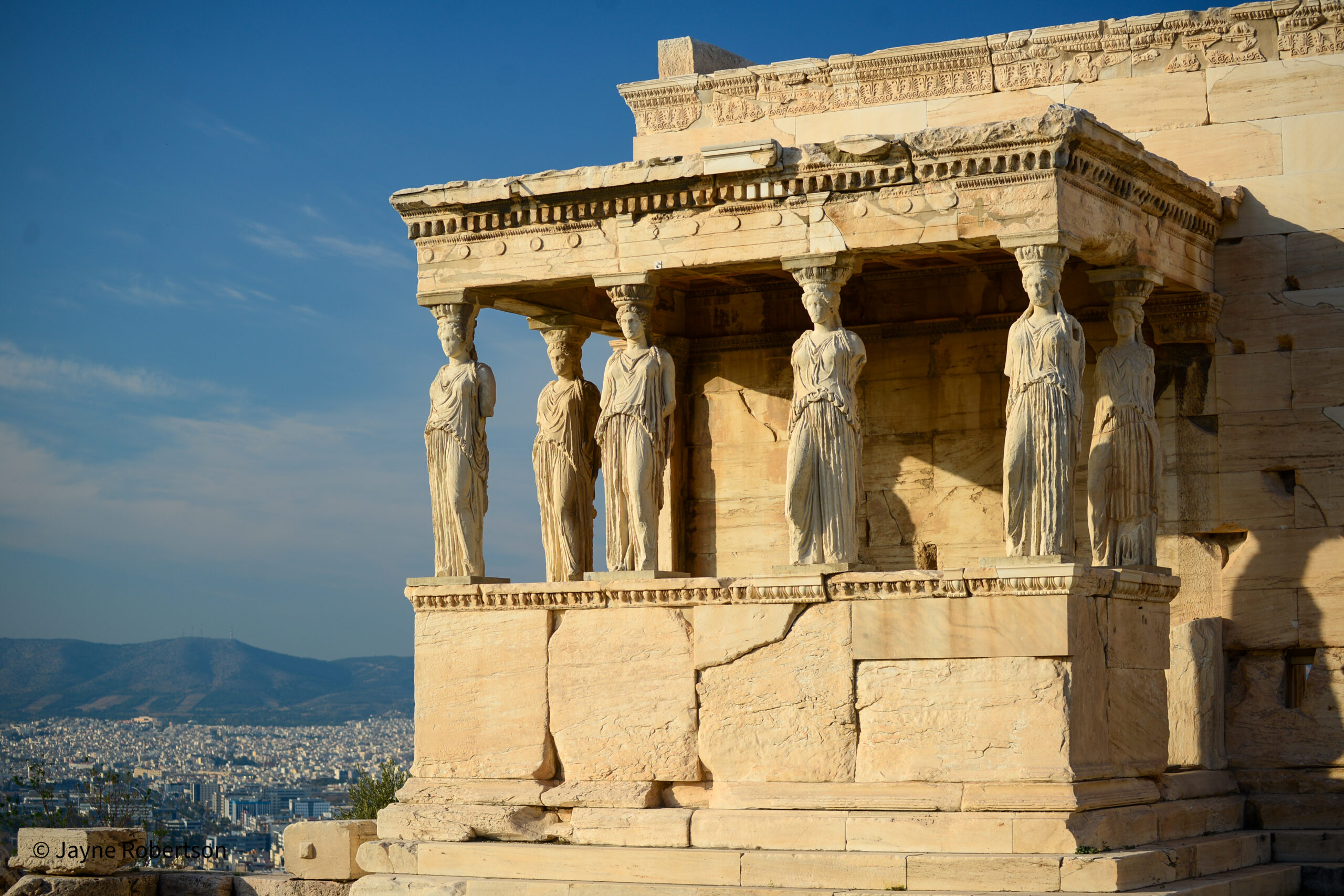
Athens was the most crowded city we had visited in some time and getting accustomed to the density of people was an adjustment. We did hear more American accents than any other place we had visited, in part probably attributed to the Athens Marathon taking place in a few days’ time, unbeknownst to us. Although the marathon meant there would be more people, it was fantastic that we could enter the Panathenaic Stadium, the site where the Modern Olympic Games began in 1896, and watch the runners pass through the finish line. It was quite the sight to see, and the serendipity of it all lent for a great experience.
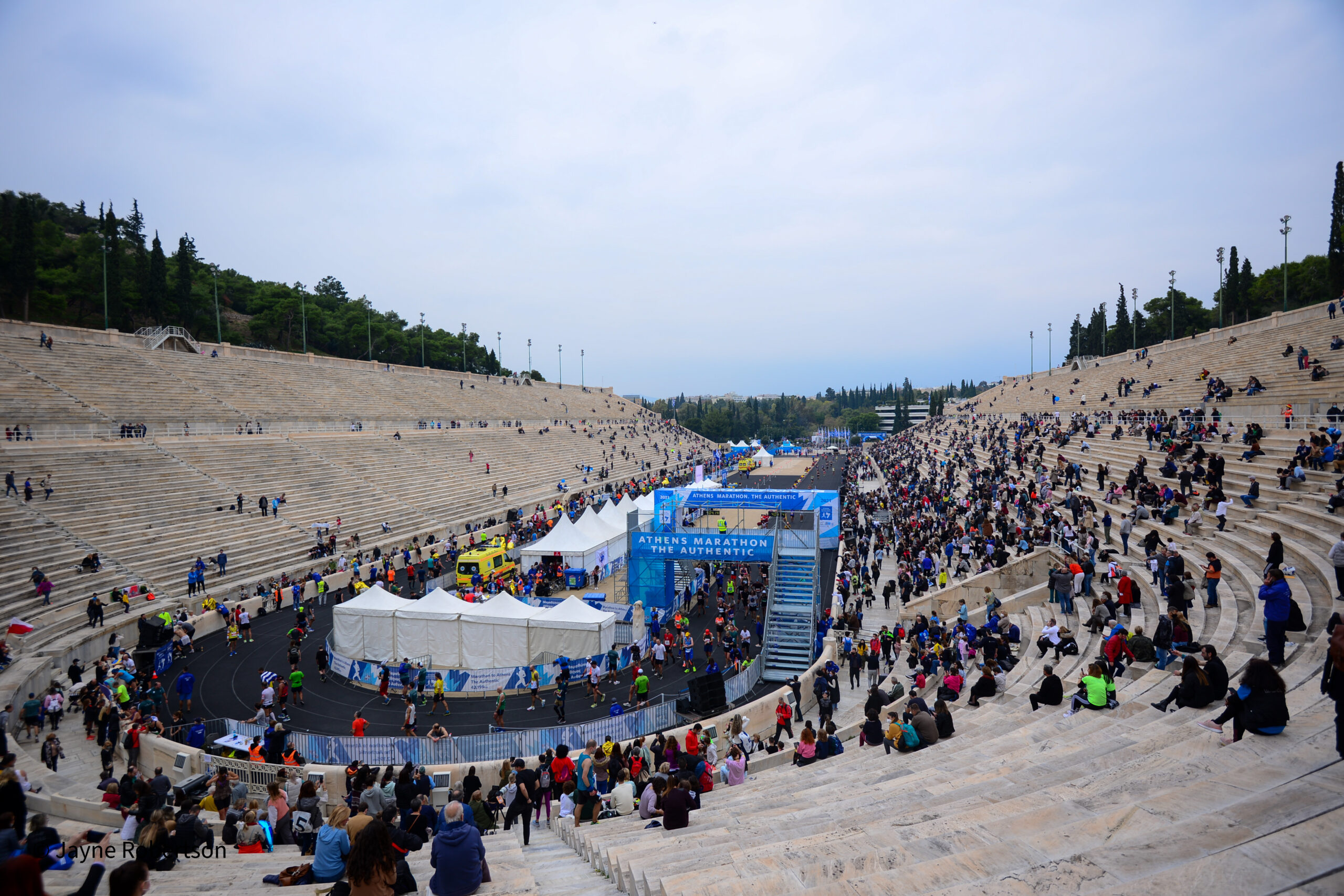
We looked forward each day to exploring the different neighborhoods of Athens, from the Plaka Steps and Anafiotika neighborhood with its quaint bars and cafes just down the hill from the Acropolis (actually, everything is just down the hill) to the squares of Syntagma and Monastiraki, always alive with people and more cafes and bars!
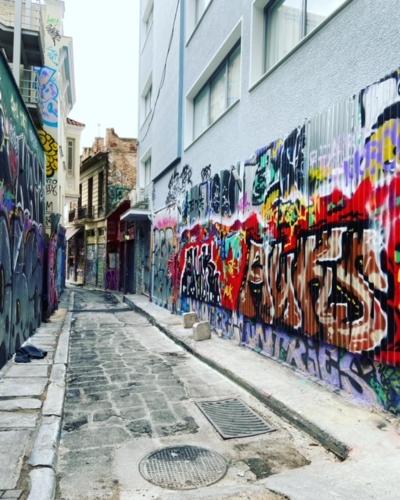
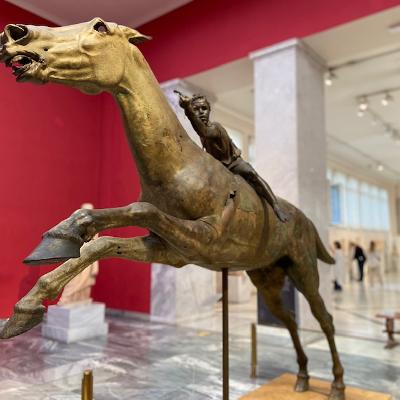
We so enjoyed our stay in Athens that we extended it a couple of more days (from 6-8) to take in as much as we could. Among the other highlights of Athens was Hadrian’s Library, the National Archaeological Museum (amazing!), the Museum of Cycladic Art, and the Hellenic Parliament House.
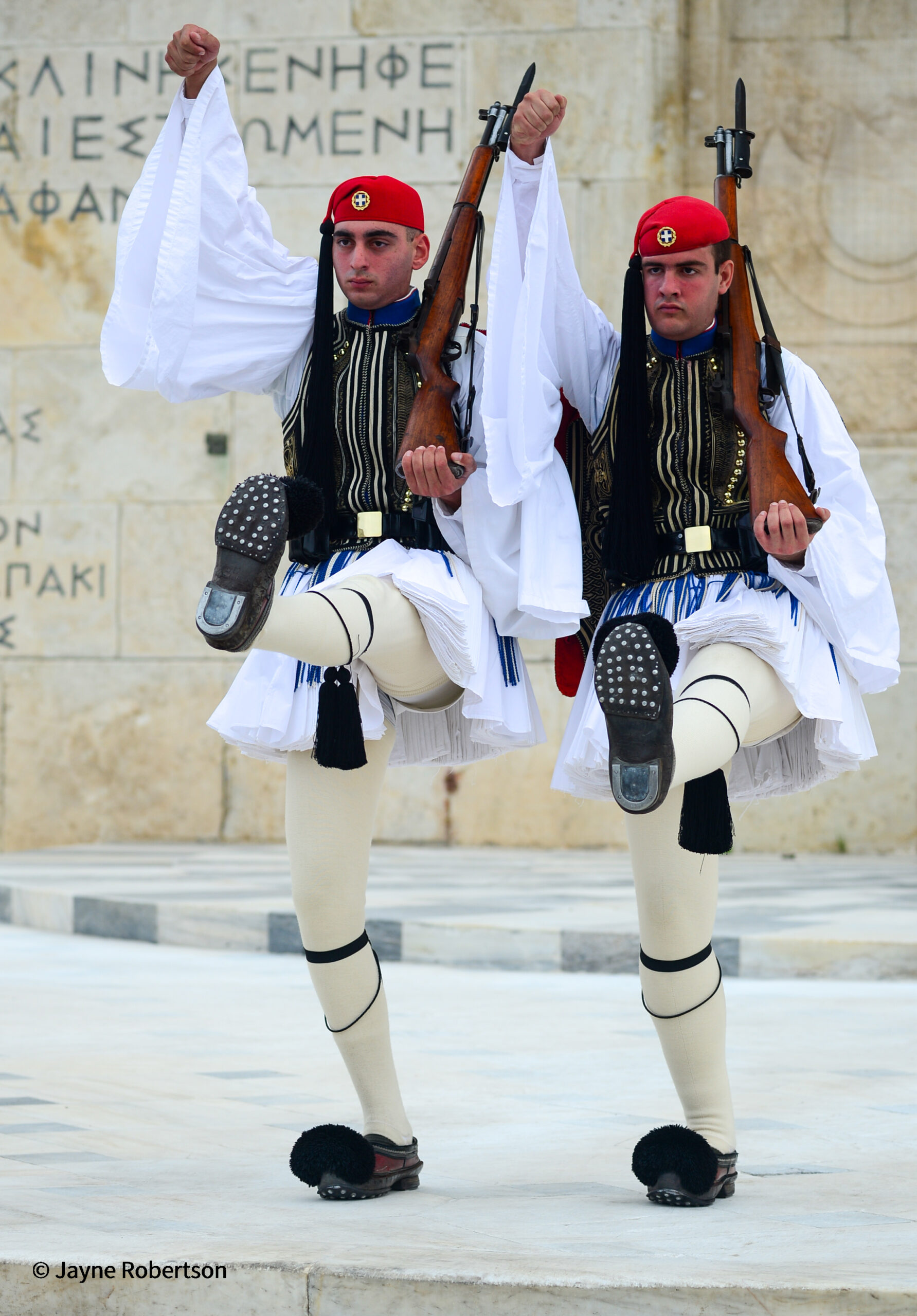
It is here that the Tomb of the Unknown Soldier resides and is guarded by an elite regiment called the Evzones. The changing of the guard is quite the sight as the Evzones, wearing traditional garb, put on a very unique choreographed performance.
We loved Athens and were also happy to leave the big city and the herds of people; can’t imagine what it would be like at the height of tourist season and no Covid. If you have never been and decide to visit, we’d highly recommend off-season, given the heat and the crowds.
Road trip Greece next on the agenda!
Happy New Year, everyone! Stay safe!