written by ed; photos by jayne
Where do I begin writing about our experiences in Egypt? As of the start of this writing we’re about to wind down our time here, and the thought of communicating all that we’ve learned and experienced seems pretty daunting, so rather than give you many of the details, as I’ve done in previous posts, I’ll stick to the view from 7,497 feet (2,285 meters) approach (you’ll understand that reference by the end of my blogs on Egypt)) and mention the many highlights.
Egypt was not necessarily on our “bucket list” of countries we wanted to visit during our travels, but given the close proximity to Kenya, combined with the relative ease of entering the country as US tourists, and the incredibly rich, ancient history of the country made it an easy choice. During our almost four weeks in Egypt, we came to find out that the tourism industry has suffered greatly over the past 10 years given the Arab Spring uprisings in 2011, some terrorist attacks, and, of course, Covid-19. And yet, our tour guides and others in the hospitality business were hopeful that things were slowly changing as there appear to be more bookings, especially of American tourists.
We heard very few American accents in places we visited. On the Nile cruise, most of the accents we heard were of Spanish origin, whether it was from Spain or South America, or Mexico. In Dahab, most of the tourists were Egyptians (many from Cairo), Russian or Ukrainian, and German with a smattering of Israelis and other Europeans.
The small number of Americans made me question why this was the case. Certainly, one of the reasons is Covid- 19 and the fact that not many Americans are traveling overseas. Secondly, Egypt has had a very small percentage of its populace vaccinated which would make potential tourists leery. Thirdly, I personally believe that travel alerts from US Embassies abroad have impacted overseas travel – it’s a wonder any US citizen would travel anywhere!
One of the more frequent questions we have been asked by those following us on social media is “how safe do you feel in Egypt”. A valid question, given the US Embassy in Cairo’s Travel Advisory which reads:
No doubt our embassies are looking out for the best interests of American citizens, but consider the following travel advisories taken verbatim from the US Embassies in Egypt and Kenya, respectively, two countries we visited:
Level 3: Reconsider travel to Egypt due to terrorism, and do not travel to the Sinai Peninsula (with the exception of travel to Sharm El-Sheikh by air) and the Western Desert due to terrorism, and Egyptian border areas due to military zones. Exercise increased caution in Egypt due to COVID-19 and the Embassy’s limited ability to assist dual national U.S.-Egyptian citizens who are arrested or detained.
Or this, a similar travel advisory from the US Embassy in Kenya reads:
Travel Advisory for U.S. Citizens August 10, 2021
Travel Advisory: Kenya-Level 3: Reconsider Travel
Reconsider travel to Kenya due to COVID-19. Exercise increased caution in Kenya due to crime, terrorism, health issues, and kidnapping. Some areas have increased risk. Read the entire Travel Advisory.
Now, to be fair to the respective embassies, further on in their travel advisories they are more specific about certain places not to visit, but really, who goes on to read further when doom and gloom seem to await you in either of these countries. I don’t want you to think that we were unaware or cavalier about travel advisories before we decided to visit. We were very well aware, but we spoke to people on the ground, like The Village Experience, and inquired as to what they thought of the situation, and we were assured that things were safe. Of course, Covid is another matter entirely, but I can assure you that Jayne and I felt safe in each of these countries.
Our flight to Cairo left Nairobi at 4:30 am which meant that we had to be at the airport around 2:30, which meant we had to leave our hotel at 1:30, which meant that when we arrived in Cairo we would be totally exhausted, which we were. Our driver though was prompt and since our AirBnb wasn’t quite ready for check-in, we dropped off some clothes to be laundered and grabbed some lunch.
Our Airbnb was in a section of Cairo called Zamalek, a very cosmopolitan area and a good place to get a feel for Egypt. Of course, all we really wanted to do was to take a shower, get some rest and then explore the neighborhood. A few hours after we checked in, the electricity (which meant our air-conditioning) went kaput and discovered we didn’t have any hot water or toilet paper. Our host assured us that all would be taken care of in 30 minutes. Four hours later, with both of us sitting in front of our apartment building with our heads in our hands, our “host” finally arrived and about an hour later everything was working fine. You would have thought he might have apologized for any inconvenience but no apology was forthcoming then or ever for that matter! Not an auspicious start to our stay, but things definitely improved from there.
We had much of our itinerary planned once again by Kelly Campbell and The Village Experience, as they had done such a great job for us in Kenya. After a day of rest, we met our Cairo guide, Farag, and driver, Mohamed (a name, by the way, which is ubiquitous for Egyptian men. In fact, we met one Mohamed who had 9 brothers, all named Mohamed! Yes, we did ask how you differentiate one from another when calling them, and that story will have to be told at another time.) We were quickly introduced to some street falafel for breakfast. It definitely tasted different from the falafel we were accustomed to as it was very light and delicious! We came to find out that not all falafel is made with chickpeas, thus the difference. In Egypt, falafel (ta’ameya) is made from dried fava beans (broad beans), a staple of the Egyptian diet. We would agree with others that Egyptian falafel might be the best in the world!
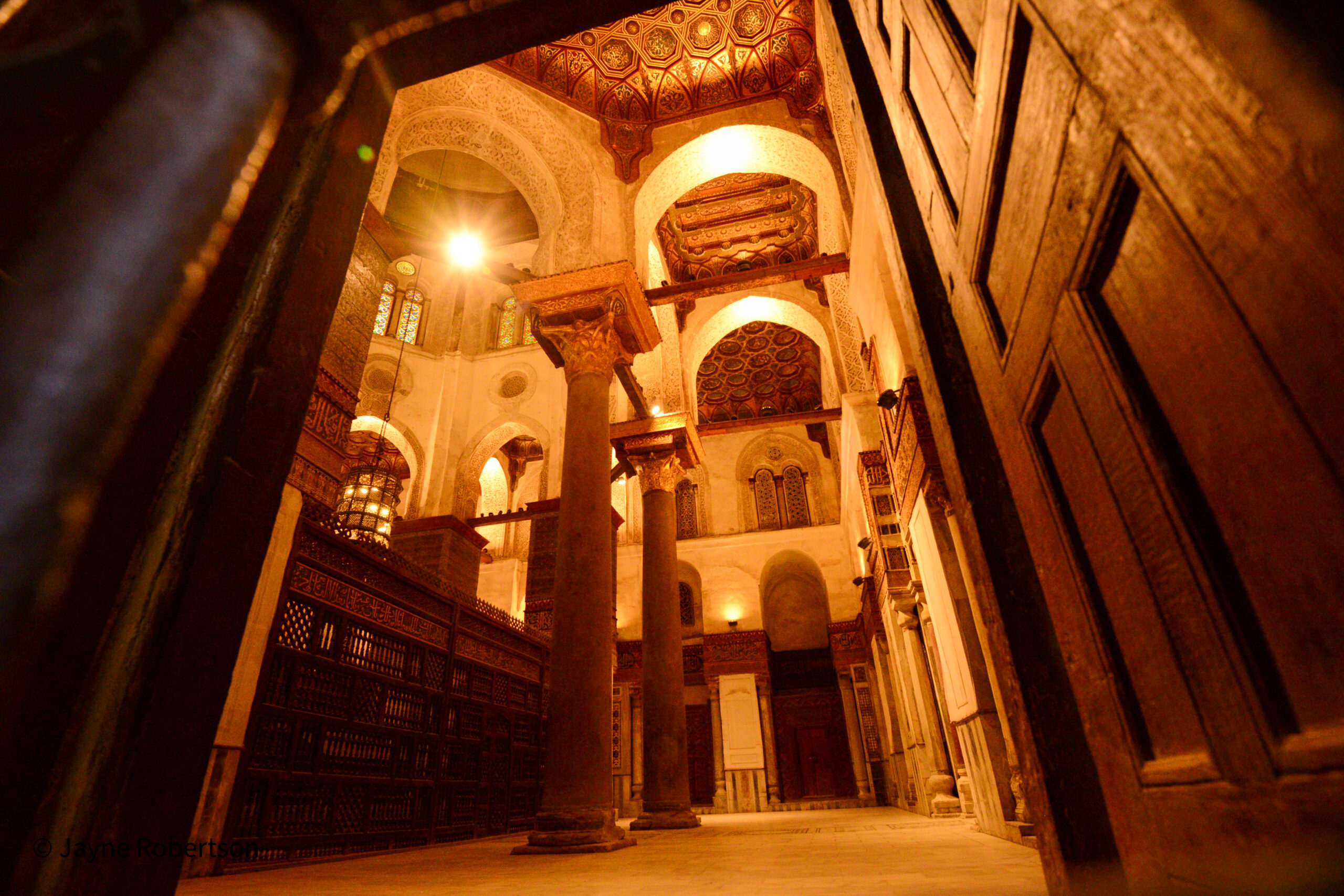
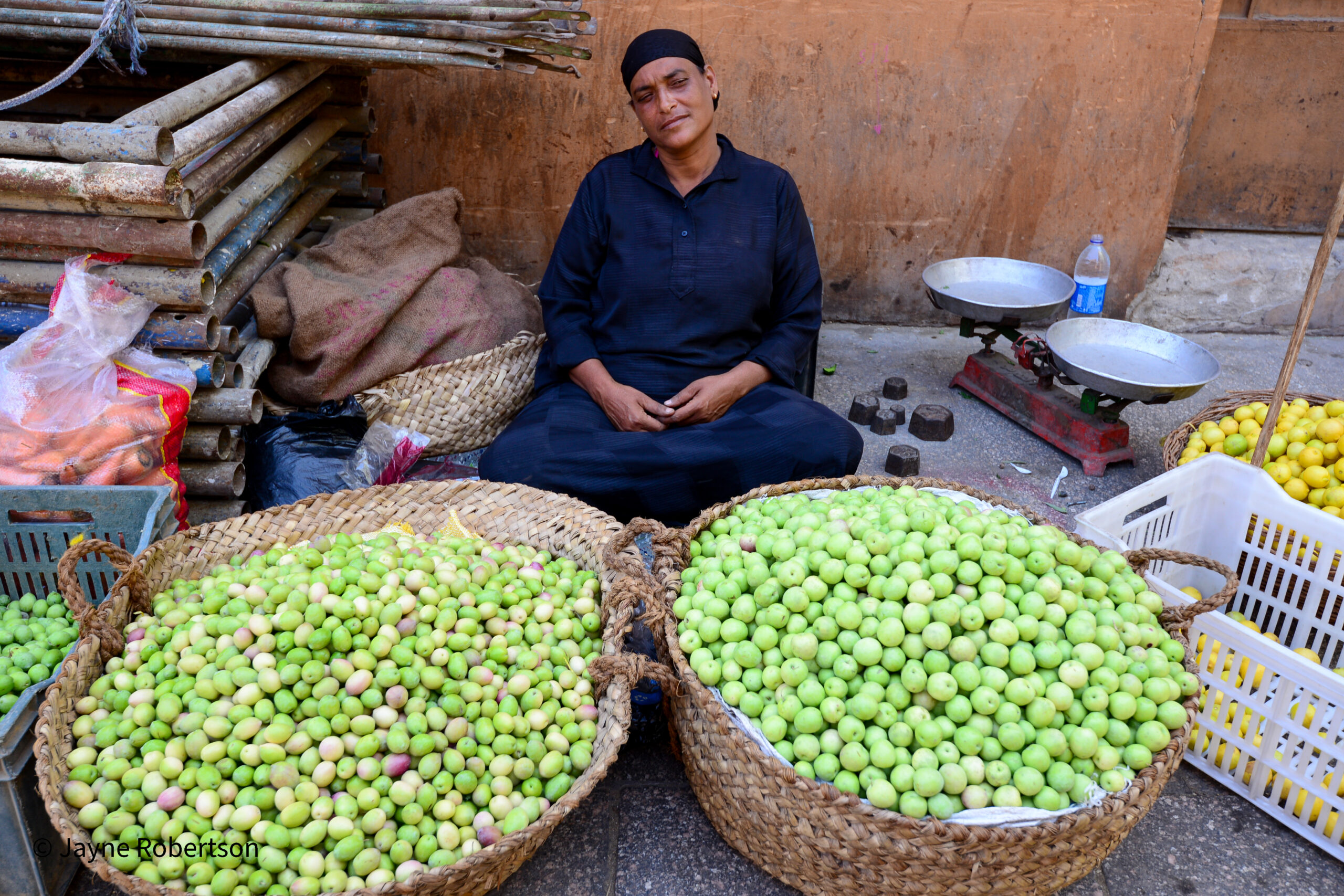
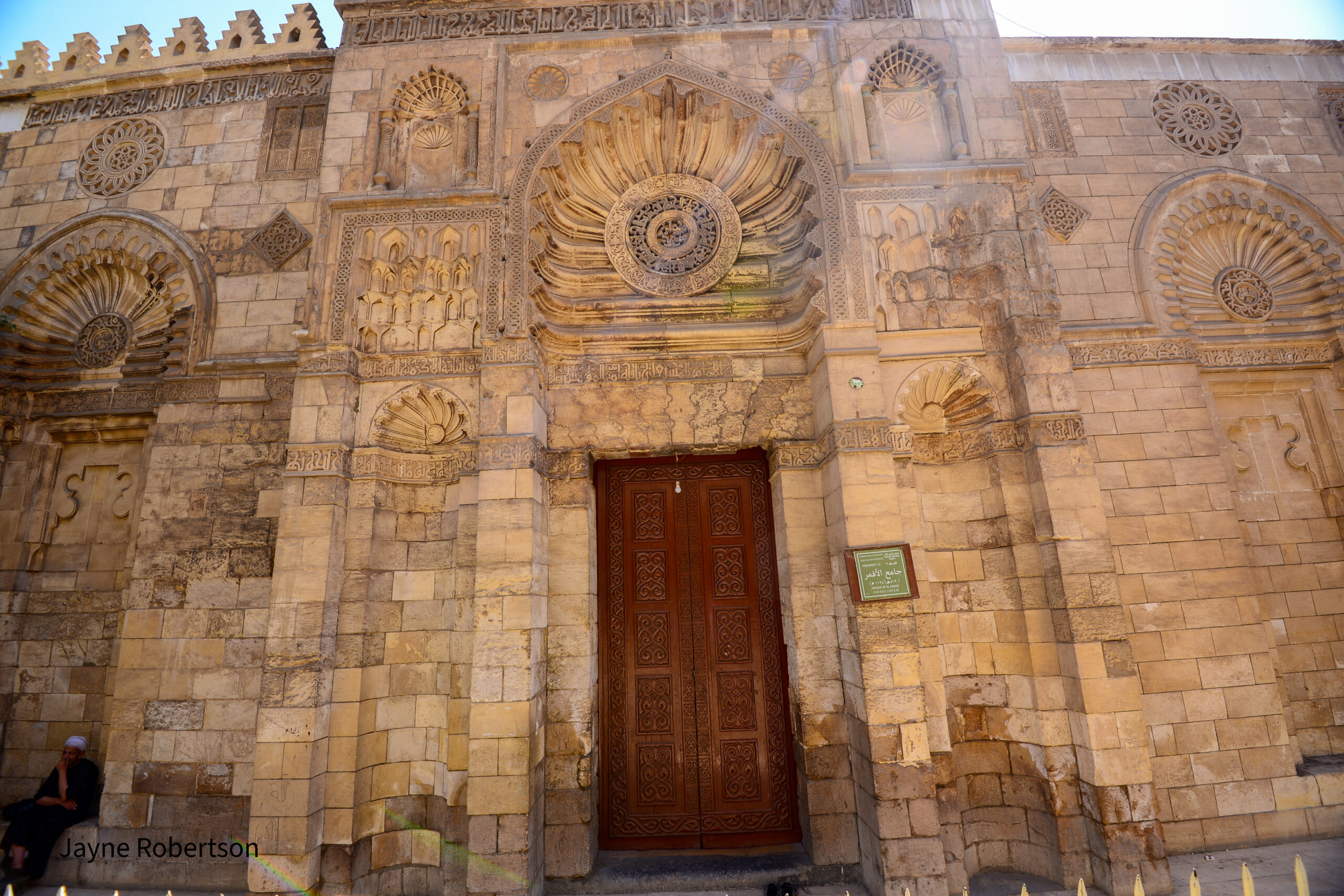
We then went to Old Cairo, a walled city, and strolled down the main 1,000-year-old street, Al Moez, where we saw Egypt’s oldest synagogue (Ben Ezra Synagogue) and several historic mosques. Of course, along the way, there were many touts selling or trying to sell, you different tchotchkes, clothing, etc. One of the great things about being a nomad is we have no room in our bags for any nonessential items, so it’s pretty easy to not even look at the wares. As you walk down this street you’re struck by its age and history. This will be a consistent theme as we see the different sites of ancient Egypt.
One of the more interesting aspects of our stroll was that we noticed we were being accompanied by two police officers, not in any real overt way, but definitely something quite evident. When we asked our guide about this, he confirmed that, yes, we were being shadowed because the last thing that Egypt wants is a tourist, especially an American tourist, to have any negative experience. Given Egypt’s dependence upon tourism, authorities seem to go out of their way to ensure that you feel safe in their country, and again, safe is how we felt throughout our stay, police accompaniment or not.
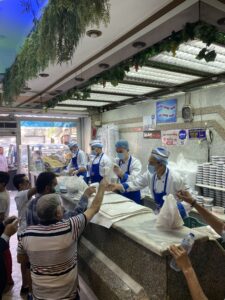
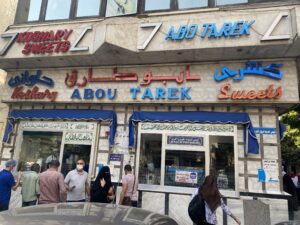
It was time for lunch, and we asked our guide to take us someplace that few tourists visit. We found ourselves in the busyness of downtown Cairo. Abou Tarek is probably the most trafficked koshary restaurant in Cairo. It reminded me of Katz’s deli in NY with the hustle and bustle of the wait staff and customers. In this case, though, the only main dish they serve is koshary. Koshary is a mixture of lentils, pasta, tomato sauce, garlic/lime sauce, chickpeas, fried onions, and some optional hot sauce. Being koshary newbies, the waiter came to our table and mixed all of the ingredients together for us, and voila, our koshary was ready to eat and it was delicious! The tab, for 4 servings, 4 bottles of waters, and some rice pudding was $12, tip included!
With our stomachs full, our next stop was the Coptic Christian section of Cairo where we visited the Church of the Caves via Garbage City. This section of Cairo (sometimes referred to as Garbage City) is where it seems much of the garbage is collected and recycled.
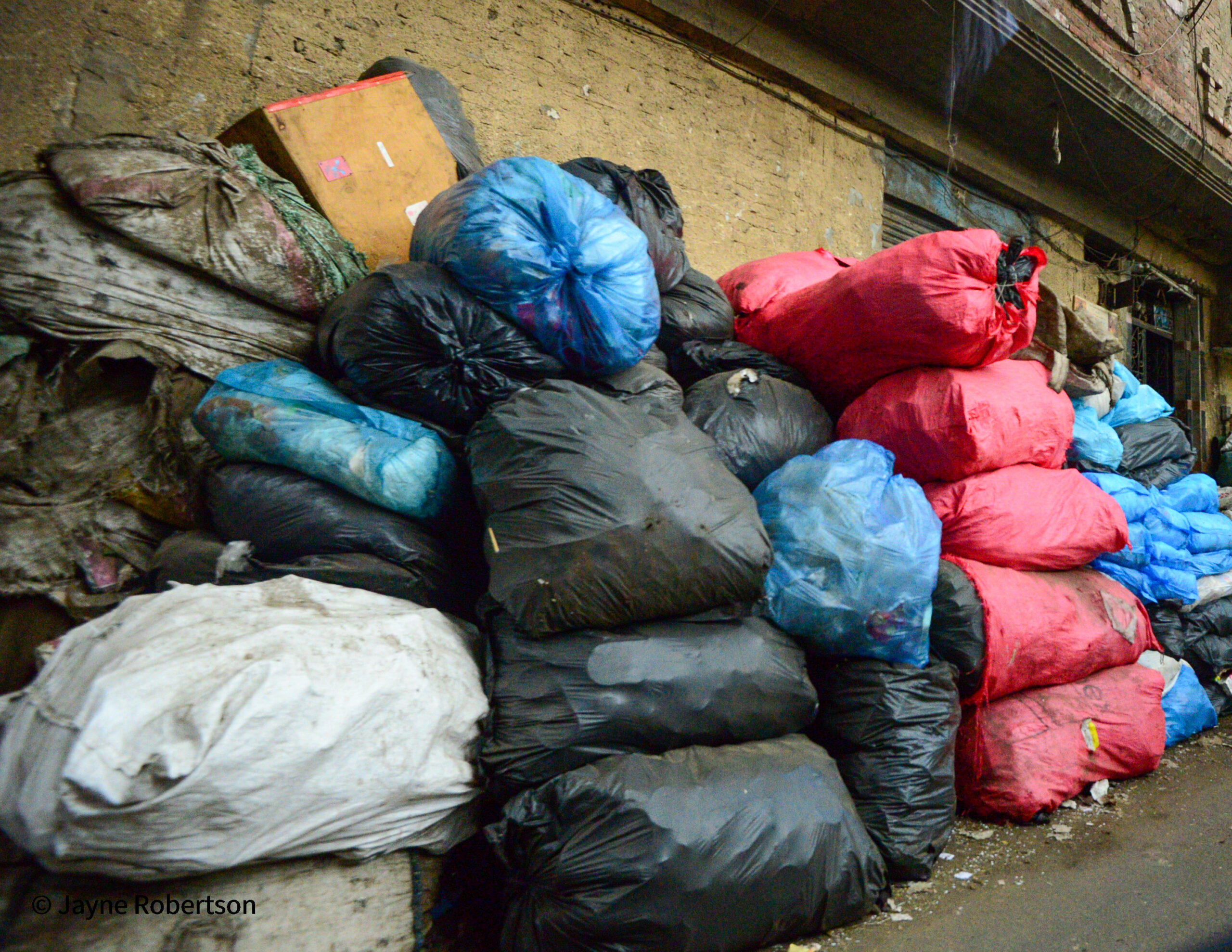
Christians mostly (Egypt is 90% Muslim) live in this area amidst the garbage, but we were assured that the people choose to live here and our guide would point out how healthy the residents looked. I have my doubts about this “choice” and how healthy it is to live with all the rubbish, yet this is what we were told.
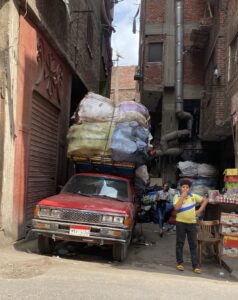
Unfortunately, it’s hard not to talk about Egypt without talking about rubbish. With the exception of Luxor, in every town and city we visited, we were struck by the amount of trash. When we brought up the subject to Egyptians and ex-pats alike, the common response was “that’s Egypt!”. It wasn’t said with any sense of pride, rather a resignation that that’s how life is these days regarding trash. In Cairo, no efficient waste management has ever been established in this city of 20 million people. It’s estimated that within Egypt nearly 45% of households dump their waste in the street!
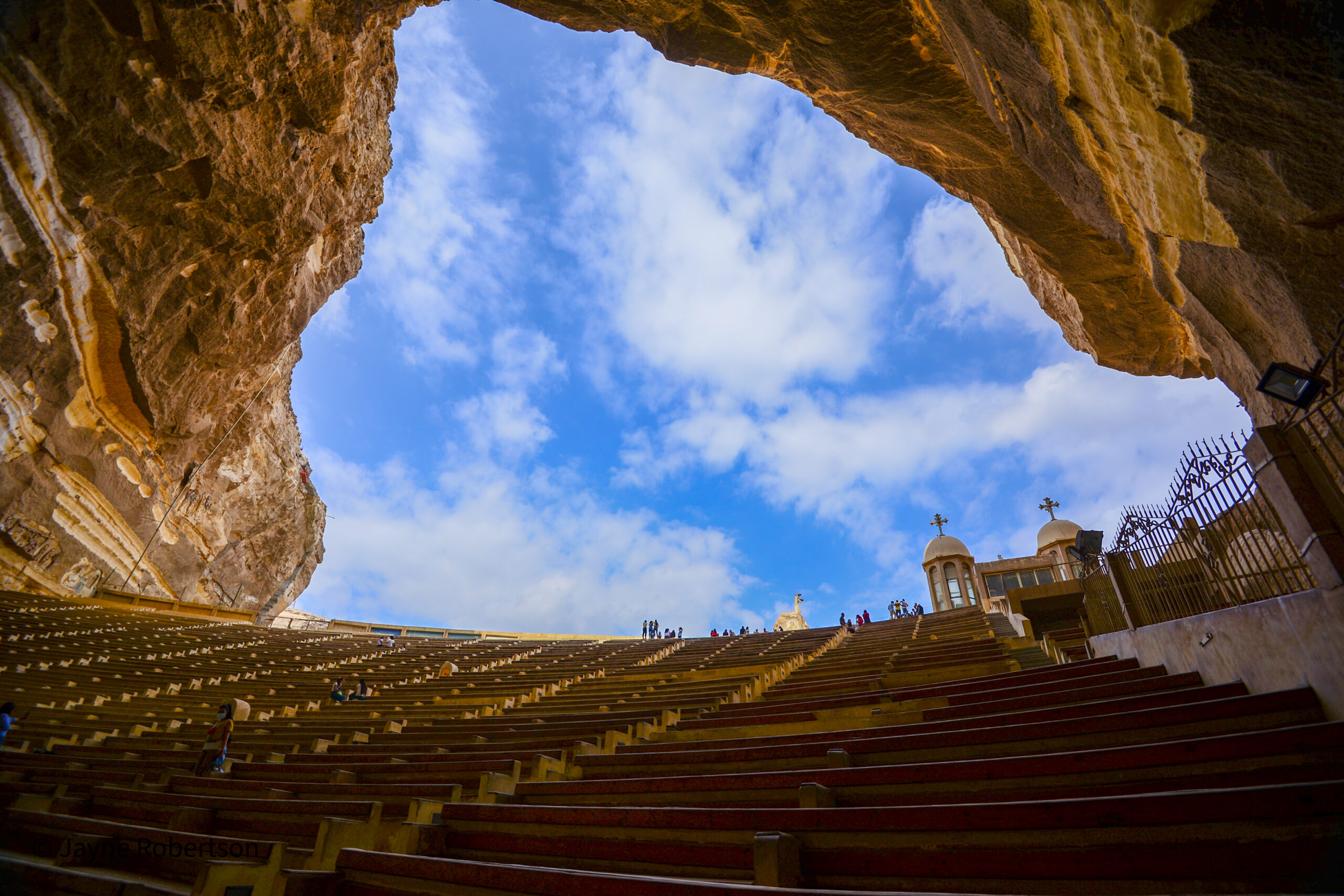
The Cave Church near Garbage City
The next day began with a visit to the recently-opened Mummies Hall of the new National Museum of Egyptian Civilization. Guides are not allowed in some exhibits of museums and this was the case at the mummies exhibit. 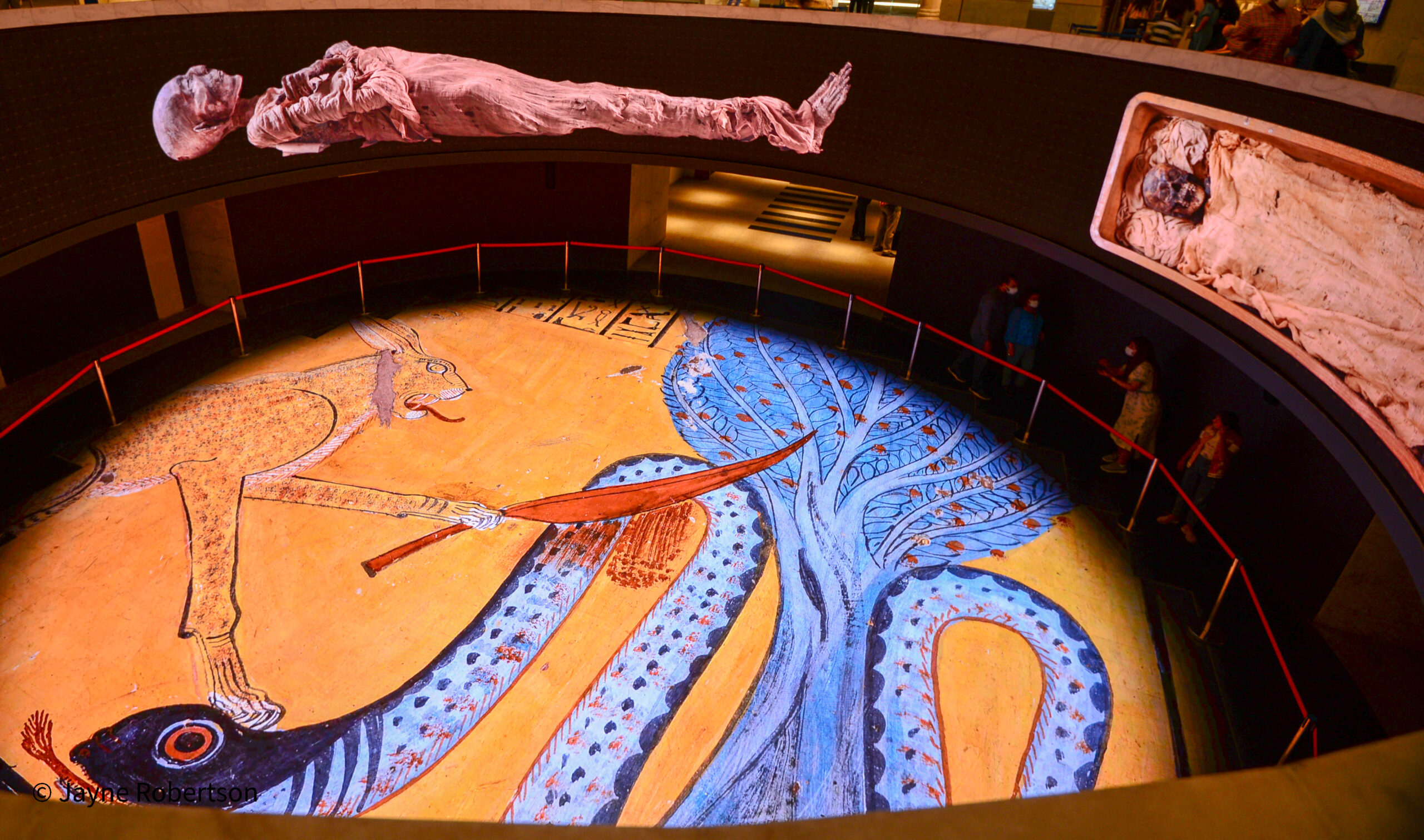 Farag though gave us some information to think about as we toured that exhibit and his knowledge of ancient Egypt were so impressive (both guides we had in Egypt were university-educated Egyptologists) that, at times, the amount of information was overwhelming. Nonetheless, having a guide was invaluable, and although we (at least I) couldn’t retain all of the information provided, what was retained gave us great context and insight into ancient Egypt.
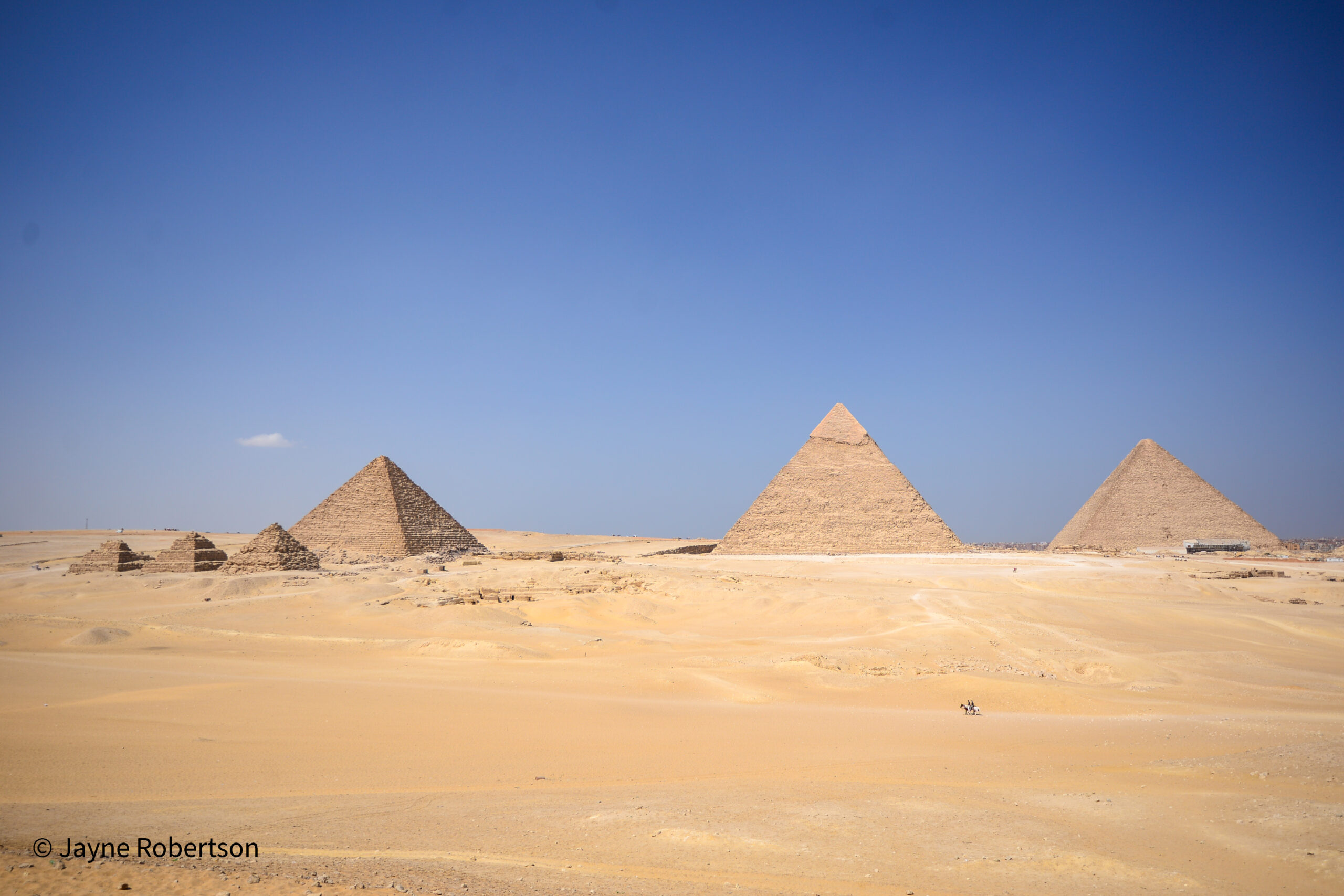
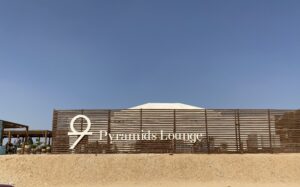
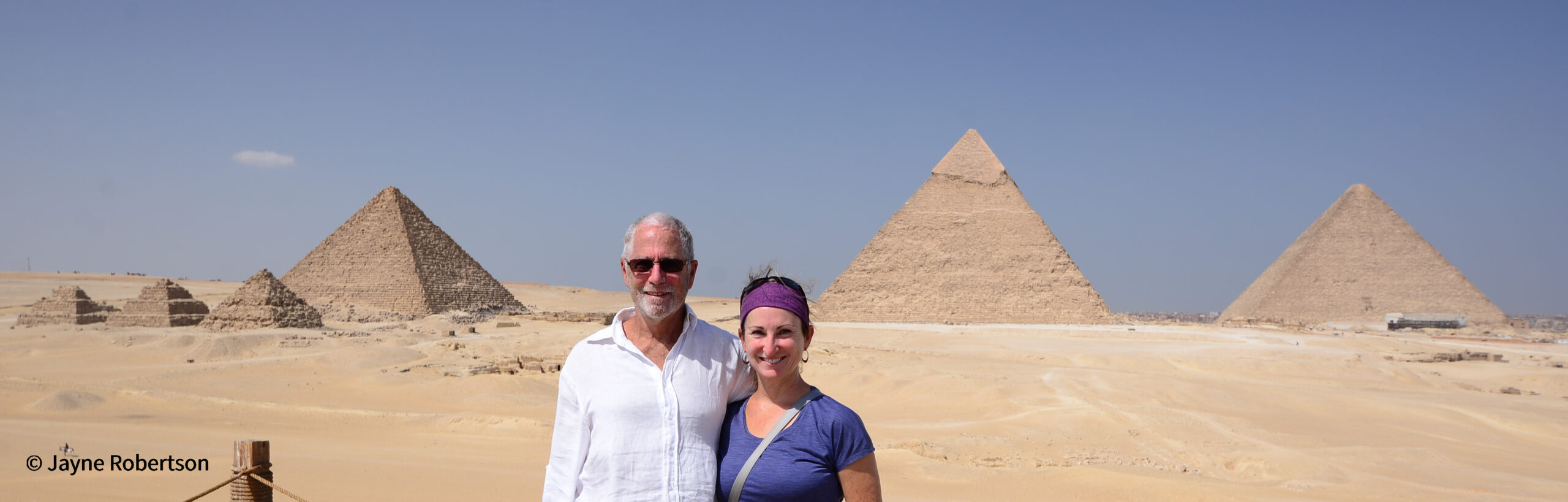 We then visited the Great Pyramids of Giza which was about an hour’s drive from Cairo. Similar to any iconic destination, words and photos don’t do the experience justice. In this case, you are overwhelmed by the sheer size of the pyramids, especially the Pyramid of Khufu, the largest pyramid and the oldest of the Seven Wonders of the Ancient World. Aside from the upfront and personal view we had of the pyramids, we also enjoyed them from a distance at a relatively new restaurant and lounge called appropriately the 9 Pyramid Lounge. While enjoying an Egyptian lunch, we soaked in the magnificence of these ancient treasures.
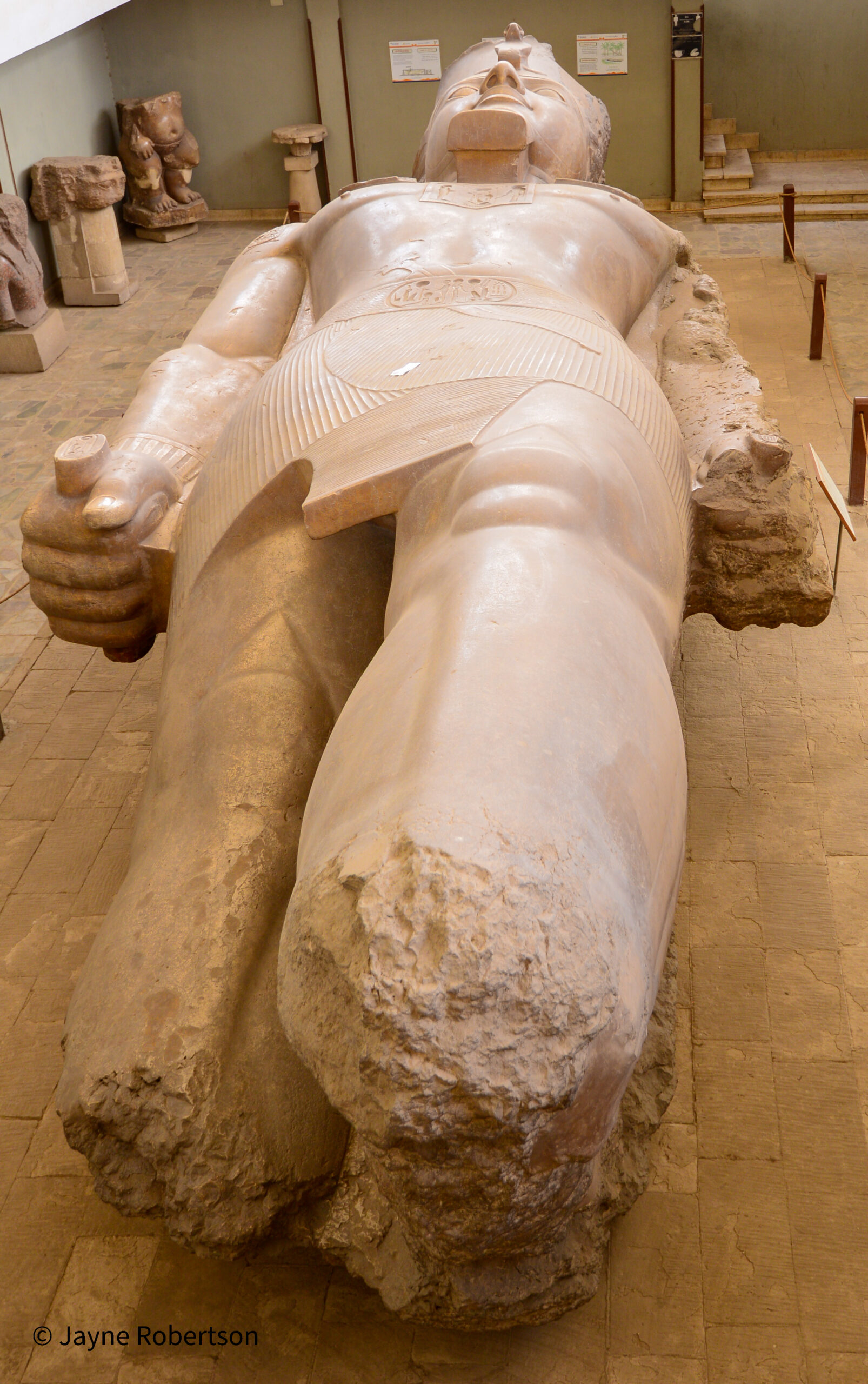
Close to the pyramid complex is the town of Memphis (yes, Memphis, TN took its name from this city which served as the capital of ancient Egypt and is considered the birthplace of Egypt sitting at the top of the Nile delta). Like Cairo, Memphis was in its day a cosmopolitan city with temples and palaces, many of which were built under the reign of King Rameses II, probably the most well known of the Egyptian Kings as he reigned for 67 years, had 119 sons and 46 daughters (these were numbers told to us by our guides, but if you dig deeper it seems the numbers, especially for sons is a bit overblown, but obviously he was a very busy King with multiple concubines. His favorite wife, though, was indisputably Nefertari).
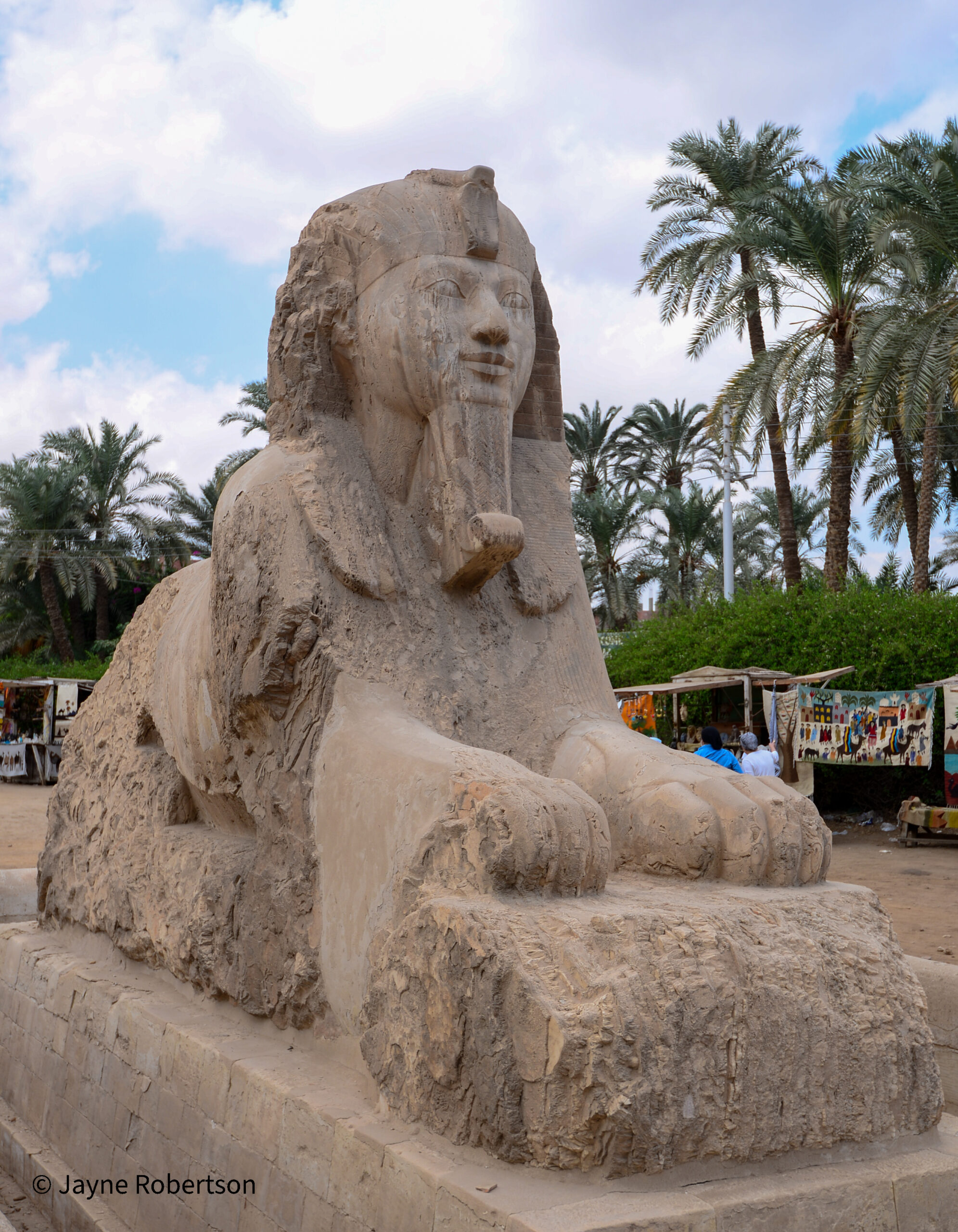
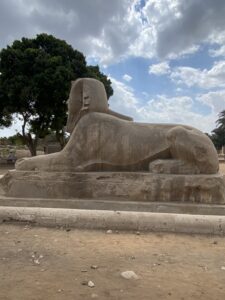
One of the most famous carvings discovered near Memphis was that of a sphinx. As you can see from the photo, the Sphinx has very relaxed shoulders, something all of Jayne’s yoga students reading this will remember as a key attribute of the sphinx pose. Of course, Jayne pointed that out to me as we marveled at this sculpture from about 1700-1400 BC.
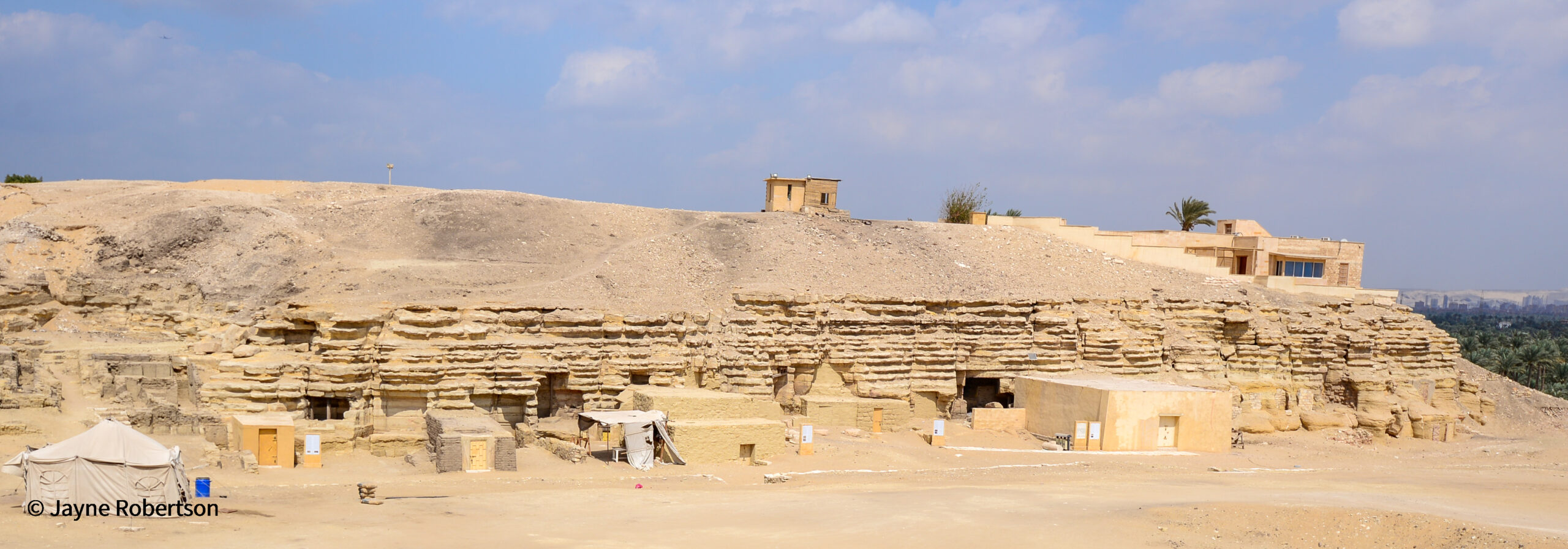
On our last day in Cairo, we visited the archeological site of Saqqara. It was recommended that we view which we did and found fascinating (personally, I find archeological digs incredibly interesting and can only wonder how exciting it is for those on the dig when discoveries are made!). Having seen the documentary, made the Saqqara tombs we visited come to life.
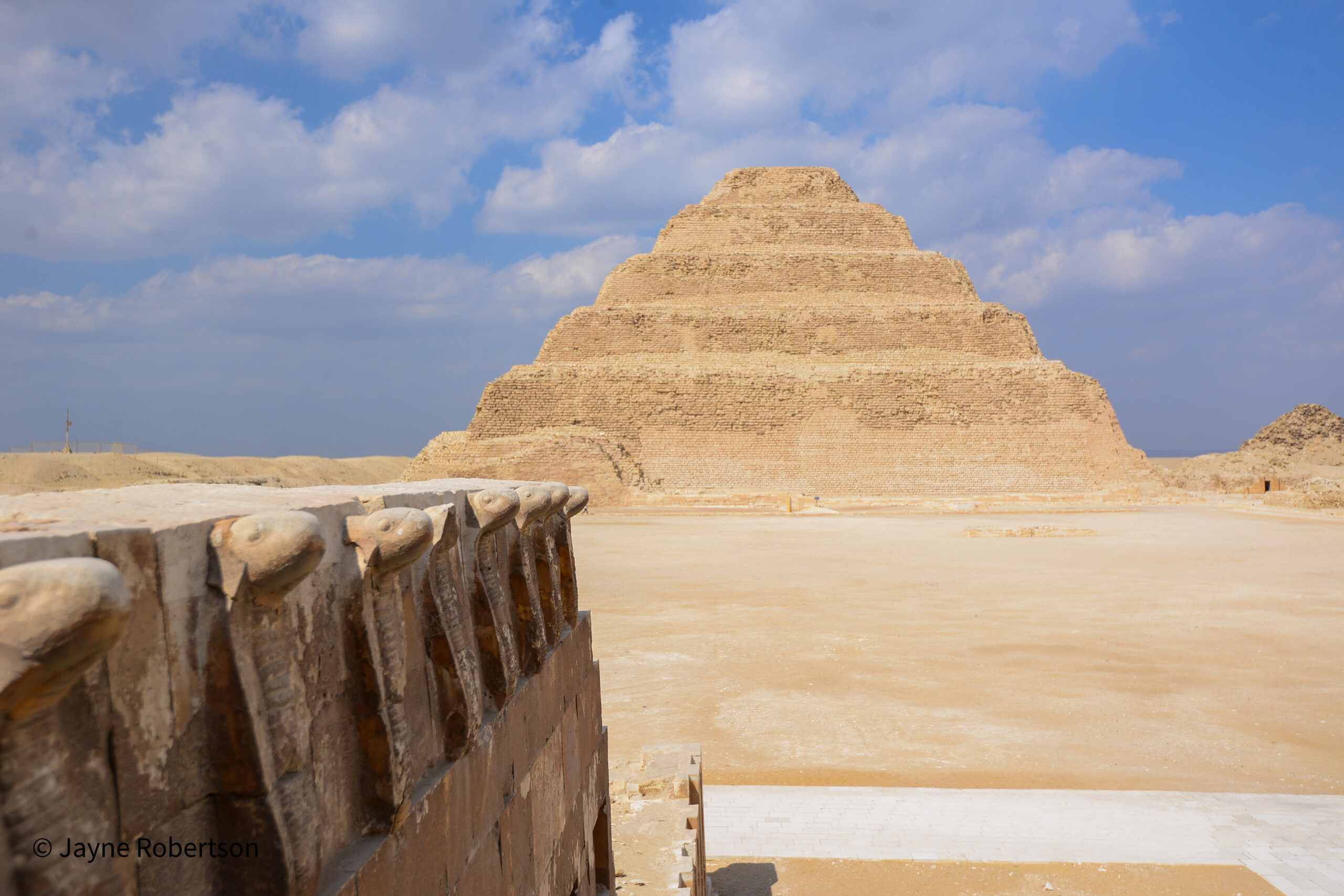
The Saqqara mortuary complex also had the first Step Pyramid ever built, the Pyramid of Djoser, built c. 2670-2650 B.C. Before pyramids were flat on all sides, they were built in a step-like formation After 14 years of restoration, the Pyramid was open to the public in March 2020.
We finished up our stay in Saqqara with a fabulous lunch, a smorgasbord of all kinds of Egyptian delicacies which we would continue to experience throughout our stay in Egypt.
Cairo, rubbish aside, proved to be a great launching point for our stay in Egypt. We found all of the people we met to be friendly and willing to help us in any way they could (of course, notwithstanding our Airbnb host). It also set the tone for how much there was to learn about the history and culture of the country.
Next stop – Aswan.