
written by ed; photos by jayne
When you think of Greece, it wouldn’t be wrong to think of beautiful turquoise waters and white sandy or pebbly beaches on islands spread throughout the Aegean Sea. Believe it or not, there is a large mainland of Greece which, of course, includes Athens and the large southern region of Peloponnese.
Jayne had visited the Peloponnese many years ago and was eager for me to see it as well and to refresh her fond memories of the region, so off we went on a road trip in our rented Nissan Micra (a pretty good little car, by the way). Google maps would prove to be a savior over the course of the week-long road trip, even though we rarely understood the words being spoken by our navigation guide. Although, we could rarely decipher the road signs (I hesitate to say it was all Greek to us, but there I said it) I’m pretty certain the navigation voice mispronounced the majority of words in her English accent. Anyway, we followed the arrows on the screen and, for the most part, we arrived at our destinations with little trouble.
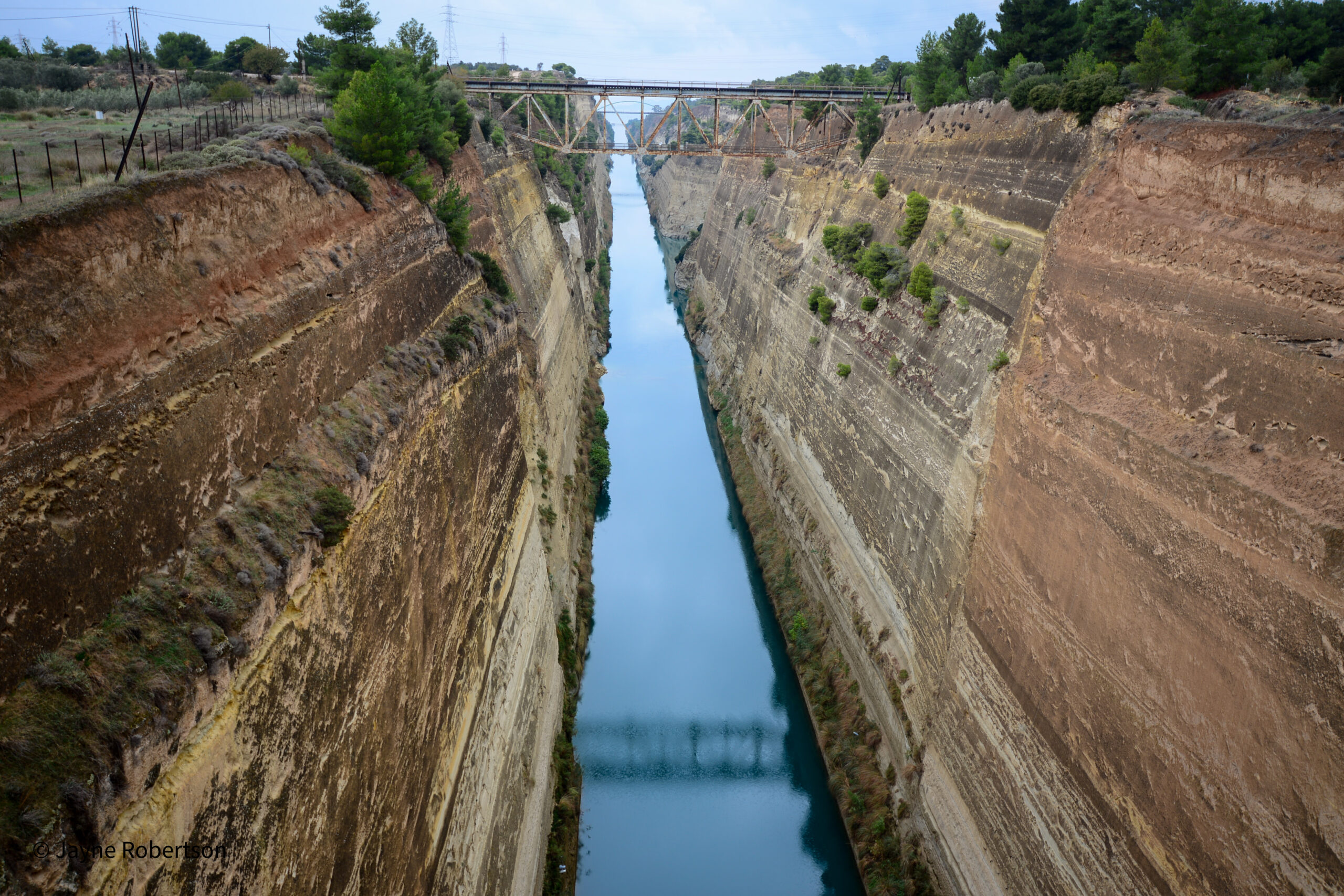
The Corinth Canal, completed in 1893, was our first stop out of Athens. It’s pretty interesting, as this canal with no locks, connects the Gulf of Corinth in the Ionian Sea with the Saronic Gulf in the Aegean Sea. It cuts through the narrow Isthmus of Corinth and separates the Peloponnese from the Greek mainland, arguably making the peninsula an island. So, essentially, you can see the two seas as you gaze down the canal. It was built as a navigational route between the two seas, but with its width being just 25 meters, modern ships cannot pass through so it’s lost all of its value as a trade route but is a worthy tourist destination.
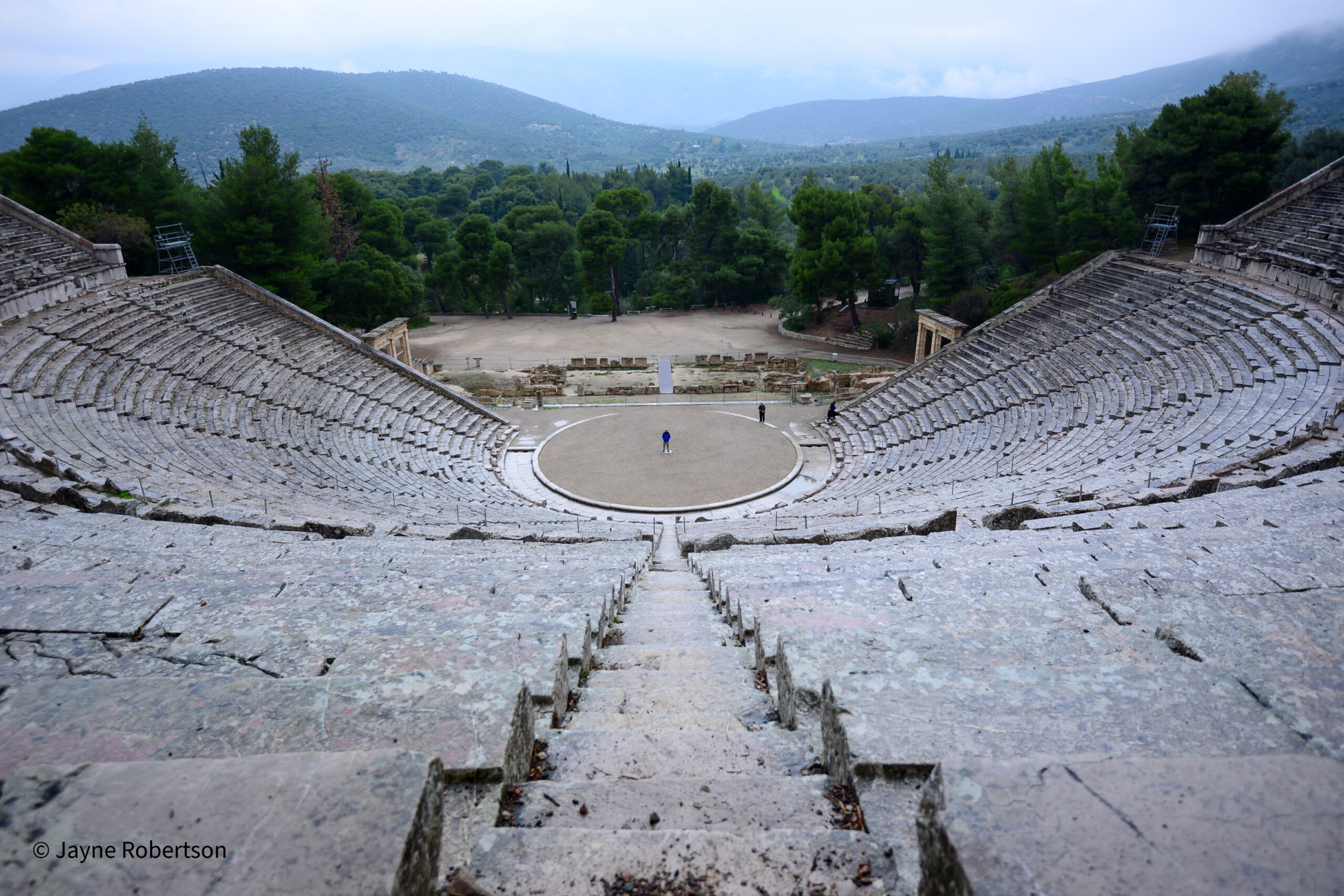
The next stop was the city of Epidaurus and its ancient theatre dedicated to the ancient Greek God of medicine, Asclepius. Constructed in the late 4th century BC, it is considered to be the most perfect ancient Greek theatre with regard to acoustics and aesthetics. To prove this point, tourists will often drop a coin in the middle of the stage and if someone can hear the coin drop then, supposedly, the theater has perfect or near-perfect acoustics. We were unaware of this little piece of trivia but a French tourist demonstrated by dropping a coin while Jayne was sitting in the top row. Sure enough, she could hear it, albeit faintly, but he proved his point. Like many long-held truths, there’s always someone trying to ruin the fun. Scientists from the Netherlands released a study in 2017 that claimed the acoustics may not be as wonderful as previously believed. Regardless, this theatre masterpiece was a sight (and sound) to behold.
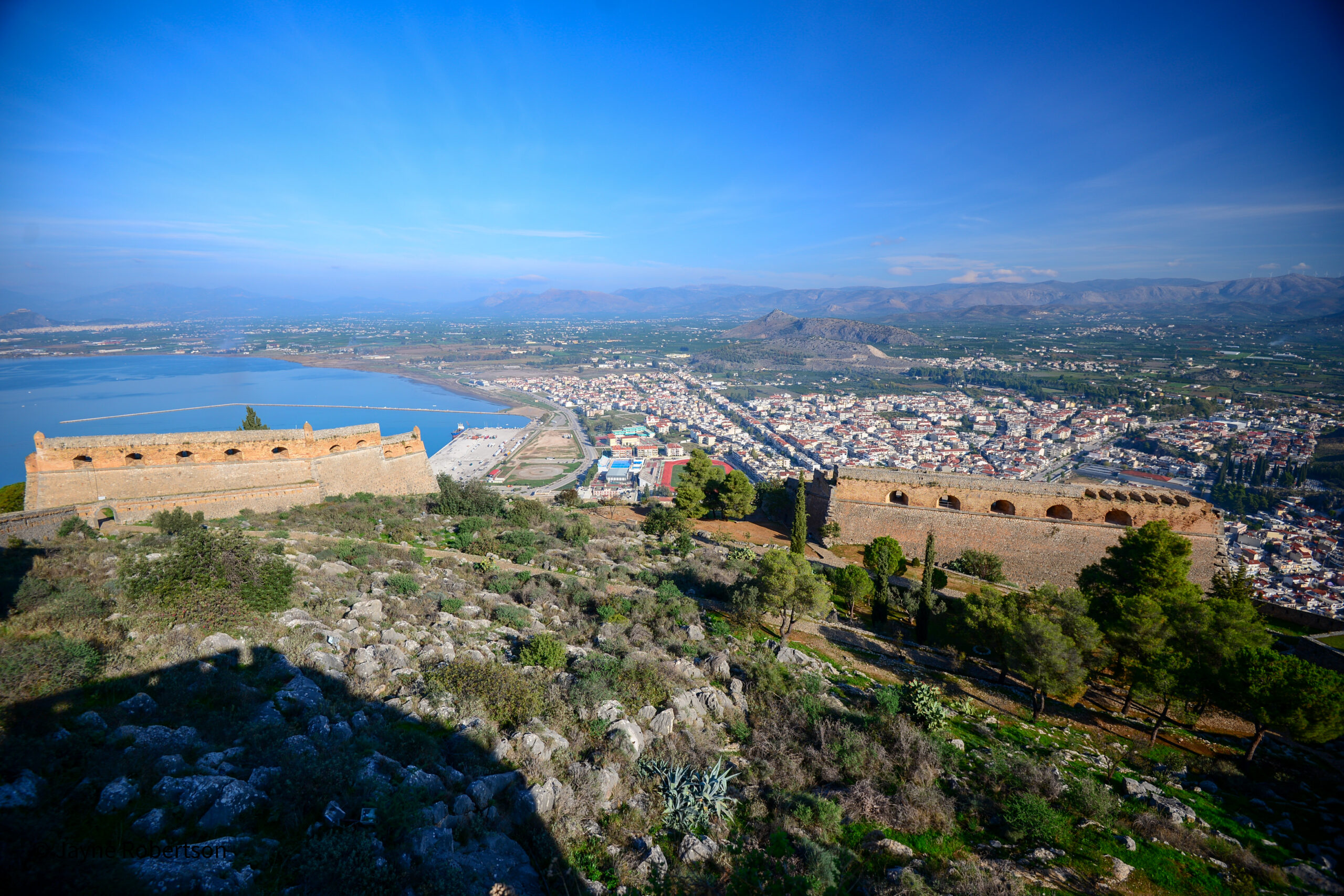
After Epidaurus, we stayed in Nafplio, where we visited the Palamidi, a fortress built by the Venetians during their second occupation of the area (1686-1715) and is situated on the crest of a 216-meter high hill. One guidebook even mentioned that Nafplio was one of the most romantic towns in all of Greece, perhaps because it sits on a beautiful sweeping bay and has an old town that’s easy to navigate.
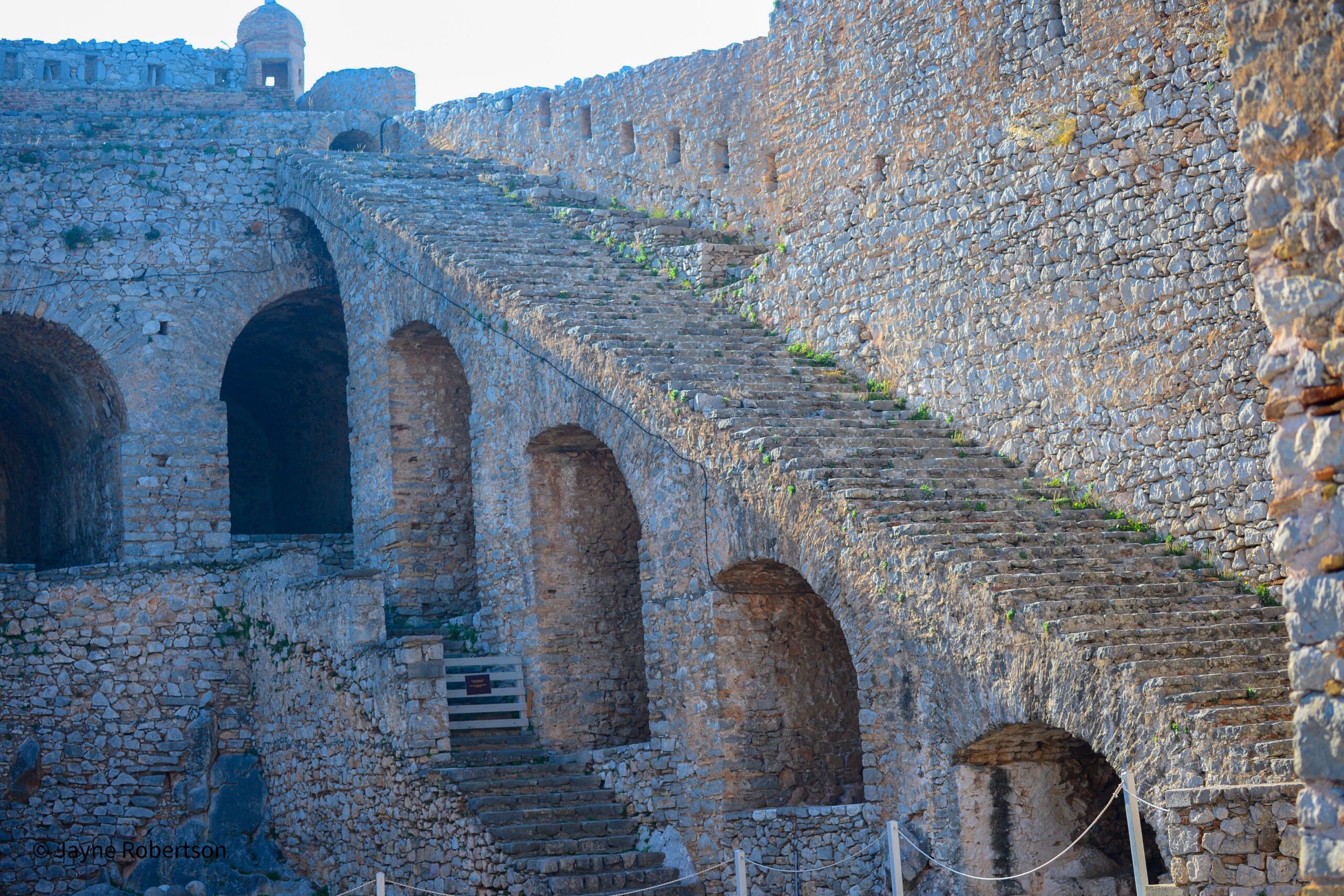
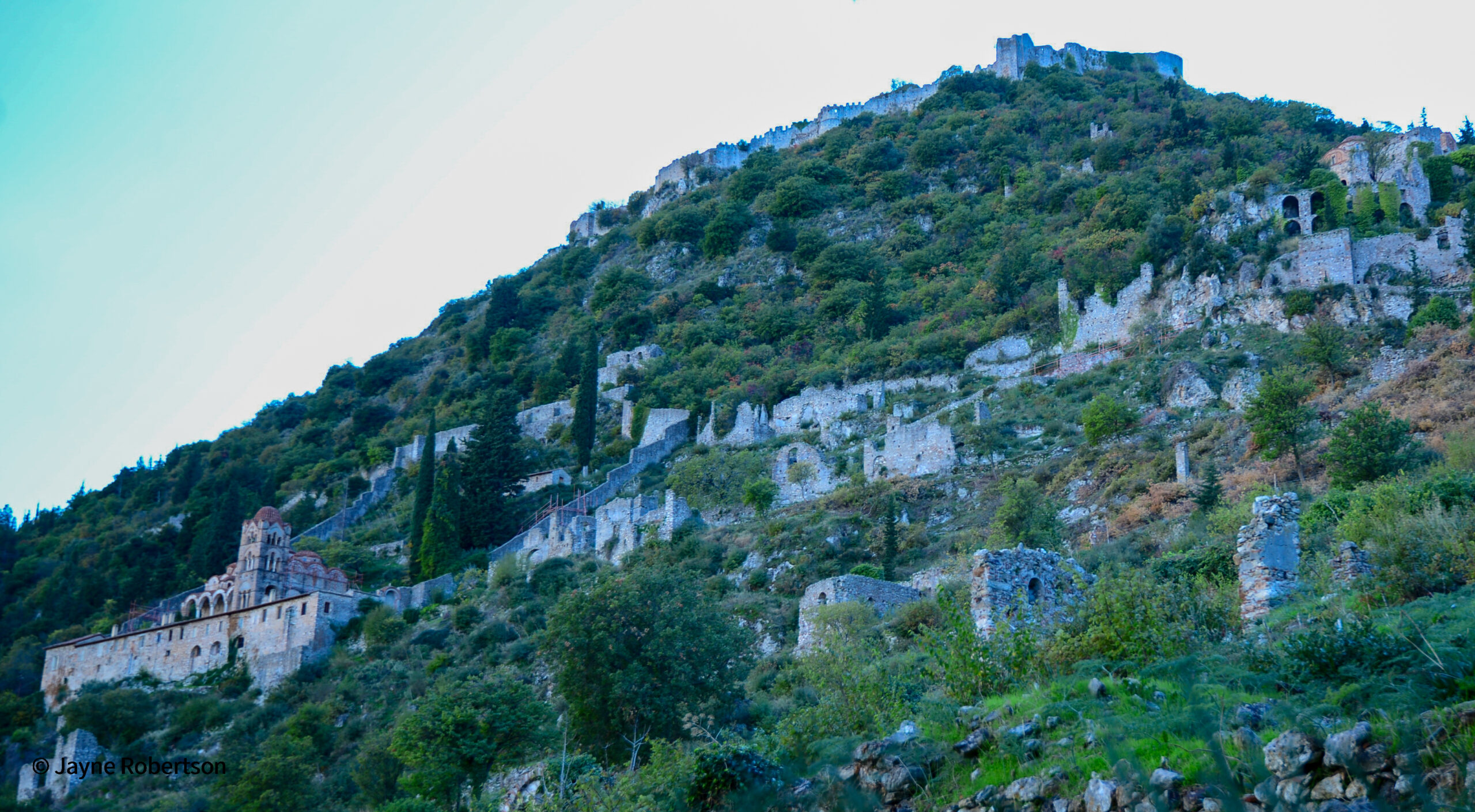
As you might suspect, fortresses are built on high ground, so if you’re committed to the journey, aside from the interesting formation of the fortress itself, you are also afforded beautiful scenic vistas of the city it was protecting. Such was the case in Mystras, our next stop. Aside from the fortress, there was the Palace of the Despots, and the Byzantine churches with their interesting architecture and frescoes.
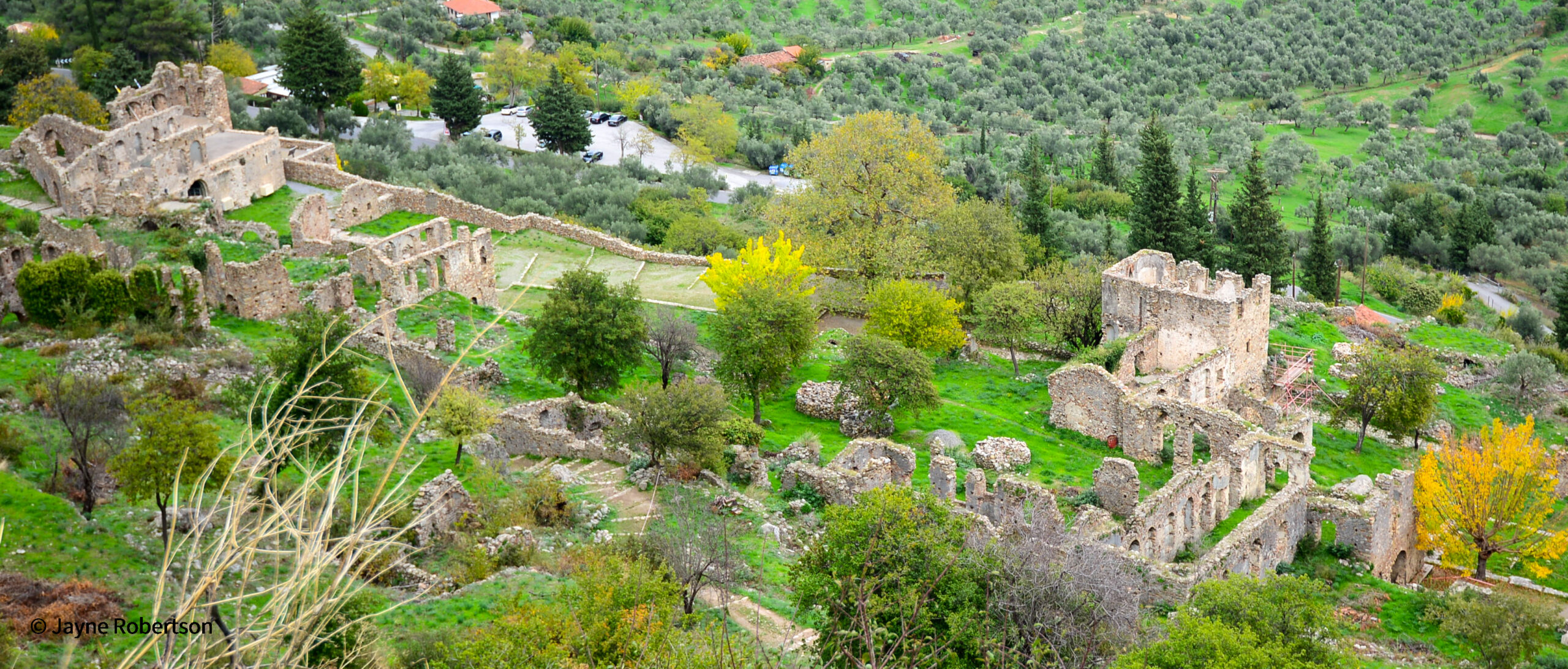
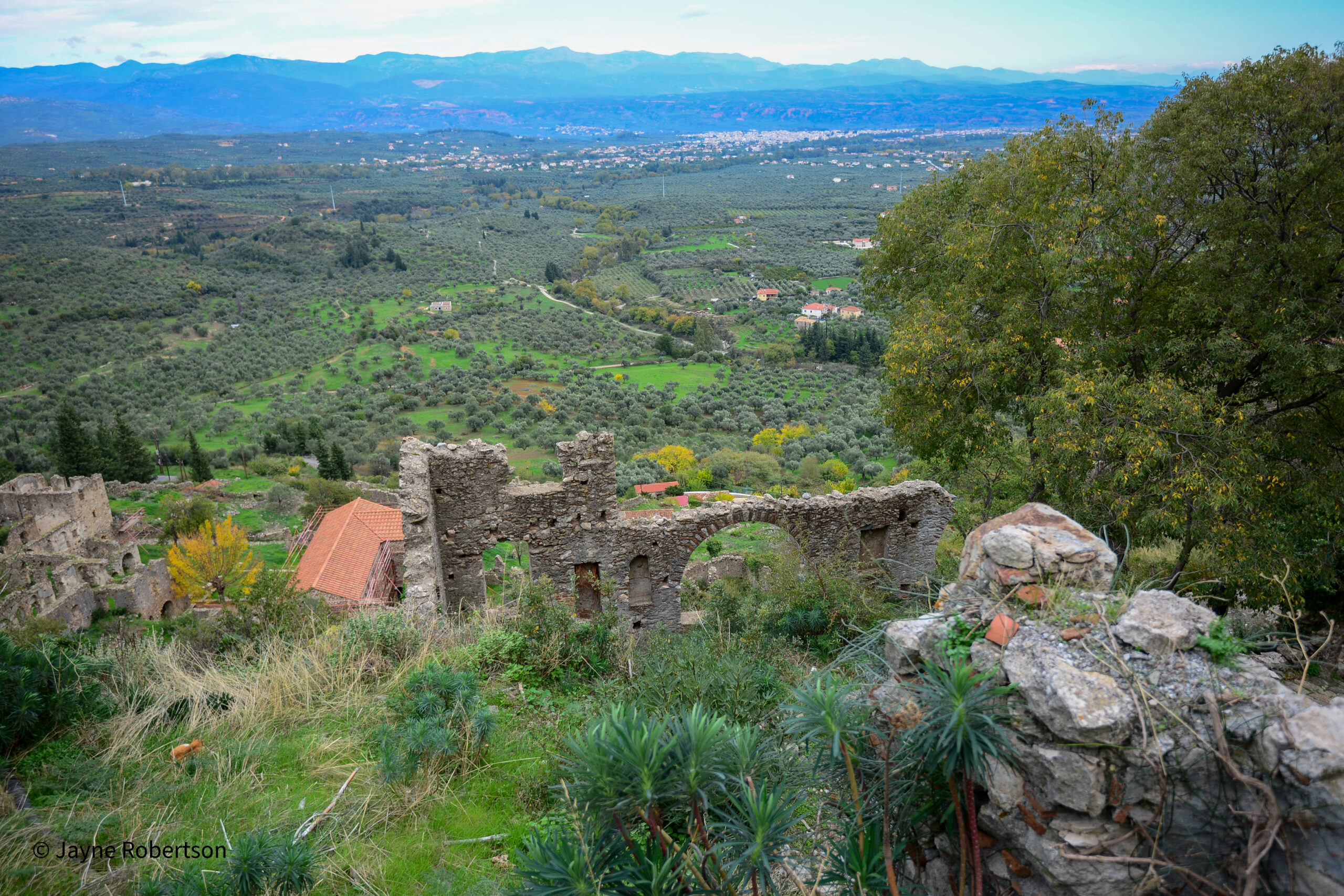
We arrived in Mystras with only 3-hours to see the entire site, and unbeknown to us, we entered from the lower car park and ended up hiking up to the very top, where the castle overlooked the valley. It was not only an amazing view but an amazing workout! One of the benefits of walking and hiking as much as possible is the incidental fitness that comes as a result, a great way to stay in shape for long-term travelers!
Greece holds so much history and our next stop in Olympia, triggered long-held memories as well. Long-distance phone calls 50 years ago were a big deal. Not only were they costly, but receiving one usually meant they were somewhat important. Such was the case for me when I received a phone call that would change the course of my life. I was living at home in the Bronx on that fateful day, and the chairman of the Physical Education Department at UC Berkeley called to advise me of my acceptance into the graduate program to study the relatively new discipline of the sociology of sport. This chairman, Dr. Deobold B. Van Dalen, had written probably the most comprehensive textbook on the history of physical education and sport at the time.
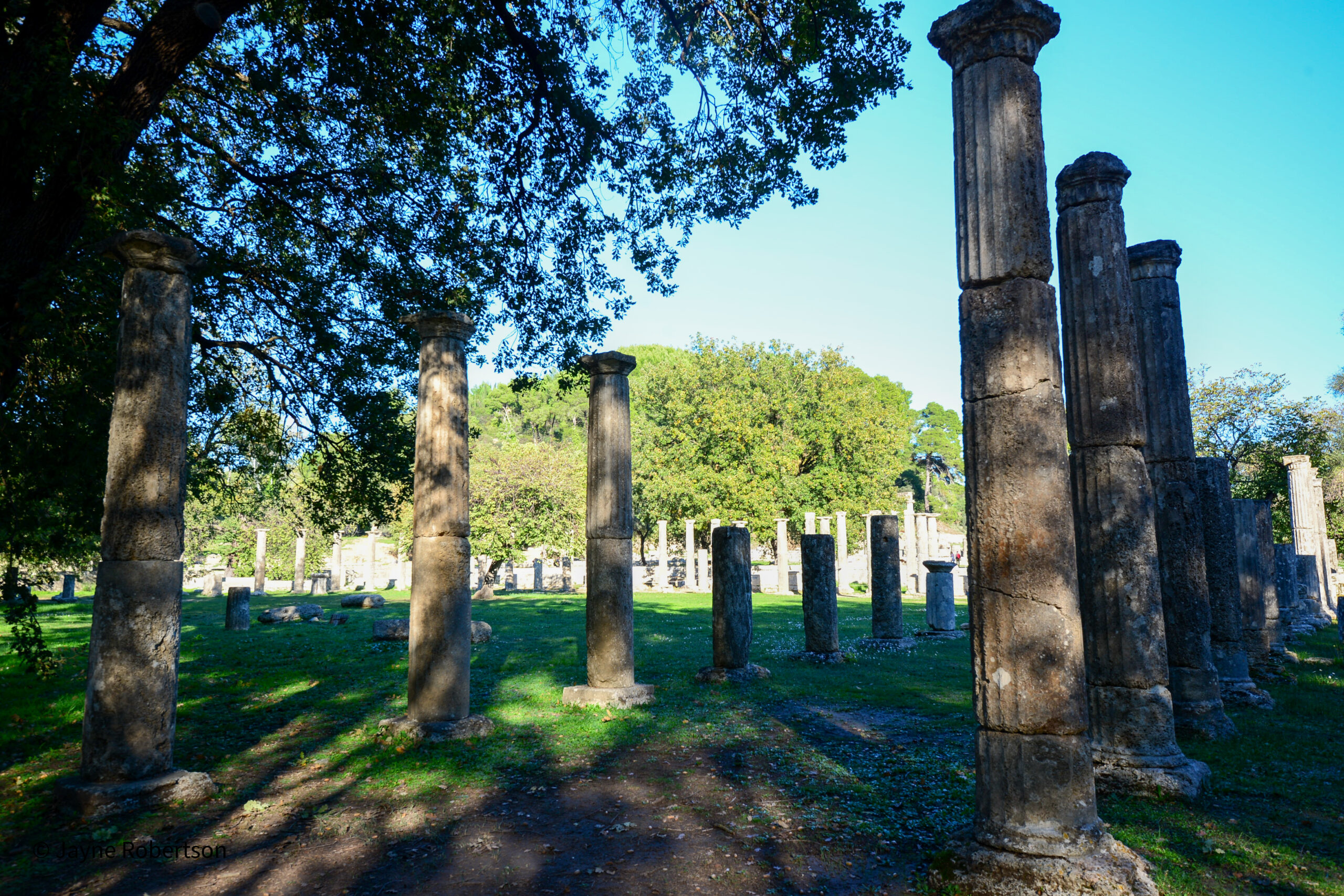
I couldn’t help but think of him on the day we visited Olympia, given his lectures on the topic of the Ancient Olympic Games and the importance of physical education in ancient Greece. After all, it was the Greeks who coined the word”gymnasia”! Likewise, when I was an Assistant Professor at San Jose State in the late 1970s, one of the topics we spent a great deal of time discussing was the political significance of the Modern Olympic Games, as 1980 would be the year the US would boycott the Moscow Olympics due to Russia’s invasion of Afghanistan. So, visiting Olympia for both Jayne and me (Jayne also did her undergraduate and graduate studies in Physical Education), was significant as Jayne said it would be as she had already been.
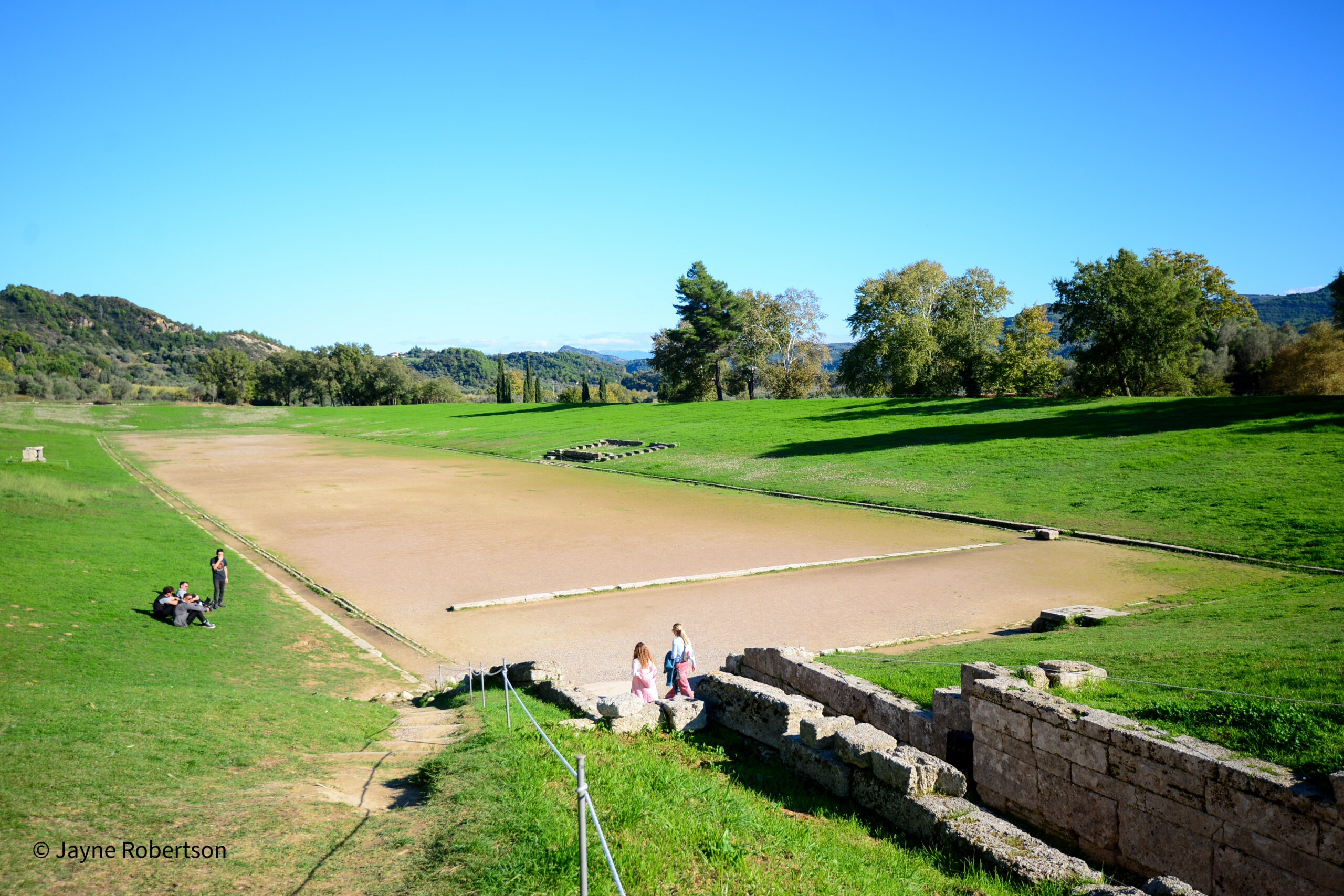
Olympia was the site of the first Olympic Games in 776 BC, and the games, held every four years, like today, went on until the 4th century AD. Not much remains of the ancient stadium, other than the starting blocks and ruins of some of the seating, but when one thinks of all those athletes and games over the years taking place here, it’s awe-inspiring (sorry to use that descriptor so frequently but…)
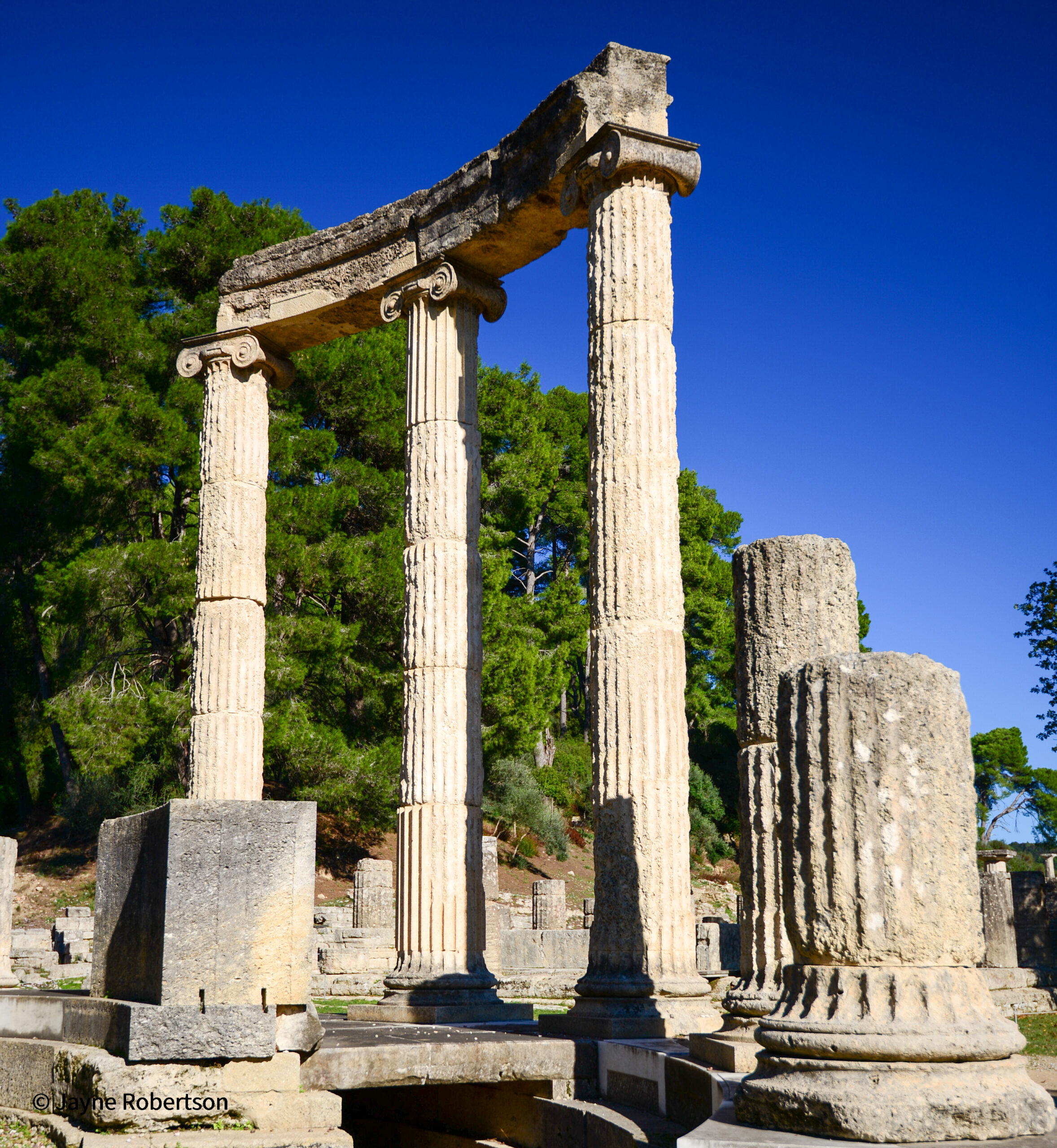
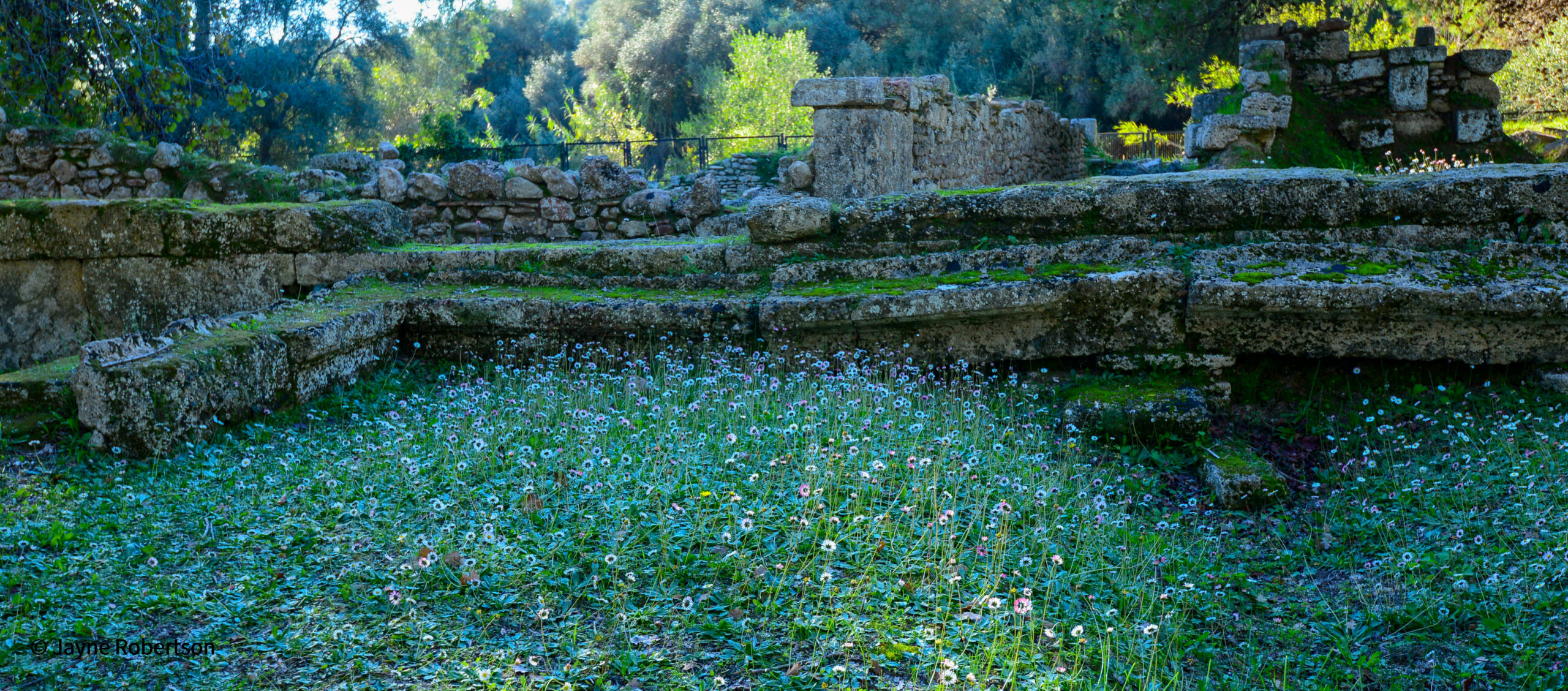
Many of the 70 buildings on the archeological site still have ruins and a walkthrough gives you some perspective of the size of the original complex. Temples dedicated to the gods Zeus and Hera are just some of the buildings and temples that remain.
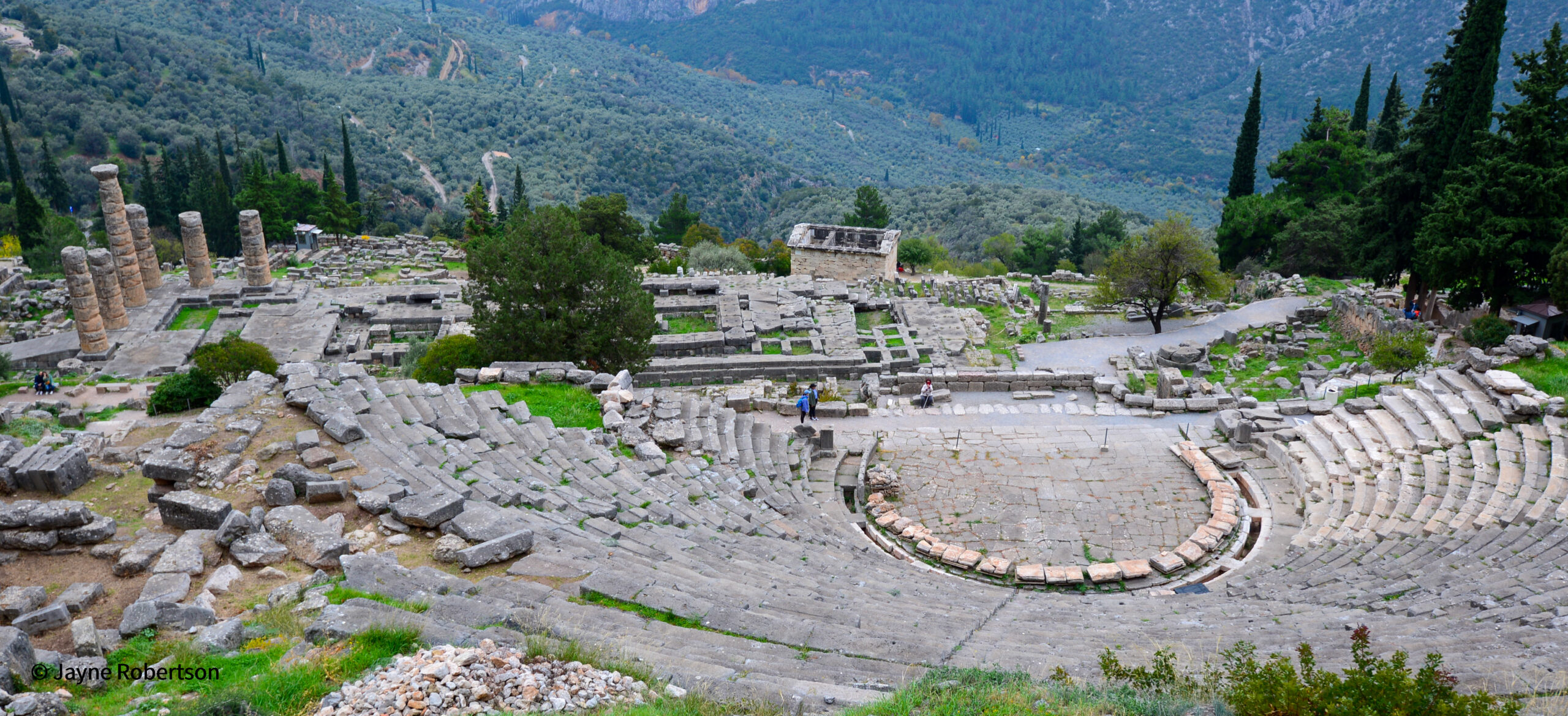
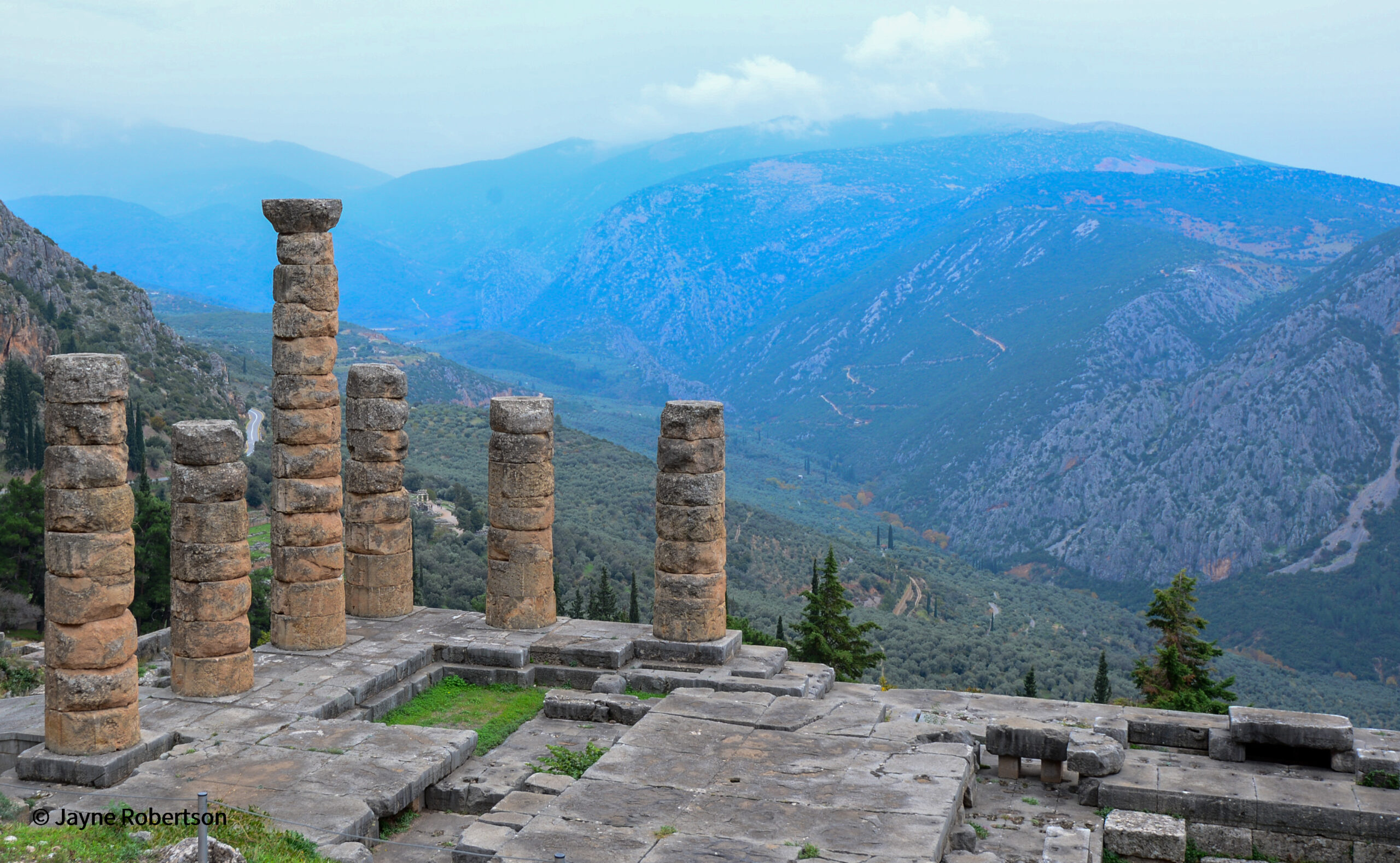
On we drove, leaving the Peloponnese for Delphi, an ancient religious sanctuary dedicated to the god Apollo. In ancient times, people from all walks of life would travel to Delphi, sometimes for weeks at a time, seeking guidance from the priestess, Pythia, the Oracle of Delphi, who could communicate with gods. Delphi was also the home of the Pythian Games, the second most important games in Greece after the Olympics.
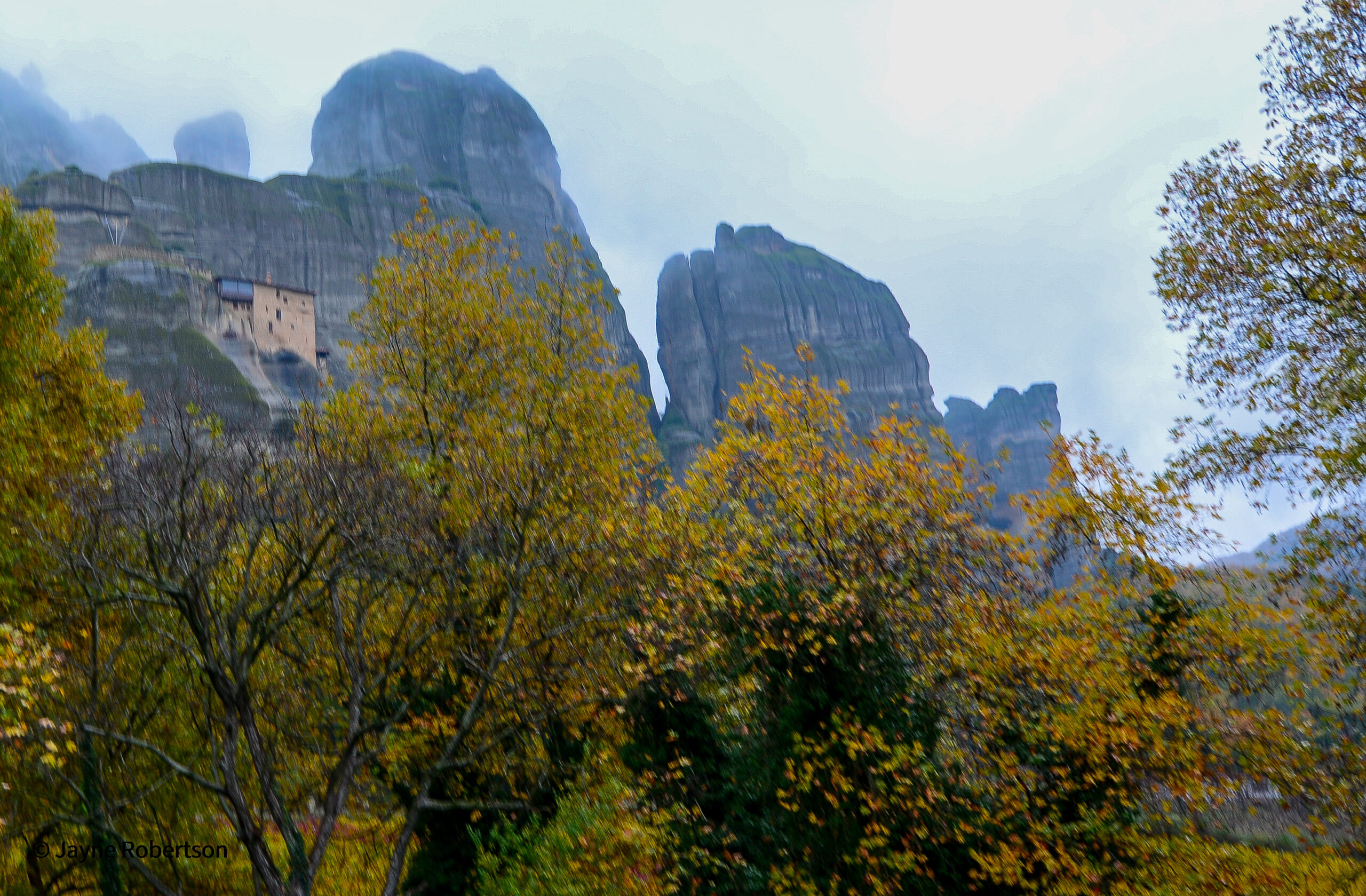
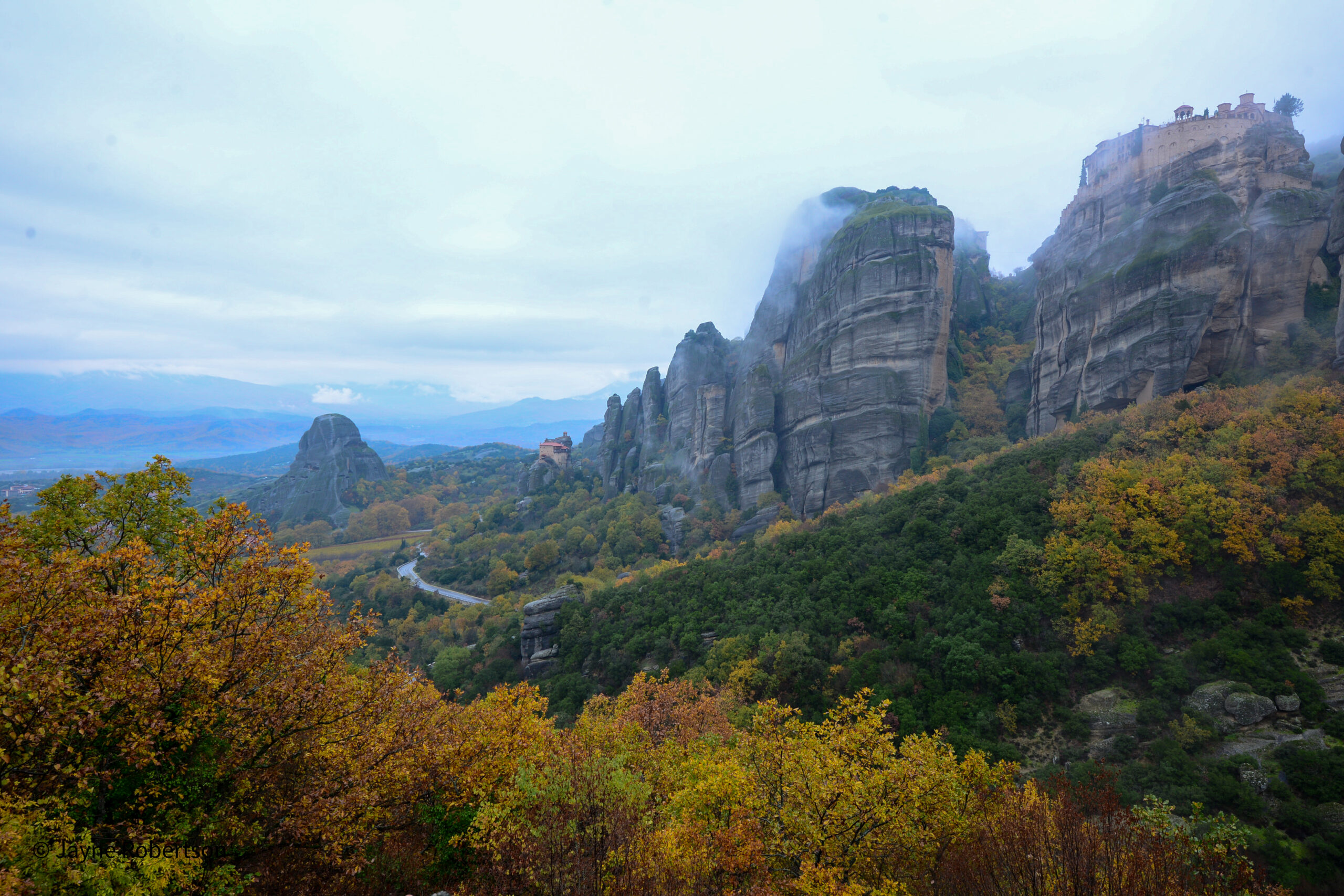
Although the drive to Meteora was going to be three hours, after seeing pictures of this Eastern Orthodox religious complex built into the sides of mountains, as well as hearing Jayne’s experience there from 30-years ago, we journeyed onward and were so happy we did. The rock formations have always been a site of worship for the ancient people of the area (it’s believed the caves were once inhabited as far back as 50,00 years ago!)
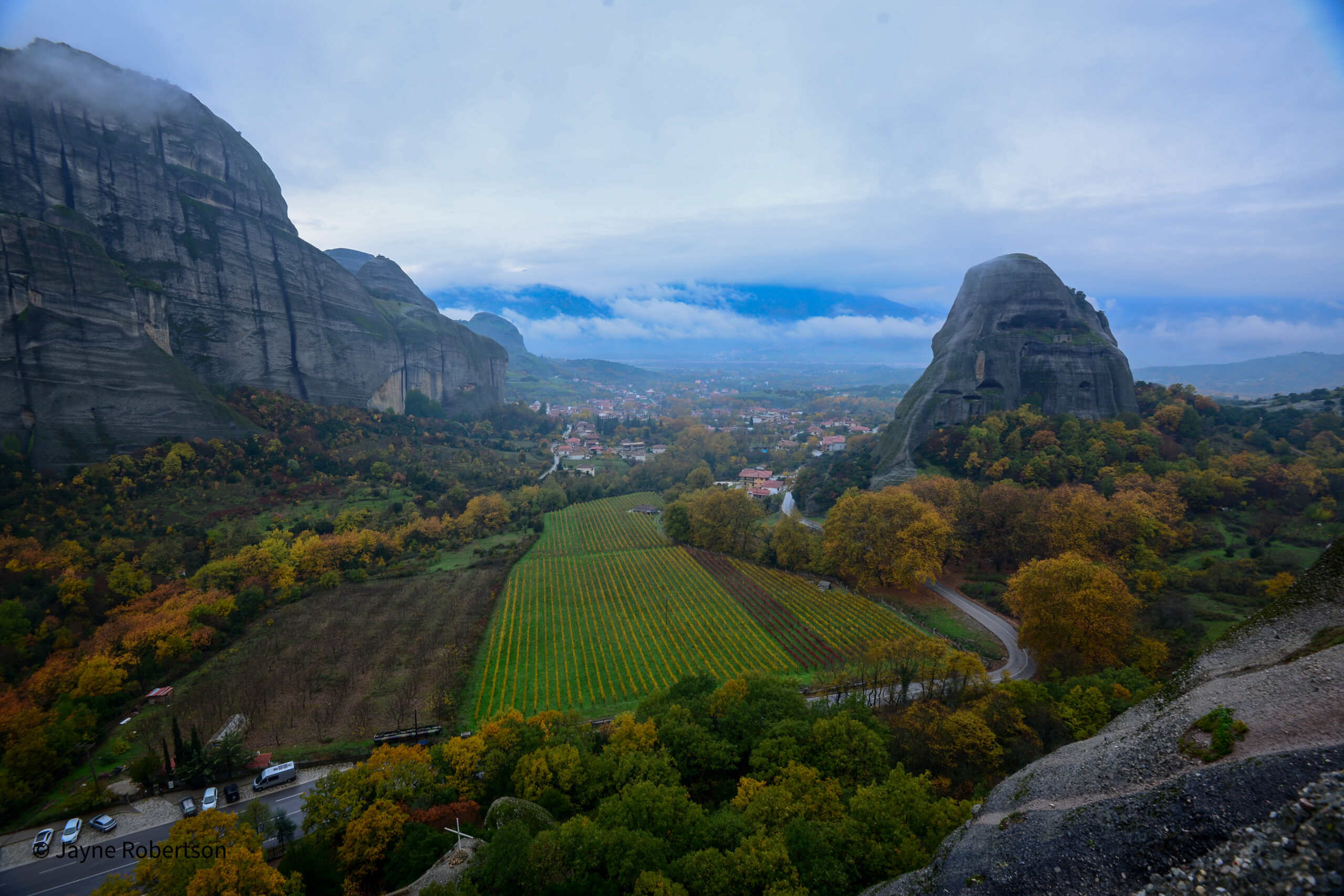
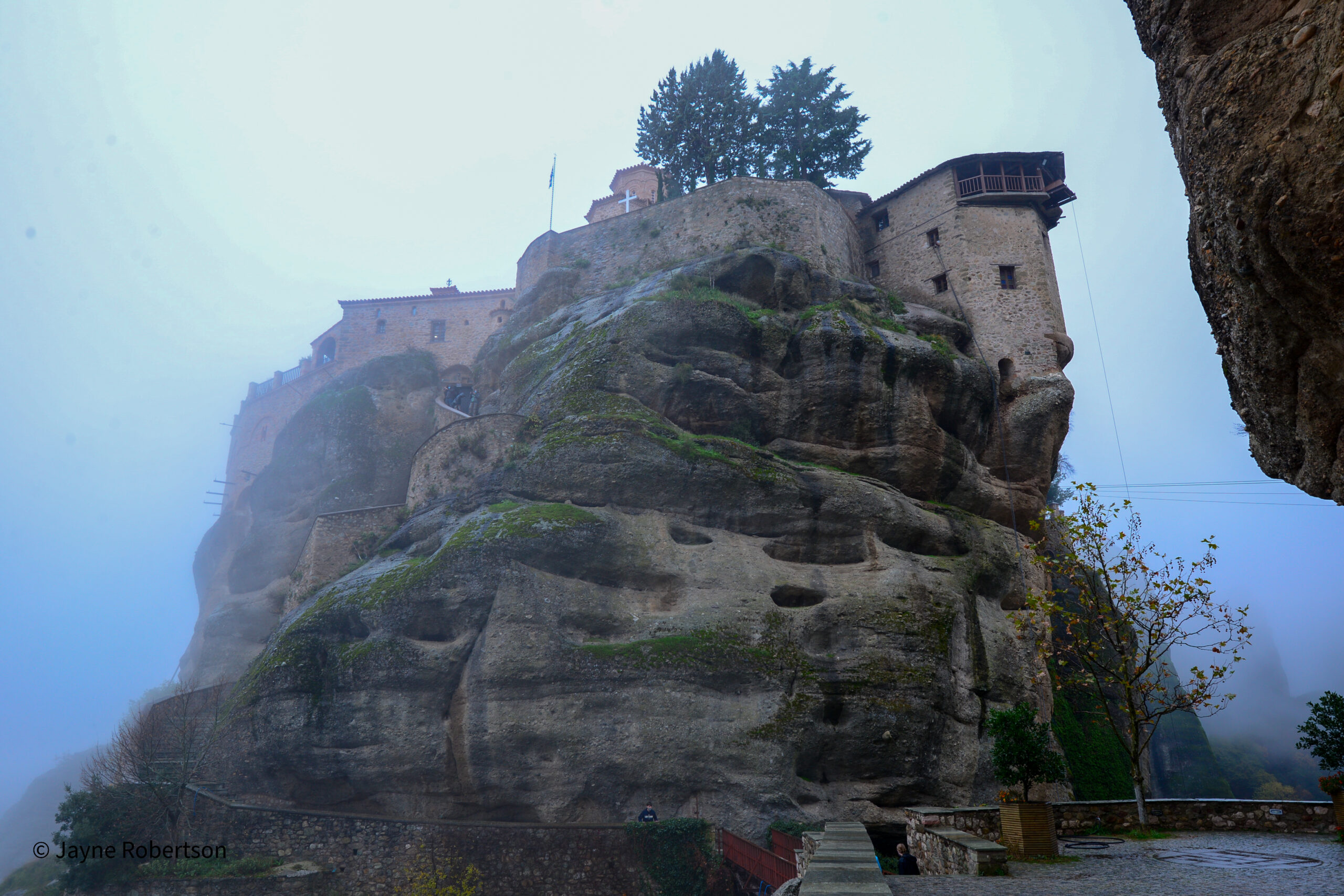
In the ninth century AD, ascetic hermit monks moved here living in the caves and fissures in the rock towers, some as high as 1800 ft (550m) above the plain. This great height, combined with the sheerness of the cliff walls, kept away all but the most determined visitors. Initially, the hermits led a life of solitude, meeting only on Sundays and special days to worship. It was during the 13th and 14th centuries that 24 monasteries were built, of which only six remain (four for monks, two for nuns). It was foggy and misty when we visited a few of the monasteries, perfect weather to experience this mystical and beautiful enclave.
Our final stop was the seaside resort town of Kamena Vourla, not known for anything in particular other than being a nice layover spot before returning to Athens just a couple of hours away. As we were flying onto Istanbul the next day, we needed a place to stay that would have easy access to the airport and the return of our rental car.
The road trip afforded us the opportunity to see the countryside of Greece, especially the various mountain ranges where fortresses, palaces, and monasteries were built. It also gave our quadriceps a good workout climbing the many hills we encountered along the way.
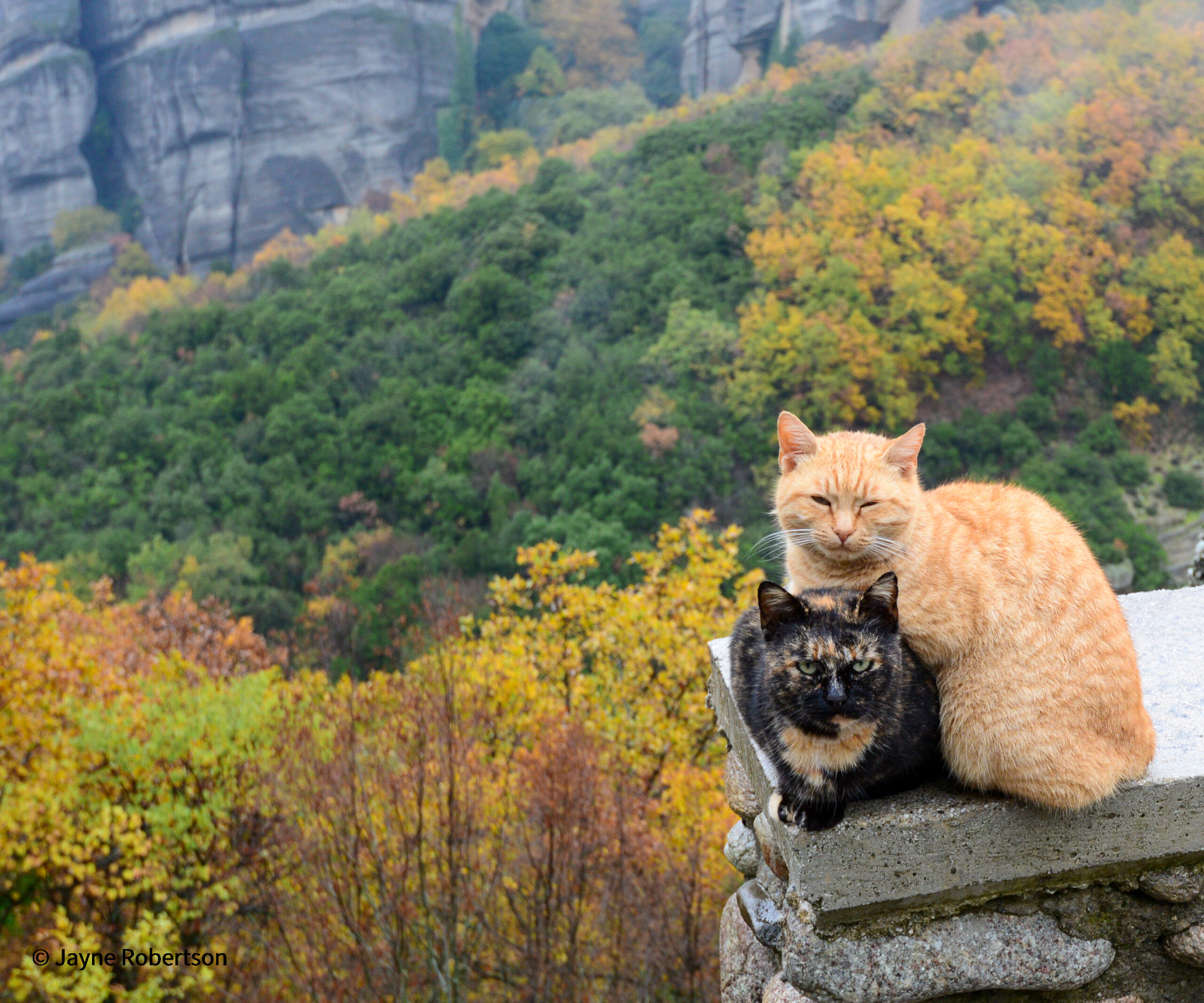
Thus, ended our month in Greece -fantastic beaches, great food, friendly people, incredible history and cats! I’d be remiss to mention that Greece is filled with cats -everywhere! Most of them are feral cats but not unfriendly ones like you might see elsewhere. You’ll find good samaritans and shopkeepers alike feeding the cats en masse wherever you go. And it was perfectly fine to pet them which many tourists found themselves doing.